

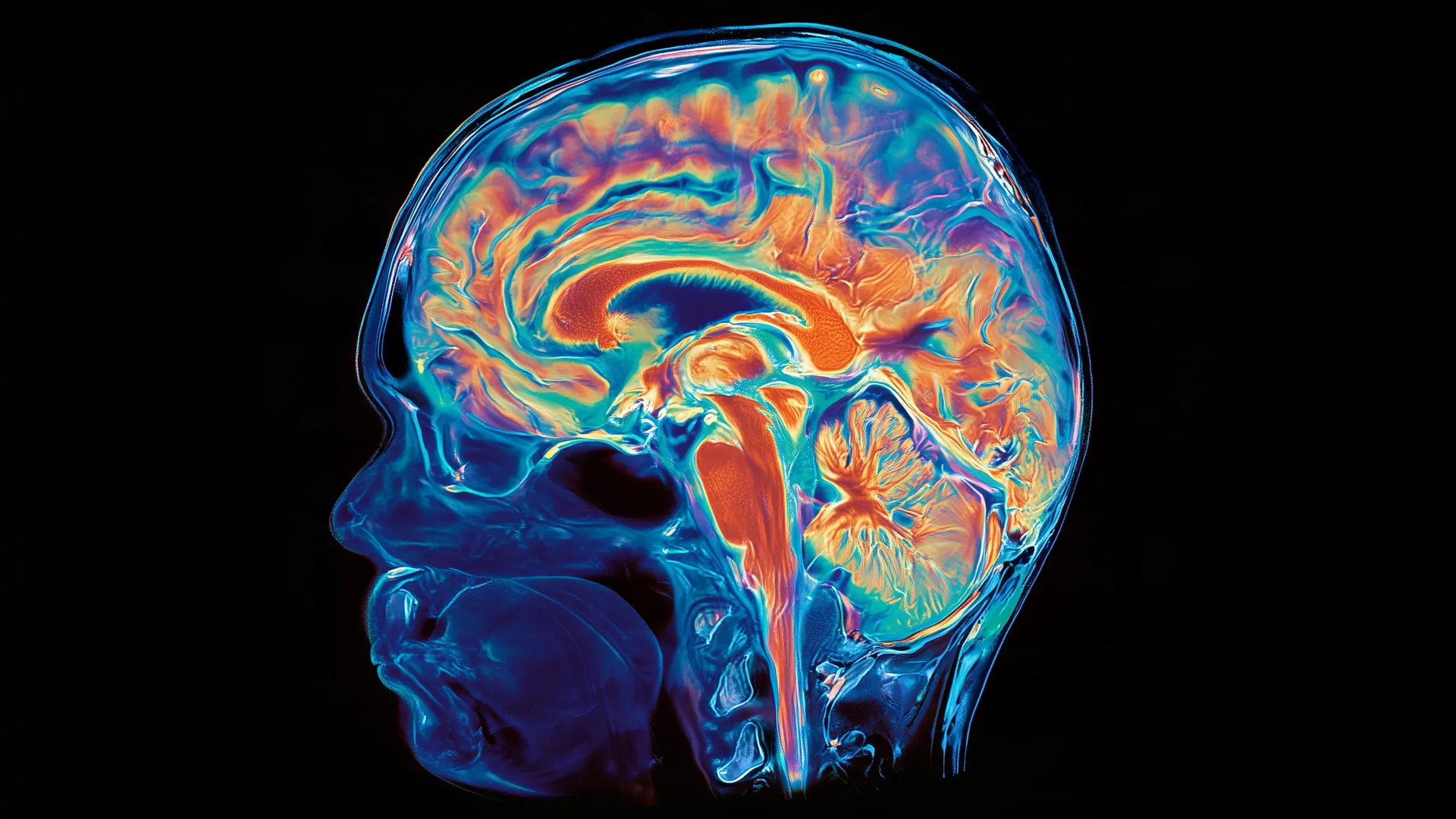
Researchers at Stanford Medicine have published findings suggesting that the human brain originates from two separate developmental systems rather than emerging from a single progenitor cell population, as long held by the scientific community. The forebrain and midbrain develop from one set of progenitor cells, while the hindbrain follows an independent developmental pathway that begins during early embryonic gastrulation.
The two populations of brain progenitor cells express different genes—one expresses Otx2 and develops into the forebrain and midbrain, while the other expresses Gbx2 and becomes the hindbrain. These populations remain distinct from the earliest developmental stages examined and possess fundamentally different chromatin configurations, the material that controls gene accessibility within cells. This fundamental separation effectively commits cells to separate developmental destinies from the beginning, meaning cells destined to become one brain region cannot be converted into another.
The discovery addresses a longstanding puzzle in neuroscience: the difficulty researchers have experienced attempting to grow hindbrain neurons in laboratory settings. Previous attempts likely failed because scientists were trying to convert forebrain and midbrain progenitor cells into hindbrain cells, a transformation now shown to be impossible. By understanding the distinct developmental origins, researchers successfully guided human pluripotent stem cells into becoming functional hindbrain motor neurons for the first time, with the cells producing appropriate electrical signals and proteins.
The findings carry implications for studying serious neurological diseases affecting the brain stem, including spinal muscular atrophy and amyotrophic lateral sclerosis. Both conditions progressively damage hindbrain neurons, leading to loss of critical functions like swallowing and breathing. The ability to grow hindbrain neurons in laboratory conditions may enable better investigation and potential treatments for these conditions.
Examination of evolutionary history revealed the same two-origin brain arrangement across chickens, zebrafish, and acorn worms, suggesting this pattern extends more than 550 million years into the past. The findings appear in Nature Neuroscience, with Kyle Loh serving as senior author alongside co-first authors Carolyn Dundes and Rayyan Jokhai.
Article Attribution | Read More at Article Source
Article summary produced by Claude AI