

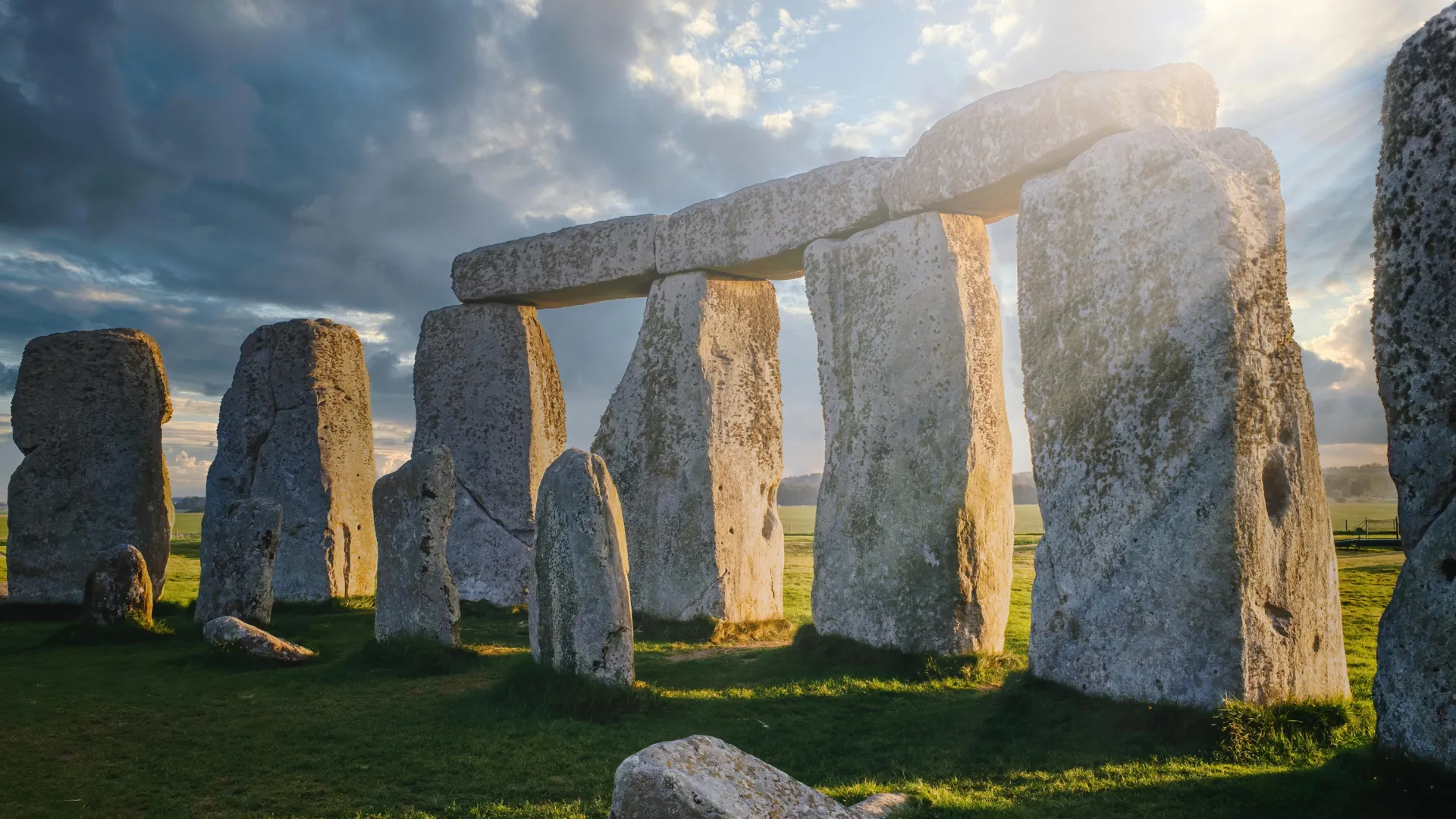
A collaborative research team from Sheffield Hallam University and Curtin University has put forward a new hypothesis regarding how Stonehenge’s Altar Stone journeyed from Scotland to southern England. The Altar Stone, a six-tonne sandstone megalith, originated in northeast Scotland approximately 700 kilometers from Stonehenge, presenting researchers with a longstanding puzzle about the mechanisms of its transportation.
The research team employed a combination of mineral grain dating techniques and computer modeling of ancient ice sheets to reconstruct the stone’s possible route. Their analysis suggests that glaciers during Britain’s last ice age may have transported the stone from Scotland’s Orcadian Basin to Dogger Bank in the North Sea. However, the stone would have required human transport to cover the remaining hundreds of kilometers to Salisbury Plain, as glacial pathways did not extend directly to Stonehenge.
Doggerland, a now-submerged Neolithic landscape off England’s east coast, may have served as an intermediate location. The researchers theorize that people living in this region could have moved the stone as environmental conditions changed and sea levels rose. From there, the Altar Stone may have been transported via the Berkshire Ridgeway, considered Europe’s oldest road and operational during Stonehenge’s construction period.
The findings suggest the Altar Stone underwent a complex, multi-stage journey rather than a single direct route. Dr. Anthony Clarke noted that evidence points to deliberate human movement across varied landscapes, indicating Neolithic communities possessed sophisticated planning and organizational capabilities. The research implies that transporting such a massive stone over such distances would have required significant cooperation among prehistoric populations and detailed knowledge of available routes.
The collaborative team, which included experts from the University of Sheffield, Wessex Archaeology, and the University of Bristol, plans to refine the stone’s precise source location and further investigate the transportation routes used by prehistoric communities.
Article Attribution | Read More at Article Source
Article summary produced by Claude AI