

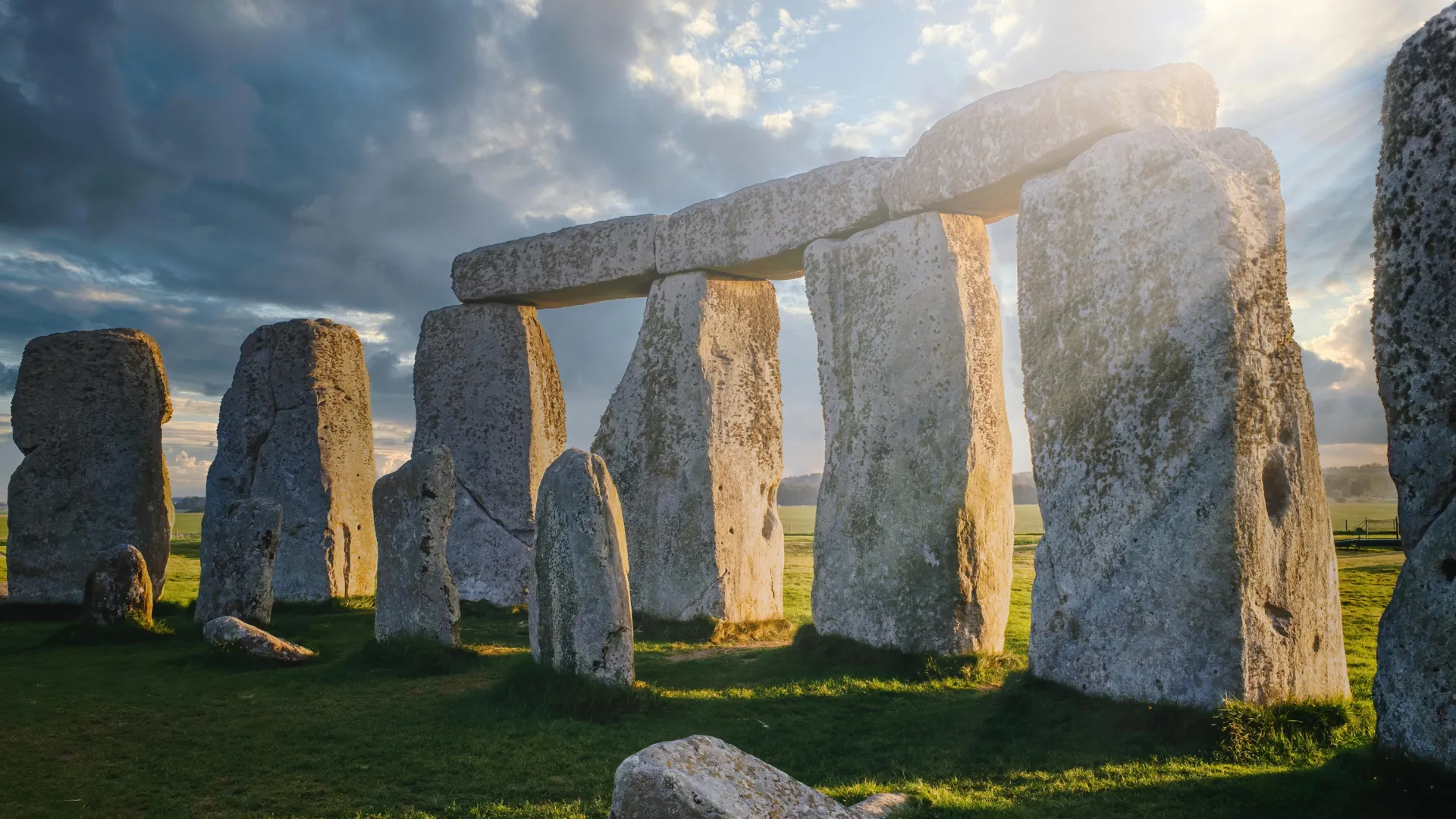
A collaborative research team from Sheffield Hallam University and Curtin University has developed a new hypothesis regarding the transport of Stonehenge’s Altar Stone, a six-tonne sandstone megalith located at the monument’s center. The stone is believed to have originated in northeast Scotland, approximately 700 kilometers from Stonehenge’s current location on Salisbury Plain, raising longstanding questions about how such a massive object traversed such a considerable distance.
The research team employed mineral grain dating techniques combined with computer modeling of ancient ice sheets to reconstruct the stone’s potential journey. Their analysis suggests that glaciers during Britain’s last ice age may have carried the rock from Scotland’s Orcadian Basin as far as Dogger Bank in the North Sea. However, the researchers emphasize that glacial transport alone cannot account for the entire distance, as no viable glacial pathways connected the source region directly to Stonehenge.
The study proposes that Neolithic communities then transported the stone from the North Sea region overland, potentially hundreds of kilometers to its final destination. Researchers suggest the Altar Stone may have made multiple stops during its journey, including a possible halt in Doggerland, a now-submerged Neolithic landscape off England’s east coast. From there, the stone could have been moved along the Berkshire Ridgeway, regarded as Europe’s oldest road and a route in use during the period when Stonehenge was constructed.
The findings indicate that such a transport operation would have required substantial coordination among prehistoric communities, involving careful planning and detailed landscape knowledge. Dr. Remy Veness noted that the discovery of the stone’s distant origin raises the possibility that it held cultural significance long before its incorporation into Stonehenge, potentially prompting communities to move it multiple times to preserve it from environmental changes including rising sea levels.
The research was conducted in collaboration with experts from the University of Sheffield, Wessex Archaeology, and the University of Bristol. Investigators plan to further refine their understanding of the stone’s precise Scottish source and examine in greater detail the routes that prehistoric populations may have utilized during its transport.
Article Attribution | Read More at Article Source
Article summary produced by Claude AI