

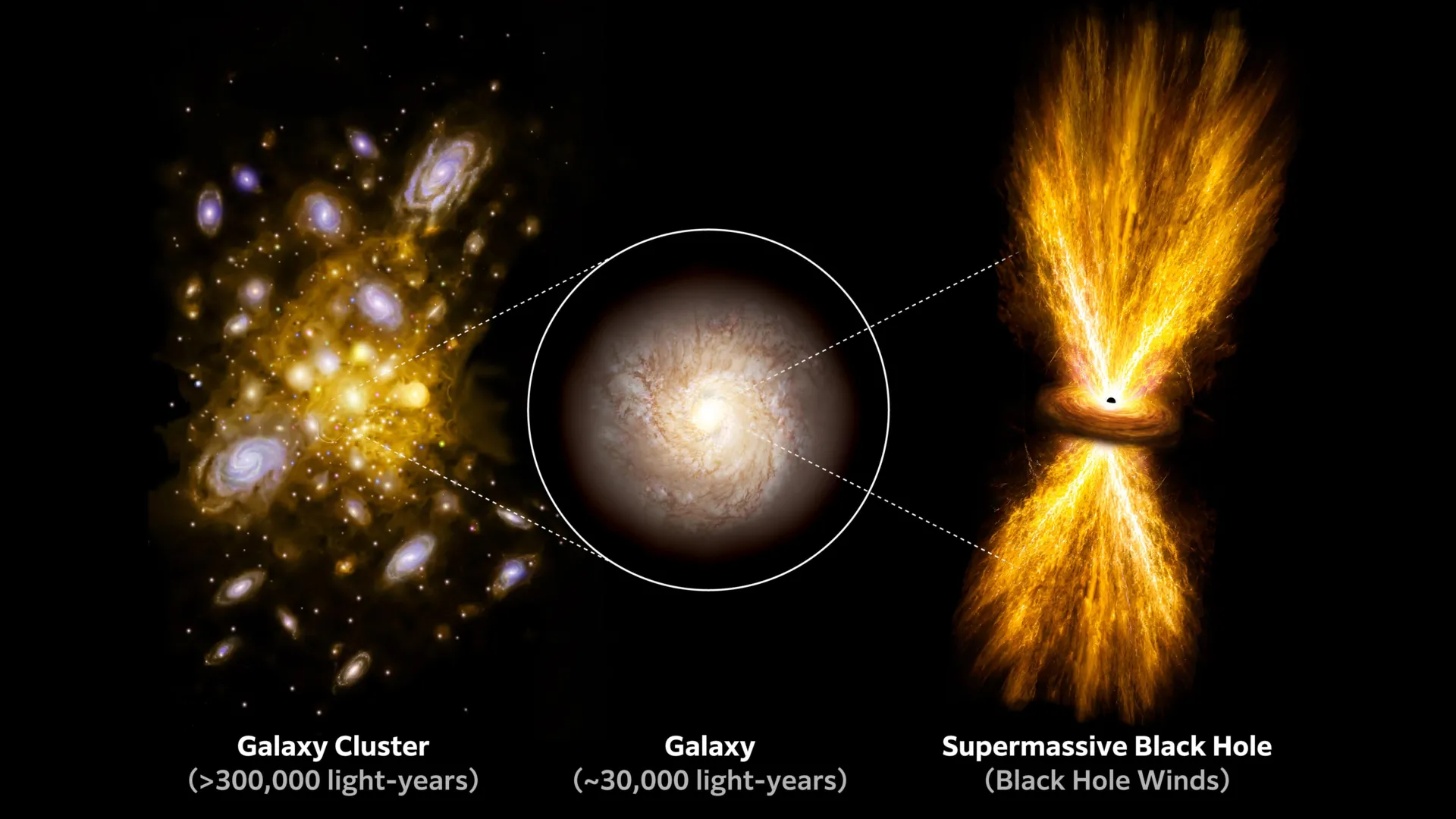
Researchers using the X-ray astronomy satellite XRISM have discovered that supermassive black holes exert significantly greater influence on their cosmic surroundings than earlier scientific understanding suggested. The study, led by scientists from multiple Japanese institutions, focused on the quasar H1821+643, located approximately 3.4 billion light-years from Earth in the constellation Draco.
Black holes are known to expel gas in the form of powerful winds as they consume surrounding matter. Prior research had assumed these winds remained confined within the galaxies hosting the black holes. However, the new findings demonstrate that the energy associated with these winds extends far beyond galactic boundaries, reaching distances of approximately 300,000 light-years into surrounding space.
Analysis of the quasar using XRISM’s high-precision X-ray measurements revealed intense turbulence in the extremely hot gas surrounding the black hole at the quasar’s center. By examining emission lines produced by iron ions, researchers determined that the energy contained within this turbulent gas flow was approximately 100 times greater than had been previously calculated. This energy output is comparable to several billion supernova explosions combined.
The research indicates that supermassive black holes function as major drivers of gas flows and motion throughout the cosmos, transporting enormous quantities of energy across different regions of space. These findings suggest black holes play a more substantial role in shaping the environments around galaxies and galaxy clusters than scientists had recognized. The study was published in the journal Nature Astronomy, with researchers indicating that future observations should provide additional insight into the mechanisms by which black holes influence their broader cosmic environment.
Article Attribution | Read More at Article Source
Article summary produced by Claude AI