

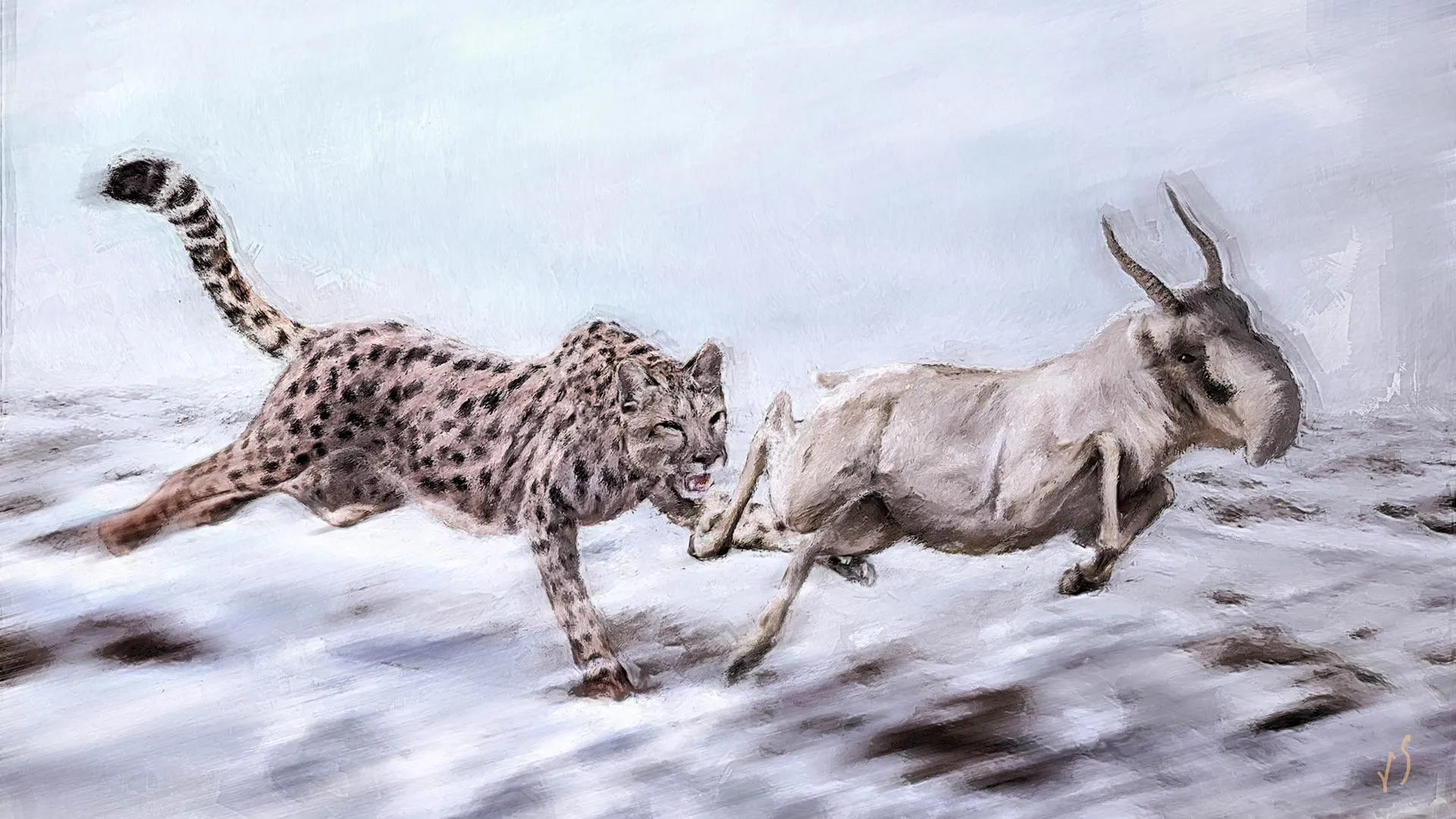
Scientists at the University of California, Santa Cruz, have published findings that fundamentally revise understanding of Miracinonyx trumani, an extinct predator from North America. Research utilizing nuclear paleogenomes and stable isotope analysis demonstrates the animal was a close relative of modern pumas rather than a true cheetah, despite its physical similarities to those African felines.
The study, released on September 4 in Current Biology, expands the known geographic range of the species substantially, extending approximately 20 degrees of latitude further north than previously documented. Populations in regions such as Wyoming and Florida functioned as generalist predators within temperate grassland ecosystems. By contrast, specimens from Arctic Yukon occupied a distinctly different ecological position, functioning as tertiary consumers with apparent specialization in anadromous fish species including salmon. The animals typically weighed around 150 pounds, stood approximately 3 feet tall, and measured roughly 8 feet in total length. Their slender frames and elongated front limbs likely facilitated efficient movement through open Pleistocene landscapes, though genetic evidence indicates they possessed more hunting versatility than modern cheetahs.
Genetic analysis of fossils dated between 23,000 and 31,000 years ago revealed mutations in genes regulating circadian rhythms, suggesting adaptations to the extreme light variations characteristic of northern latitudes. Researchers also identified an unusual sensory feature: the species lacked a functional gene for sour taste detection, consistent with patterns sometimes associated with highly specialized diets. These genetic findings challenge the longstanding “ghosts of predators past” hypothesis, which attributed the exceptional speed of American pronghorns to evolutionary pressure from cheetah-like predators. The new evidence indicates the resemblance between Miracinonyx and true cheetahs represents convergent evolution rather than close kinship.
The research identified low genetic diversity across populations from both Wyoming and Yukon regions. However, unlike modern pumas, these populations showed no evidence of severe inbreeding or sudden population collapses. Instead, genetic records point to a gradual decline spanning from the early through late Pleistocene. This extended period of reduced population size may have left the species increasingly vulnerable when climate conditions shifted, ultimately contributing to its extinction.
The collaborative effort involved researchers from the University of Alaska Fairbanks, the Yukon Palaeontology Program, and Des Moines University. Researchers emphasized that assigning identities to extinct species primarily through physical characteristics can be misleading, as the “American cheetah” designation incorrectly suggests both evolutionary kinship with true cheetahs and comparable hunting specialization.
Article Attribution | Read More at Article Source
Article summary produced by Claude AI