

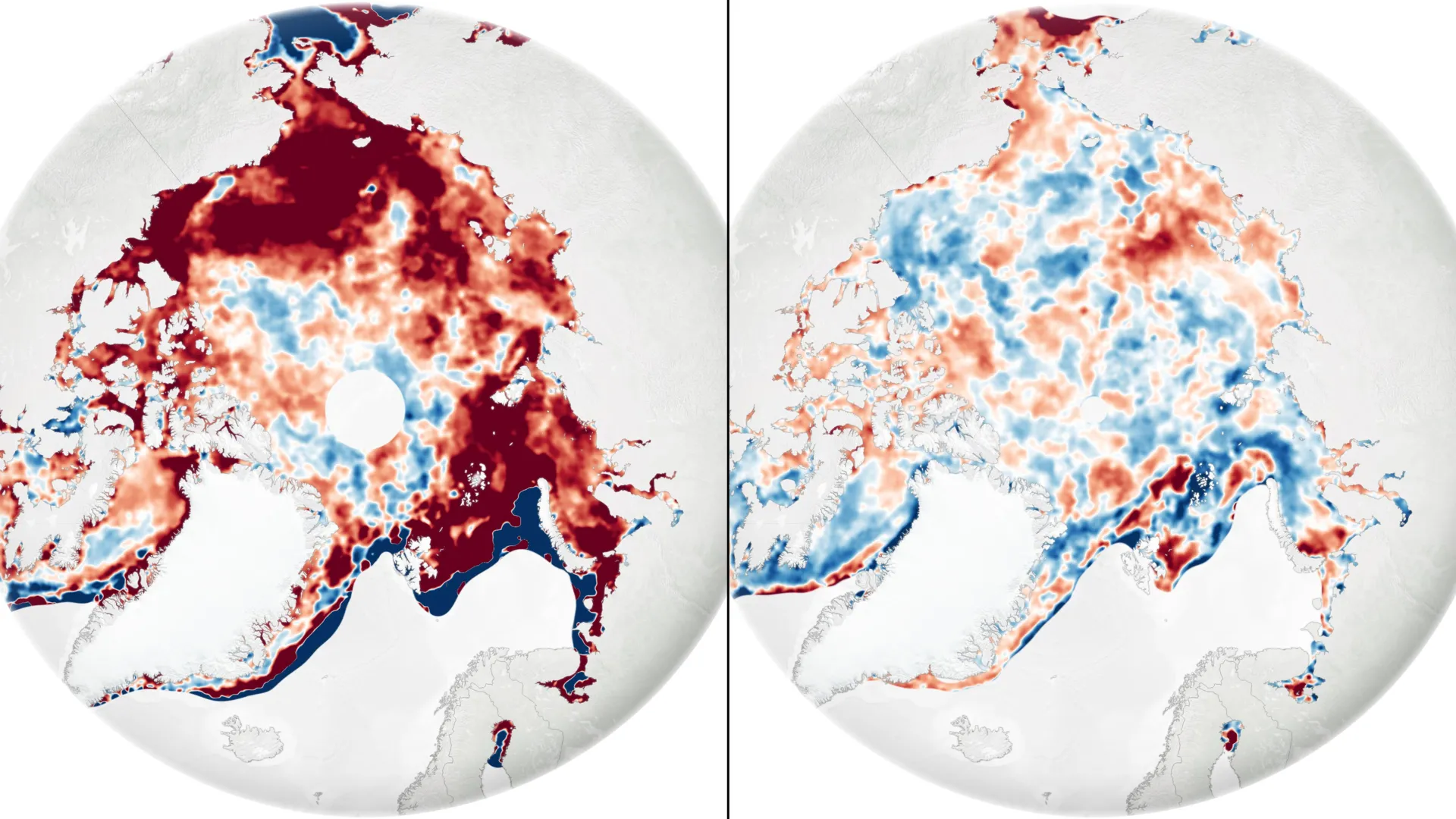
A research team led by NASA analyzed satellite data spanning from 1979 through 2023 to track changes in Arctic sea ice melting patterns. The investigation revealed that the melt season has grown approximately 40 days longer than it was at the beginning of the satellite record, but this expansion followed a markedly different trajectory than many scientists anticipated.
During the early decades of satellite monitoring through the 2000s, the melt season extended primarily due to later autumn freeze-up rather than significantly earlier spring melting. The researchers attributed this acceleration to changes in the Arctic’s energy balance. As sea ice cover declined, more dark ocean water became exposed to solar radiation. Since bright ice reflects sunlight while darker water absorbs it, this transformation allowed additional heat to accumulate in the region, further delaying the formation of new ice in fall months.
Around 2010, however, the rate of lengthening slowed considerably. Although the average duration of the melt season has remained relatively stable since that point, individual years still show substantial variation. According to researchers, Arctic ice composition has shifted significantly, with younger and thinner ice now dominating where thicker, multiyear ice once prevailed. This structural change has made the remaining ice more susceptible to disruption from atmospheric conditions.
Since the early part of this decade, alterations in cloud patterns have reduced sunlight penetration over portions of the Arctic Ocean, contributing to the plateau in melt season length. The findings underscore that Arctic warming continues at a pace nearly four times faster than the global average, yet atmospheric conditions have gained influence over ice melt timing as the ice itself has become more vulnerable.
Researchers caution that the current stabilization may prove temporary. Thicker ice persisting north of Greenland and in the Canadian Arctic Archipelago could eventually thin further, potentially triggering another phase of rapid sea ice decline and melt season extension. Continued satellite monitoring remains essential for understanding long-term Arctic ice dynamics.
Article Attribution | Read More at Article Source
Article summary produced by Claude AI