

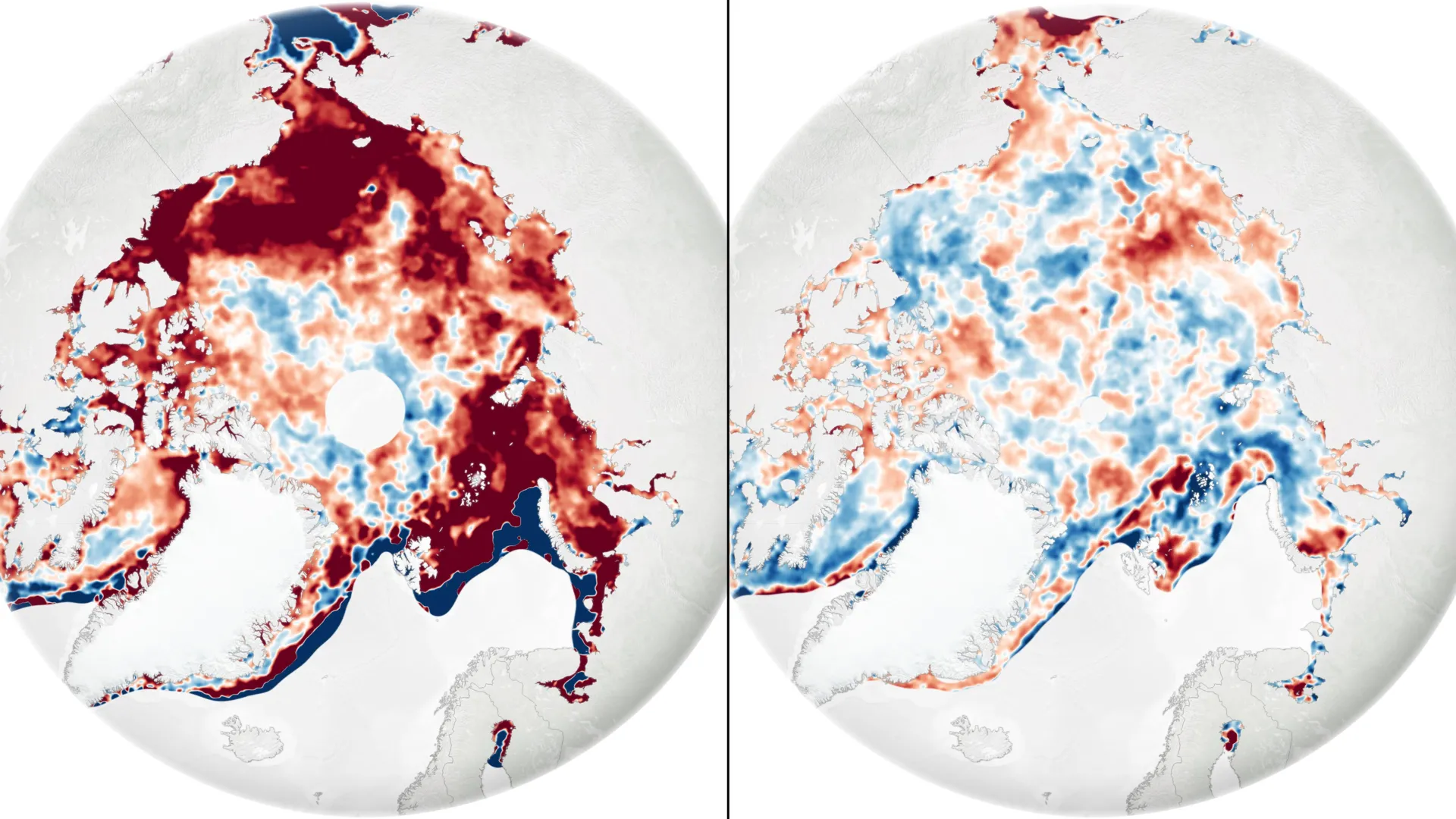
A NASA-led research effort analyzing satellite data from 1979 through 2023 has documented a significant shift in how Arctic sea ice responds to warming conditions. The study found that the annual melt season—measured from spring thaw to autumn freeze-up—has lengthened by approximately 40 days compared to conditions at the beginning of the satellite record. However, the rate of expansion slowed dramatically around 2010, with the average melt season duration remaining relatively stable over the following years despite continued year-to-year variability.
The lengthening of the melt season through the early 2000s resulted primarily from delayed autumn freeze-up rather than substantially earlier spring melting. As sea ice cover diminished, darker ocean water replaced bright ice that reflects solar radiation. This exposed ocean absorbed more heat, postponing the refreezing process and extending the period when melting could occur. The effect was most pronounced in certain Arctic regions, where the melt season expanded by as much as 5 days per year during the 2000s.
Since approximately 2010, the character of Arctic sea ice has undergone fundamental changes that appear to have altered the dynamics of seasonal melting. Modern Arctic ice is predominantly younger and thinner than the multiyear ice that historically dominated the region. This thinner ice proves more susceptible to disruption from atmospheric variability, including shifts in cloud cover, storm patterns, and wind conditions. Research indicates that changes in cloud patterns have reduced solar radiation reaching certain Arctic Ocean areas in recent years, a factor that appears to have counterbalanced other warming influences.
The stabilization of melt season length does not indicate a pause in Arctic climate change. The region continues warming at roughly four times the global average rate, and surviving sea ice remains considerably thinner than in previous decades. Scientists attribute the recent plateau to a transition where atmospheric conditions exert greater influence over seasonal melt timing than the gradual ice loss that dominated earlier decades. Researchers emphasize that this stabilization may prove temporary if remaining thick ice around Greenland and the Canadian Arctic Archipelago continues thinning, potentially triggering another phase of rapid seasonal changes.
Article Attribution | Read More at Article Source
Article summary produced by Claude AI