

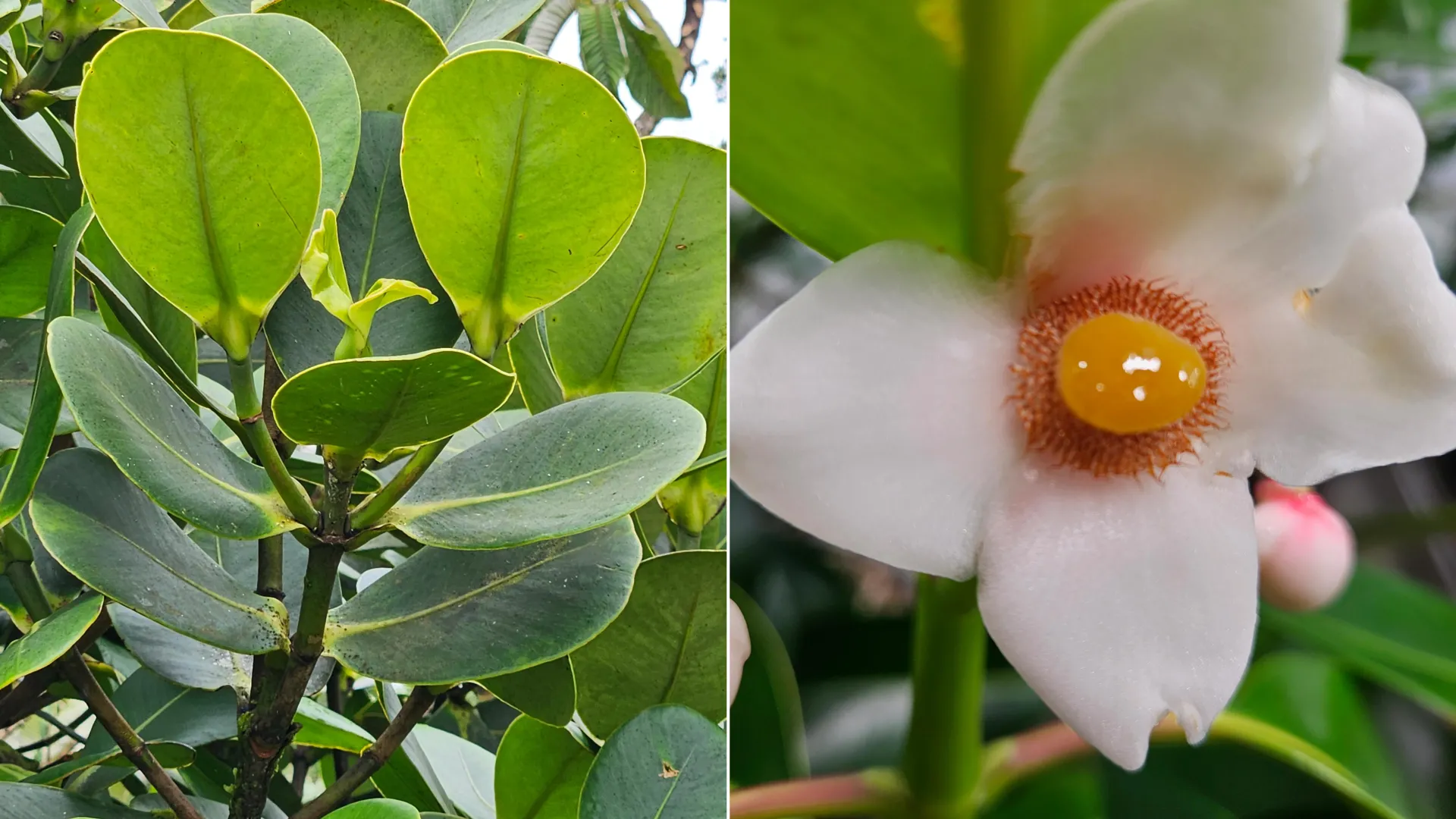
Scientists led by Wolfram Weckwerth at the University of Vienna have identified the genetic mechanisms behind the evolution of CAM photosynthesis in tropical trees of the genus Clusia. The research, published in Nature Communications, reveals how ancient genome multiplication followed by extensive reorganization produced different forms of this water-efficient photosynthetic pathway.
The investigation began with a historical observation made around 1800 by Alexander von Humboldt, who noticed that certain tropical tree leaves did not produce oxygen bubbles in sunlight despite being submerged in water. This unusual behavior stems from the plants’ adapted daily cycle: their stomata remain closed during daylight hours to minimize water loss, while the plants absorb carbon dioxide at night and store it chemically as malic acid. This process, termed CAM photosynthesis or Crassulacean Acid Metabolism, represents a significant departure from conventional daytime carbon dioxide uptake, though scientists have long understood the mechanism’s function.
To understand how this adaptation evolved within Clusia species, researchers analyzed genomes from three species displaying different photosynthetic strategies: Clusia rosea, Clusia minor, and Clusia major. The analysis revealed that all three species are ancient polyploids whose genomes underwent multiplication followed by extensive reorganization over millions of years. During this process, gene copies were lost, deactivated, or acquired new functions, particularly those governing nocturnal carbon dioxide storage essential to CAM metabolism.
Physiological monitoring conducted under controlled greenhouse conditions with varying water availability demonstrated remarkable diversity in how the three species employ CAM. Clusia rosea utilizes strong CAM with substantial nighttime malic acid storage, Clusia minor activates CAM primarily during stress conditions, and Clusia major employs a hybrid approach combining conventional and CAM photosynthesis. These physiological differences correlated directly with patterns of gene activity and metabolic processes, establishing connections between genomic changes and observable plant behavior.
The findings indicate that CAM evolution in Clusia resulted from multiple rounds of genomic reorganization rather than a single evolutionary event. Because CAM plants require substantially less water than species relying on conventional photosynthesis, the genetic insights could inform development of climate-resilient crops better suited to arid conditions.
Article Attribution | Read More at Article Source
Article summary produced by Claude AI