

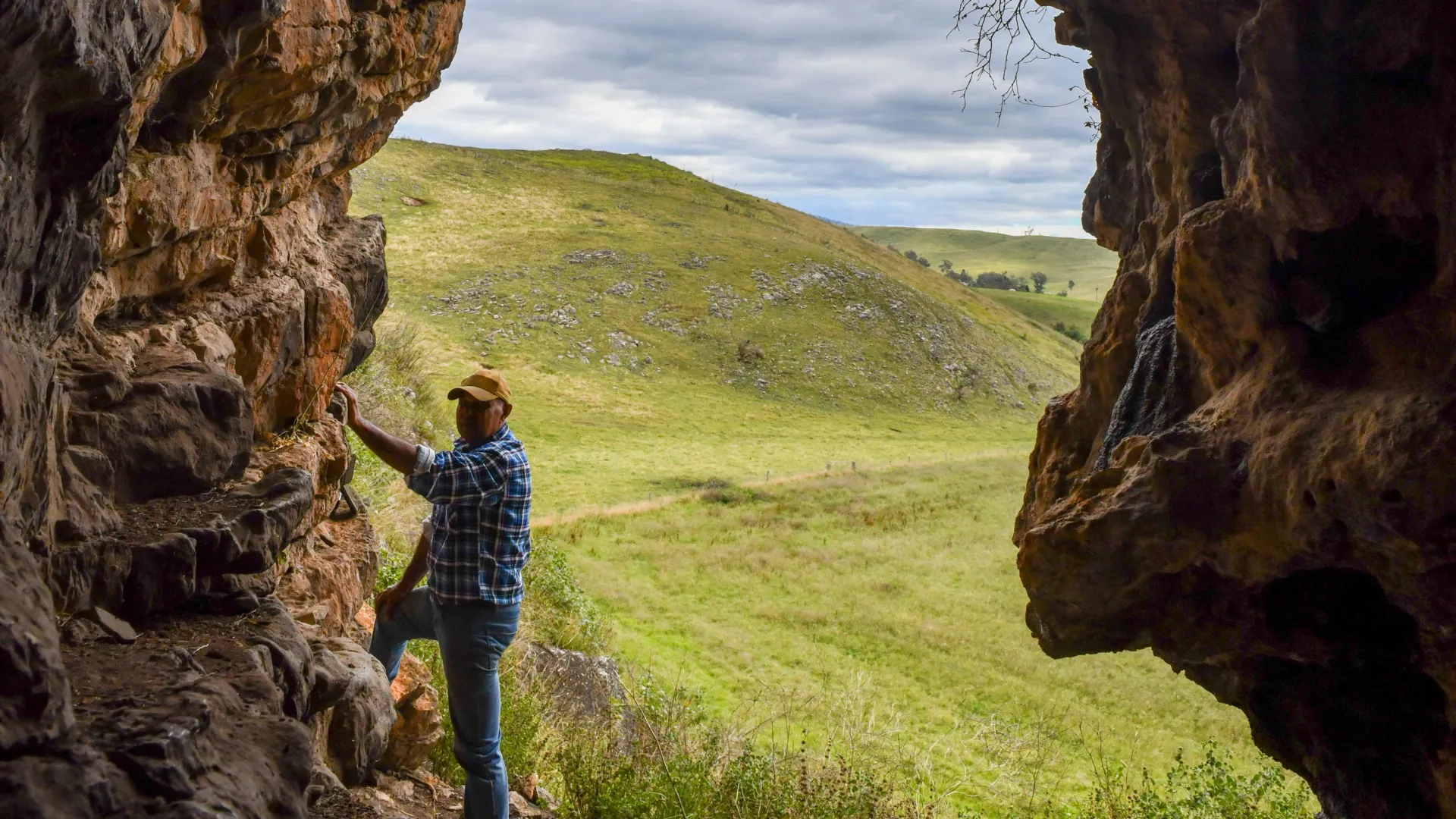
Cloggs Cave in Gippsland has yielded archaeological evidence demonstrating continuous ritual activity by the GunaiKurnai people over approximately 25,000 years. The site is recognized as having been used by spiritual practitioners known as ‘mulla-mullung’ for ceremonies involving healing, magic, and other ritual purposes, according to historical accounts and oral traditions passed down by the GunaiKurnai, the traditional custodians of the region.
Researchers from Australian and international institutions analyzed phytoliths—microscopic silica structures from plant tissues—extracted from excavated sediments. Because the cave’s interior darkness prevents plant growth, any vegetation found at the site must have been deliberately transported there by humans or animals. The research team focused on burnt phytoliths from ash layers, as these could only have arrived through human action. The excavations were conducted in 2019 and 2020 at the request of the GunaiKurnai Land and Waters Corporation, with community members involved throughout the research process.
The analysis identified approximately 29 varieties of grasses, herbs, and woody plants represented in the deposits. Grass phytoliths comprised up to 97 percent of samples, including types that favor cool conditions alongside those adapted to warmer environments. Significantly, the botanical remains differed markedly from surrounding landscape vegetation, suggesting deliberate selection rather than opportunistic gathering. Whole plants including non-edible portions were transported into the cave, indicating intentional preparation.
The upper excavation sections contained 73 distinct ash layers deposited between approximately 4,400 and 1,600 years ago, dated using optically stimulated luminescence and accelerator mass spectrometry. Approximately 18 percent of phytoliths showed evidence of burning or melting, distributed throughout the dated sequence. A standing stone 28 centimeters high was discovered among the layers and determined to have been placed intentionally around 2,000 years ago for ritual purposes. Additional macro-botanical remains, including modified wooden sticks, were found in deeper deposits, suggesting diverse ritual practices employing different plant materials across the millennia.
Article Attribution | Read More at Article Source
Article summary produced by Claude AI