

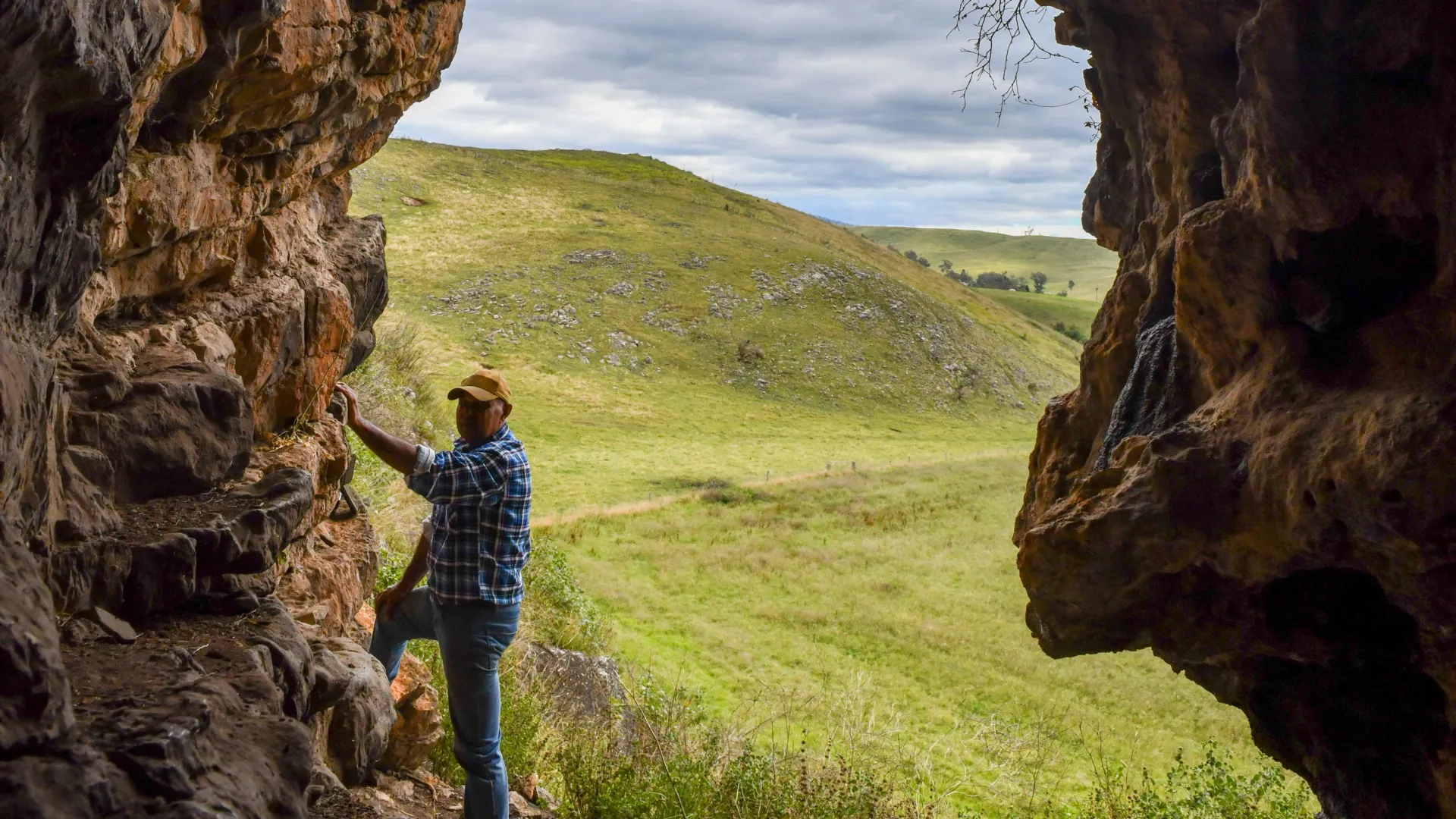
Cloggs Cave, located within lands traditionally custodied by the GunaiKurnai Aboriginal nation in Gippsland and the southern Victorian Alps, has yielded archaeological evidence of sustained ritual activity spanning approximately 25,000 years. Historical accounts and oral traditions describe such caves as sites where spiritual practitioners known as ‘mulla-mullung’ conducted rituals involving magic, healing, and other ceremonial practices.
Researchers from Australia, France, and New Zealand analyzed microscopic silica structures called phytoliths recovered from sediment layers within the cave. Phytoliths are remnants that persist long after plant material has decomposed. The investigation arose from excavations conducted in 2019 and 2020, which were undertaken at the request of the GunaiKurnai Land and Waters Corporation, with community representatives participating throughout the research process.
The phytolith analysis identified evidence of deliberately carried plant material spanning multiple millennia. Within the upper sections of excavation pits, researchers documented 73 distinct ash layers deposited between approximately 4,400 and 1,600 years ago. Dating was established through optically stimulated luminescence and accelerator mass spectrometry. Among these layers, a standing stone measuring 28 centimeters in height was found to have been intentionally positioned for ritual purposes around 2,000 years ago.
The vegetation brought into the cave appeared carefully selected rather than randomly gathered. Researchers identified 29 different types of phytoliths representing various plant species, with grass remains comprising as much as 97 percent of samples. The composition included grasses from temperate and warm-climate varieties, while plants naturally abundant in surrounding landscapes were largely absent from the deposits. Approximately 18 percent of phytoliths exhibited signs of burning or melting, occurring throughout the dated sequence and suggesting repeated cycles of intentional burning across millennia.
The findings align with documented GunaiKurnai practices involving ash for magical and ritual purposes, as well as evidence of ceremonial use of wooden materials recovered from deeper archaeological layers. The pattern of evidence indicates Cloggs Cave functioned as a sustained ritual site rather than an ordinary habitation location throughout its extensive archaeological history.
Article Attribution | Read More at Article Source
Article summary produced by Claude AI