

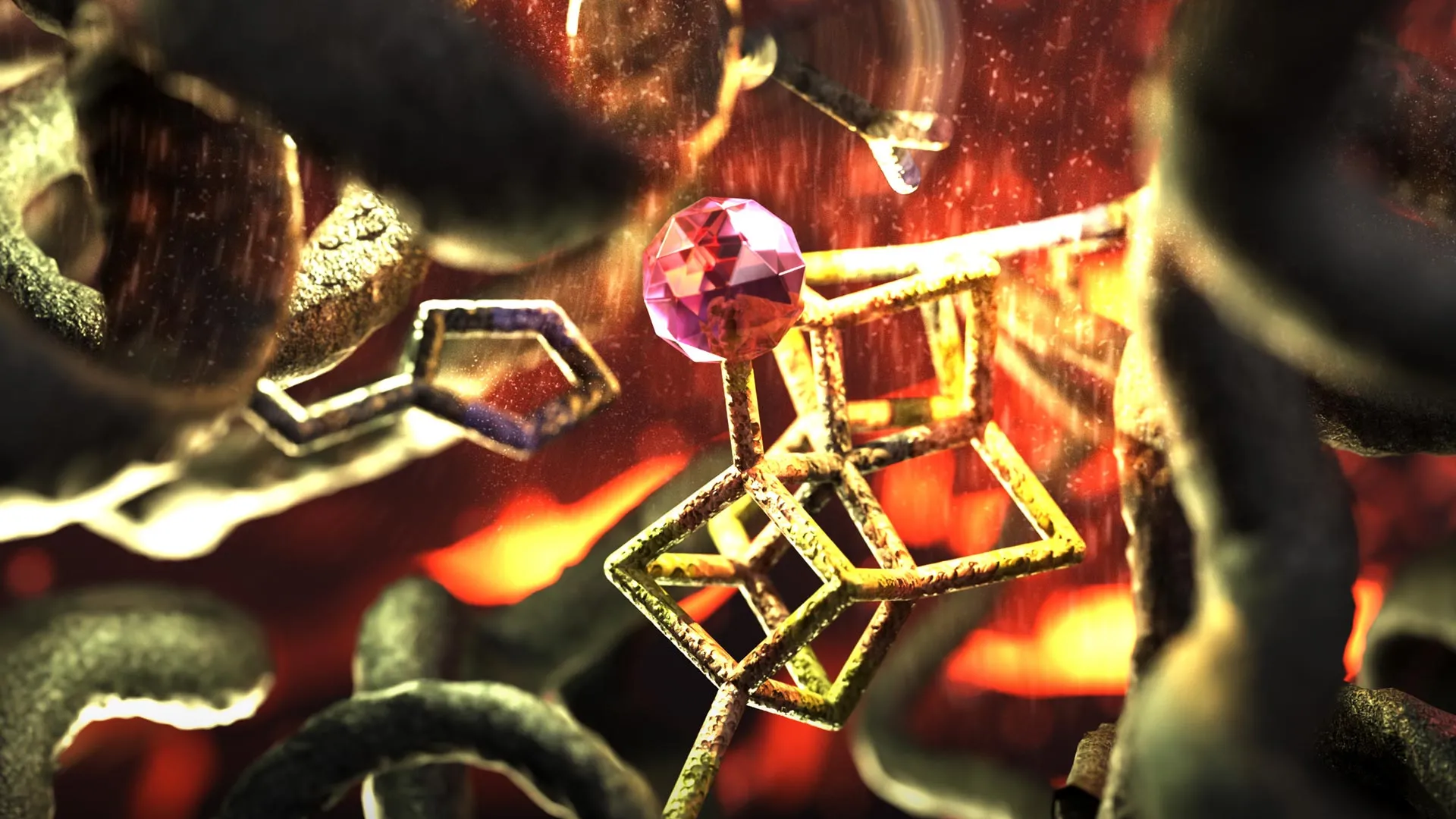
Researchers at the Max Planck Institute for Marine Microbiology have characterized an enzyme called nitrogenase from the deep-sea archaeon Methanocaldococcus infernus, an organism that thrives in volcanic marine environments where temperatures exceed the boiling point of water. The team successfully cultivated the microorganism in laboratory conditions and studied how it accomplishes nitrogen fixation under extreme heat, a process essential for converting atmospheric nitrogen into usable biological forms.
The nitrogenase enzyme proved remarkably heat-stable, remaining partially intact at temperatures up to 98°C, in contrast to most proteins that would denature under such conditions. The enzyme is notable for containing a molybdenum-based metallocofactor, a metal-containing helper molecule crucial for enzyme function. Notably, the archaeal nitrogenase displayed structural features characteristic of all three major nitrogenase families, suggesting it may resemble ancient ancestral forms of the enzyme from which modern versions evolved.
Using X-ray crystallography at a synchrotron facility in France, the research team determined the enzyme’s molecular structure at near-atomic resolution while maintaining strictly oxygen-free conditions required to preserve the metallocofactor. The analysis revealed an unexpected molecular state previously observed only in vanadium and iron-based nitrogenases, indicating that different nitrogenase variants may employ a shared fundamental mechanism for breaking the nitrogen molecule’s extremely strong triple bond.
The findings have potential applications in biotechnology and agriculture. Deep-sea microorganisms like this archaeon may serve as biological systems for converting gases into useful products such as methane and ammonia. Understanding nitrogen fixation could eventually enable crops to obtain nitrogen directly from the atmosphere, potentially reducing agriculture’s dependence on industrial fertilizers produced through energy-intensive processes that generate significant greenhouse gas emissions.
Article Attribution | Read More at Article Source
Article summary produced by Claude AI