

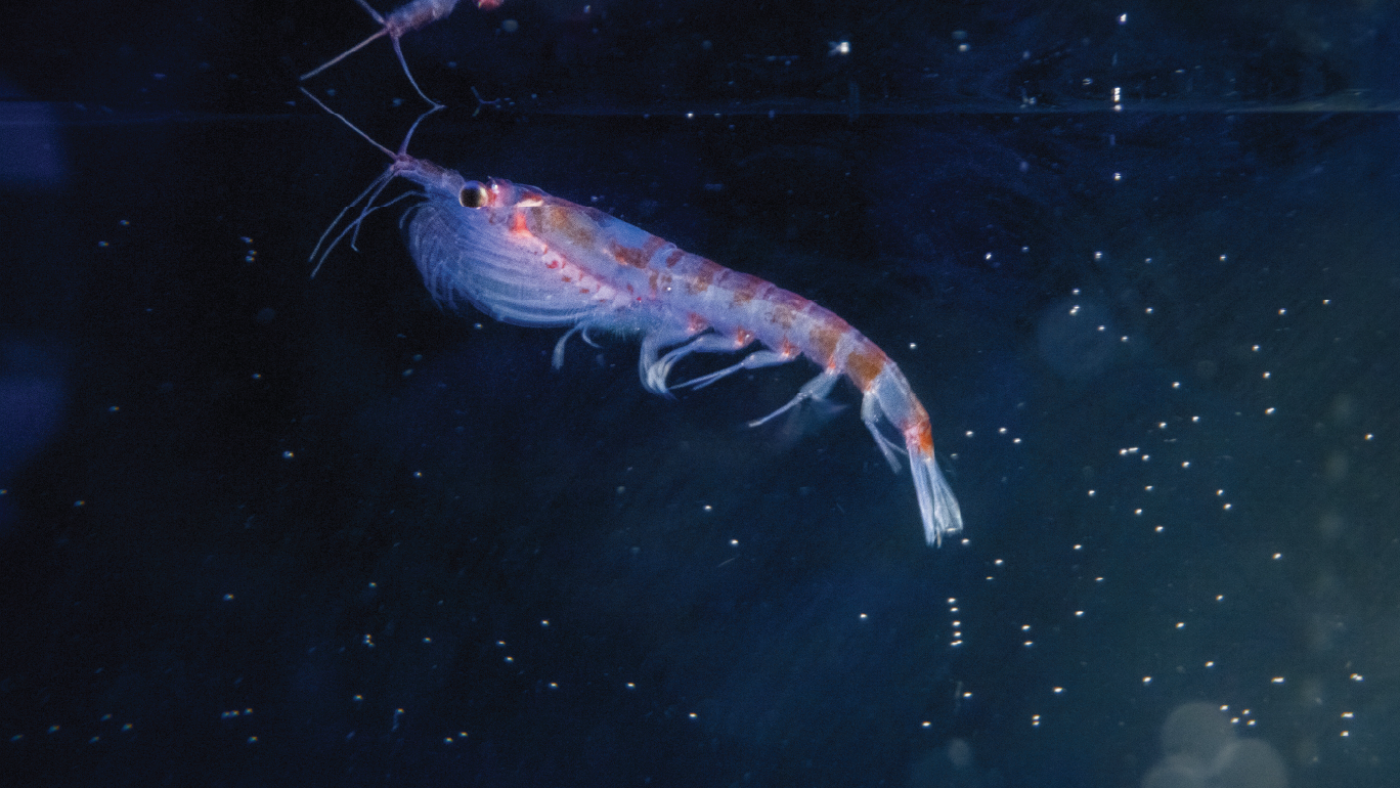
Researchers have documented Antarctic krill at a hydrothermal vent located approximately 3,600 feet below the surface in Bransfield Strait off the Antarctic Peninsula, marking the first known observation of the species at such a location. The discovery occurred during the National Geographic and Rolex Perpetual Planet Southern Ocean Expedition in collaboration with the Schmidt Ocean Institute in late 2024.
Antarctic krill are fundamental to the Southern Ocean ecosystem, serving as the primary food source for penguins, seals, whales, and other marine species. These shrimp-like crustaceans also play a vital role in nutrient cycling that supports phytoplankton growth. The species faces mounting pressures from climate change, as the Southern Ocean is warming rapidly, which is affecting krill populations and cascading through the food web.
Biological oceanographer Kim Bernard and her team observed four reproductive female krill at the hydrothermal vent, all heavily laden with eggs. The females appeared to be feeding on microbes living near the vent, a food source available year-round unlike seasonal phytoplankton. The krill had accumulated higher levels of manganese, a mineral scarce in the Southern Ocean but important for embryo development in crustaceans. The warmer waters near the vent may also accelerate embryo development.
The discovery raises significant questions about deep-sea environments’ role in krill reproduction. Given the energy required for krill to reach such depths and their exposure to potentially toxic heavy metals like cadmium, barium, and lead, the presence of reproductive females suggests the hydrothermal vent environment offers substantial benefits. Understanding this newly identified habitat may inform conservation strategies for these crucial organisms as the Southern Ocean continues to experience environmental changes.
Article Attribution | Read More at Article Source
Article summary produced by Claude AI