

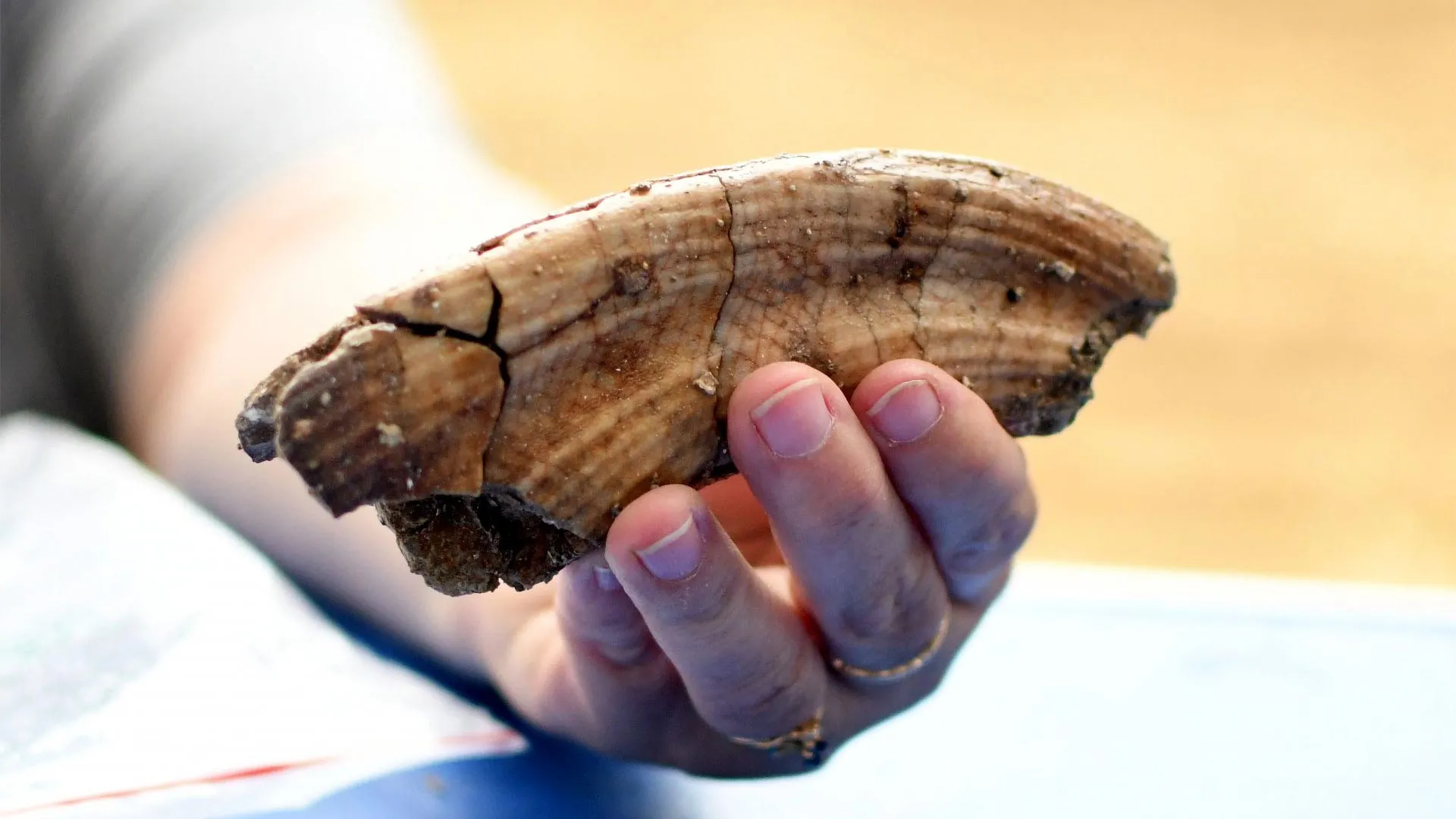
Researchers have established a revised chronology for the ‘Ubeidiya archaeological site in the Jordan Valley, determining that it dates back at least 1.9 million years. The study was conducted by a team led by researchers from the Hebrew University of Jerusalem, the University of Haifa, and the University of Tulsa. This dating places the site among the earliest known locations of human activity outside Africa, alongside Dmanisi in Georgia.
The team employed three complementary dating techniques to establish the site’s age more reliably than previous estimates, which had ranged between 1.2 million and 1.6 million years old. The first method, cosmogenic isotope burial dating, measures the decay of rare isotopes formed by cosmic rays in rocks that have been underground. The second approach analyzed the magnetic field orientation preserved in lake sediments, comparing these records to known magnetic reversals to determine when deposits formed during the Matuyama Chron, which began more than two million years ago. The third technique used uranium-lead dating of fossilized freshwater snail shells to establish a minimum age for the geological layers containing stone tools.
The ‘Ubeidiya Formation has long attracted scientific attention due to its evidence of Acheulean stone tool technology, characterized by large tools shaped on both sides including hand axes. The site also contains a rich collection of animal fossils representing species originally found in Africa and Asia, including several extinct species. The new findings suggest that ancient human populations carrying different stone tool traditions had already spread into the Levant region during a critical period of early human expansion.
The researchers encountered an unexpected complication during their analysis, with initial cosmogenic isotope measurements suggesting some rocks were approximately three million years old. Investigation revealed that sediments in the area had undergone a complex history of repeated deposition, burial, and movement within the Dead Sea rift. Material had been buried long before being transported and redeposited near the ancient lake at ‘Ubeidiya, meaning some geological records extended further into the past than the archaeological layers themselves. By accounting for this sediment recycling, the team reconciled the conflicting measurements and confirmed the site’s revised age as at least 1.9 million years old.
Article Attribution | Read More at Article Source
Article summary produced by Claude AI