

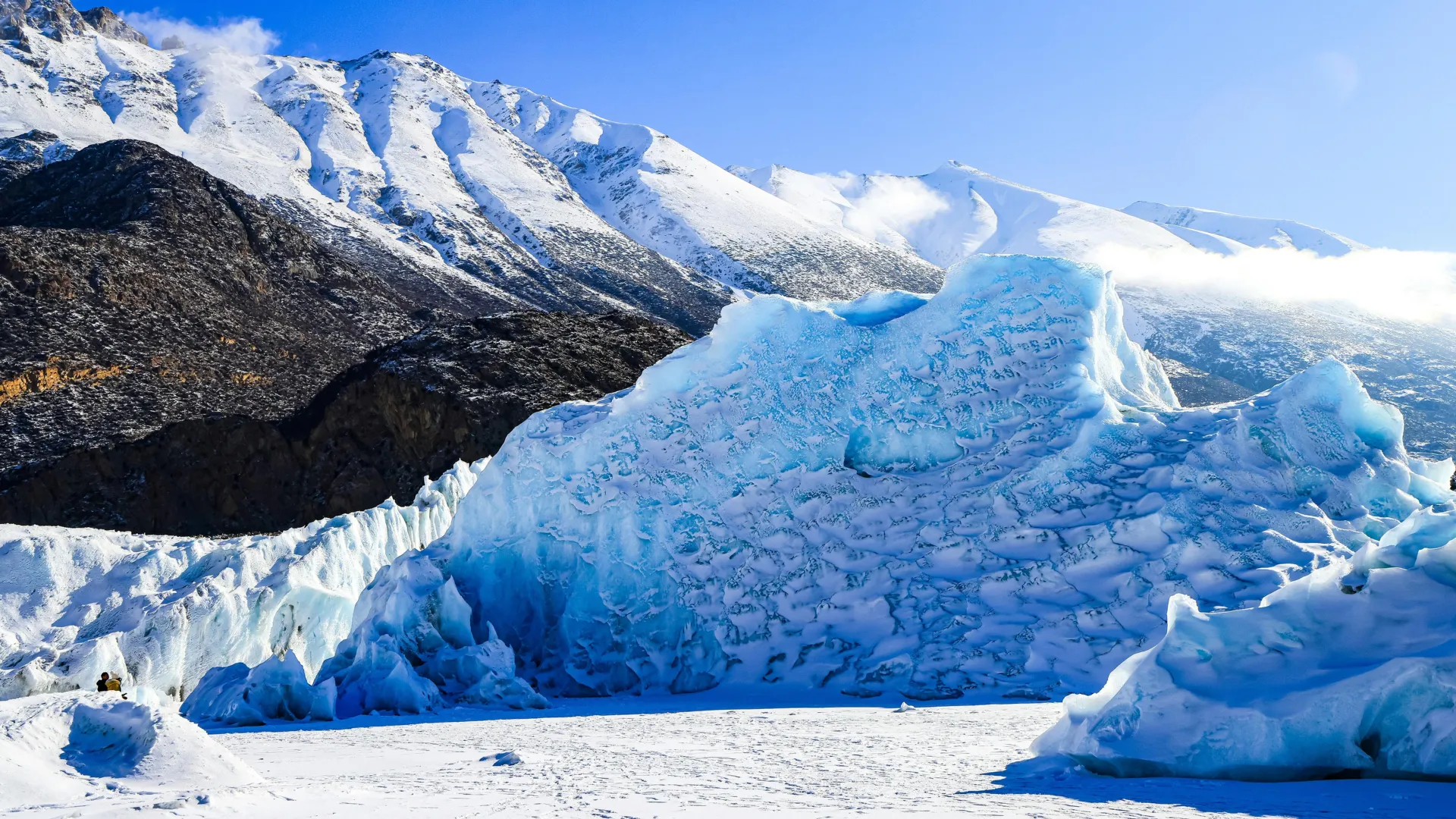
Researchers examining ice cores from the Guliya Plateau in northwestern Tibet have identified evidence suggesting the ice may date back more than 128,000 years, significantly extending the known climate record from the region. The discovery was made through analysis of samples collected in 1992 and 2015, which displayed remarkably similar patterns of oxygen isotopes despite being drilled more than two decades apart. This consistency indicates the ice has preserved a reliable record of past environmental conditions.
To determine the age of the ancient ice, the international research team employed advanced dating techniques using radioactive isotopes of beryllium and chlorine, which decay at predictable rates. Scientists identified evidence of the Leschamp Geomagnetic Excursion, a significant disturbance in Earth’s magnetic field occurring more than 41,000 years ago that left distinctive chemical signatures in the ice. The findings were corroborated by comparisons with oxygen isotope records found in nearby Tibetan cave deposits, strengthening the case for ice extending well beyond 128,000 years into the past.
Previous research had suggested the Guliya ice cap’s record reached only to the middle of the Holocene epoch, which began nearly 12,000 years ago following the last ice age. The new evidence establishes that at least some ice is considerably older, indicating that large ice masses in Tibet persisted as the planet transitioned from the last glacial period. The ice cap’s high elevation and surrounding geography likely contributed to conditions that allowed ancient ice to survive major environmental changes.
The revised timeline creates opportunities for more detailed investigation of the ice cores and offers potential to answer fundamental questions about Earth’s glacial history. Understanding when major periods of glaciation began, their duration, and when ice retreated is essential for reconstructing the planet’s natural climate cycles. Researchers plan to study additional samples to determine how other indicators of past climate fit into this extended history, potentially revealing information previously overlooked due to uncertainty about the ice’s age. The findings were published in Science Advances with support from the U.S. National Science Foundation.
Article Attribution | Read More at Article Source
Article summary produced by Claude AI