

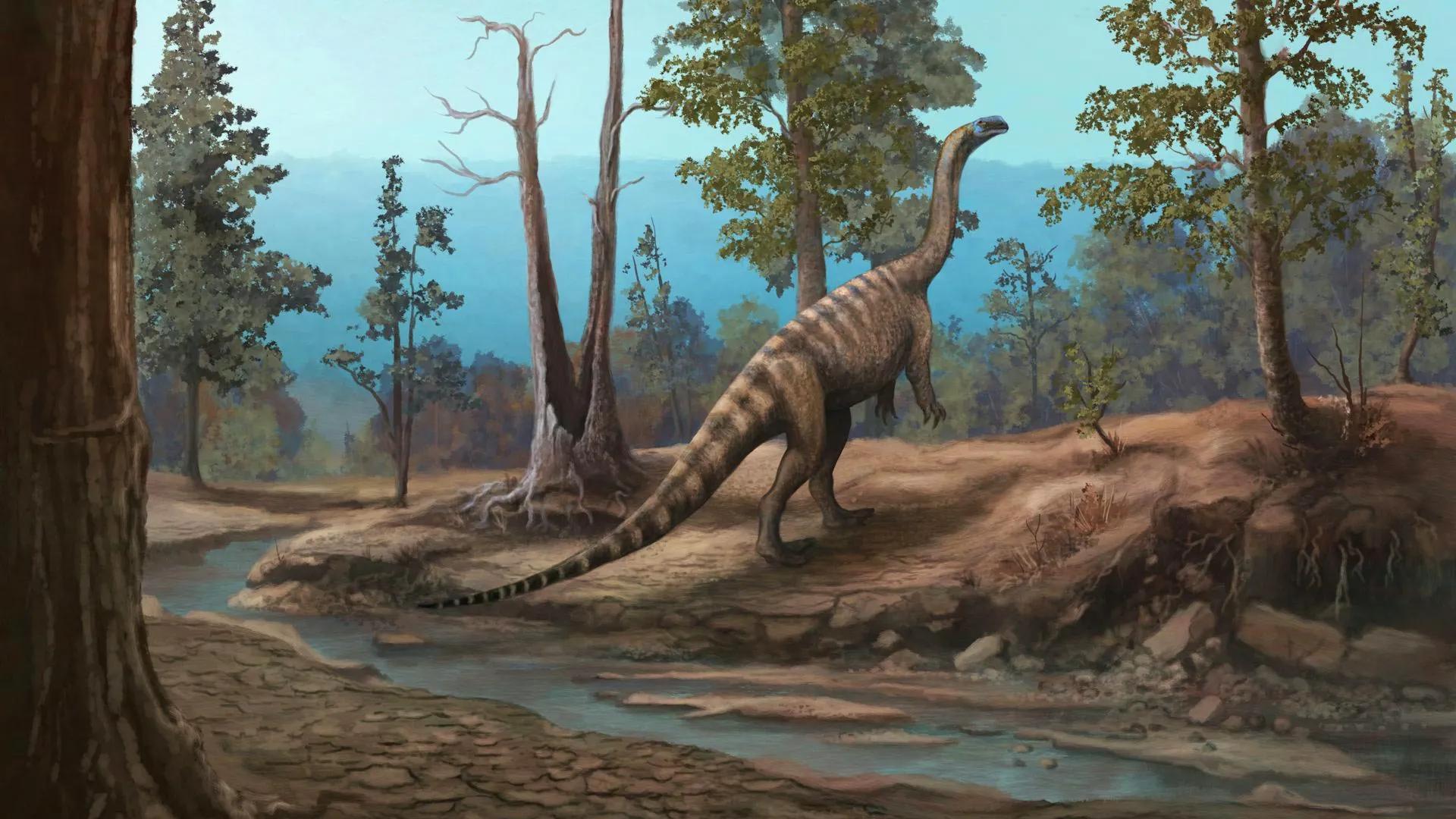
Researchers have identified a previously unknown sauropodomorph dinosaur species, Musango matusadonaensis, from fossil beds along the Nyamasango River in Zimbabwe, dating back approximately 210 million years to the Late Triassic period. The incomplete skeleton was recovered from brick-red mudstones and sandstones that formed from ancient river deposits. Analysis indicates the animal was bipedal, measured about 4.5 meters in length, weighed 220 kilograms, and had not yet reached full adulthood at the time of death.
The discovery emerged from expeditions conducted in 2017 and 2018 to sites within Matusadona National Park along Lake Kariba, the artificial lake forming much of the border between Zimbabwe and Zambia. Researchers utilized Kariba houseboats as mobile bases to access and prospect the shoreline locations. The team included collaborators from South African, Zimbabwean, and UK institutions, coordinated by paleontologist Jonah Choiniere of the University of the Witwatersrand.
Significantly, the new findings challenge earlier assumptions about Zimbabwean dinosaurs. Previous scientific work had classified these fossils as extensions of South African faunas, but detailed analysis reveals the Zimbabwean specimens represent distinct species not found in neighboring regions. This pattern extends to other fossil animals recovered from the same deposits, including lungfish and aquatic reptiles called phytosaurs, which are rare or absent at South African sites.
Paleontologists hypothesize that climatic differences may explain the regional variation in dinosaur species. Zimbabwe’s position further north and closer to the equator during the Triassic period may have created environmental conditions that supported different animal communities. Researchers plan additional expeditions to collect more fossils and geological data to refine comparisons with other early dinosaur sites and better understand these evolutionary patterns.
Article Attribution | Read More at Article Source
Article summary produced by Claude AI