

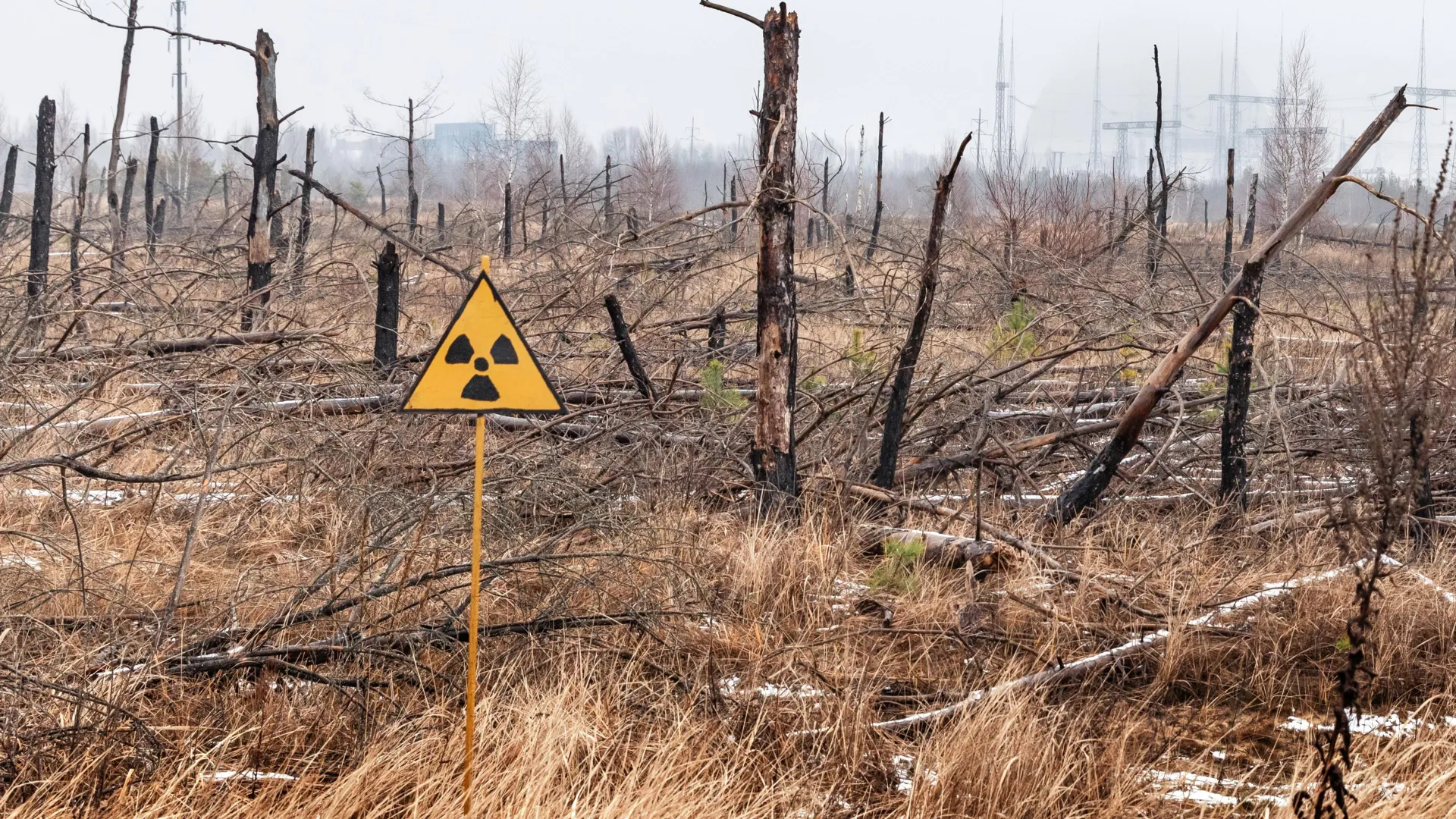
More than four decades after the Chernobyl nuclear disaster, researchers have conducted unprecedented structural analysis of radioactive particles that remain scattered throughout the surrounding soil. The initial explosions released enormous quantities of debris, and microscopic particles measuring 8 to 50 micrometers continue to pose health risks to anyone entering affected areas. Scientists from Leibniz University Hannover and the Helmholtz-Zentrum Dresden-Rossendorf identified three distinct classes of particles based on their composition and formation during the reactor failure.
The first category consists of particles chemically similar to uranium dioxide nuclear fuel. The second category formed when nuclear fuel melted and combined with zirconium, a highly resistant metal used in the fuel’s protective outer layer. The third type emerged when the reactor’s graphite moderator caught fire and the fuel oxidized into uranium oxides such as U3O8. Unlike more stable materials, uranium oxide is mechanically fragile and can break apart into microscopic fragments that wind can carry through the environment, presenting serious health hazards if inhaled.
Using advanced synchrotron X-ray diffraction technology at the Rossendorf Beamline in Grenoble, researchers conducted the first successful structural analysis of radioactive fragments from the region. Scientists examined six particles recovered from Chornobyl soil samples by rotating them in a focused X-ray beam and measuring reflections from 2,000 different angles. The analysis revealed that despite spending four decades in the environment, the nuclear fuel inside the examined particles retained much of its original crystal structure, suggesting greater chemical stability than previously expected.
However, researchers caution that these findings have significant limitations. The study involved only six particles from two locations, too small a sample to establish how radioactive particles behave throughout the entire contaminated region. Individual particles differ in composition, structure, and resistance to weathering, meaning some could release radioactive materials much later than others. Scientists emphasize that the findings do not indicate Chornobyl’s contamination is becoming harmless or that exclusion zone restrictions can be removed soon.
Further research continues into the disaster’s enduring consequences, with scientists already conducting additional experiments on highly radioactive transuranic phases in remaining debris. Understanding how Chornobyl’s nuclear materials change over time and how long their environmental effects persist remains crucial for assessing future contamination and health risks in the region.
Article Attribution | Read More at Article Source
Article summary produced by Claude AI