

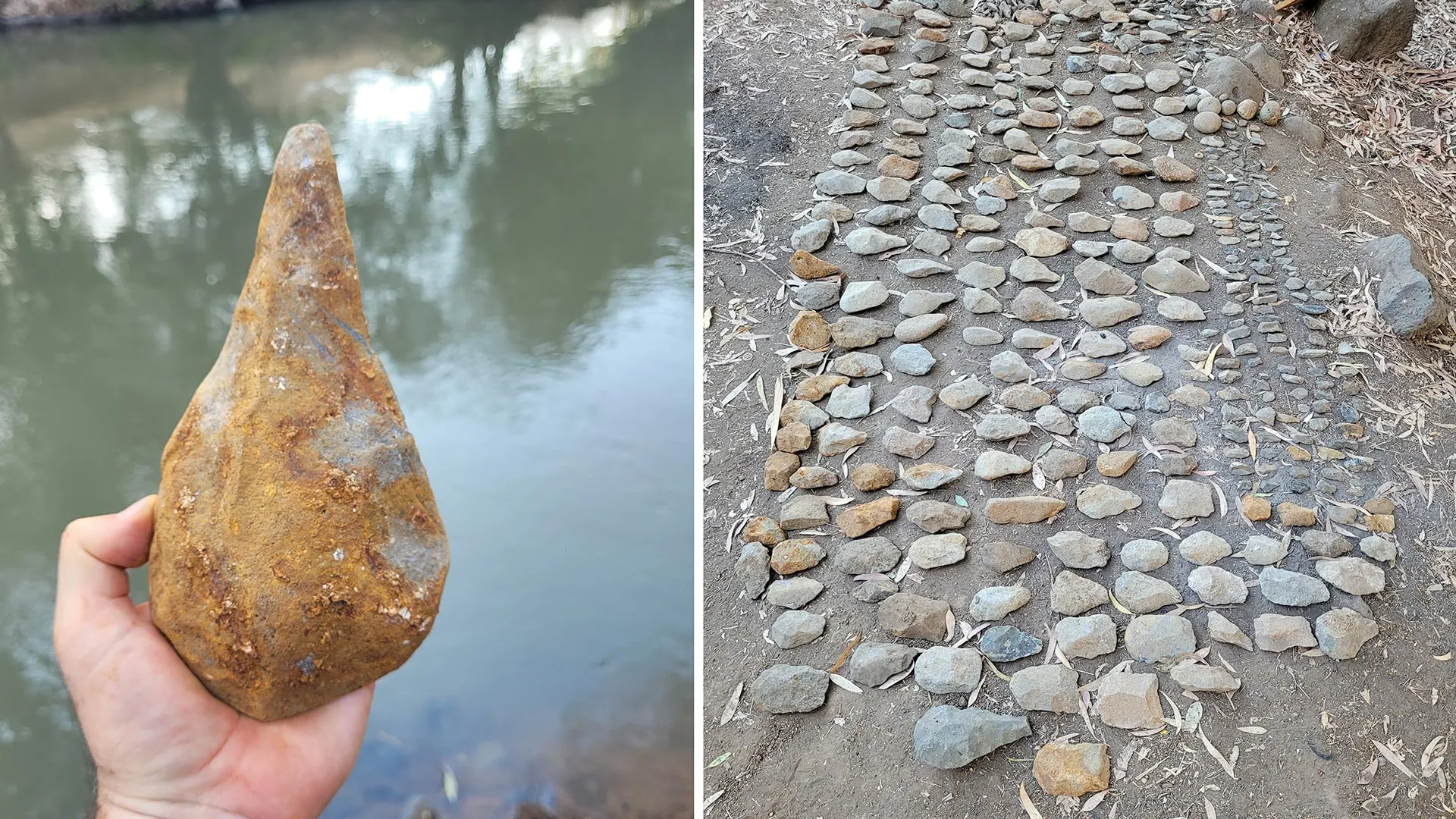
Researchers have analyzed an ancient elephant tooth discovered at an archaeological site in northern Israel to gain insights into environmental conditions from approximately 700,000 years ago. The fossil, belonging to a straight-tusked elephant known as Palaeoloxodon antiquus, was found at Gesher Benot Ya’aqov in the Jordan Rift Valley alongside stone tools crafted by early humans. The discovery was led by Hannah Farrell, a doctoral candidate at Haifa University, with the site excavated by Prof. Gonen Sharon of Tel-Hai University.
The research team employed multiple scientific methods to extract environmental information from the tooth. These techniques included computed tomography scans, three-dimensional reconstruction, microscopic analysis of wear patterns, isotope geochemistry, and pollen examination. The internal structure of the fossil and chemical measurements revealed details about the elephant’s diet and habitat, while pollen preserved in surrounding sediments provided additional ecological data.
The analysis indicated that the region hosted a diverse landscape featuring woodlands, grasslands, marshes, and flowing rivers with consistent water availability. Carbon isotope measurements supported evidence of dependable water sources, while pollen samples identified wetland vegetation such as reeds, sedges, willows, tamarisk, and aquatic plants. These findings suggest the area could sustain both large animal populations and early human communities.
The location holds particular significance as it sits within the Levantine Corridor, a natural passage connecting Africa and Eurasia that facilitated movements of ancient humans and animals. The researchers propose that the region functioned as an ecological refuge with stable habitats and resources over extended periods. Access to water, vegetation, and wildlife in such environments would have been critical for human populations migrating through unfamiliar territories. The study was published in Quaternary Science Reviews and included collaborators from multiple Israeli universities specializing in isotope studies, archaeozoology, and palynology.
Article Attribution | Read More at Article Source
Article summary produced by Claude AI