

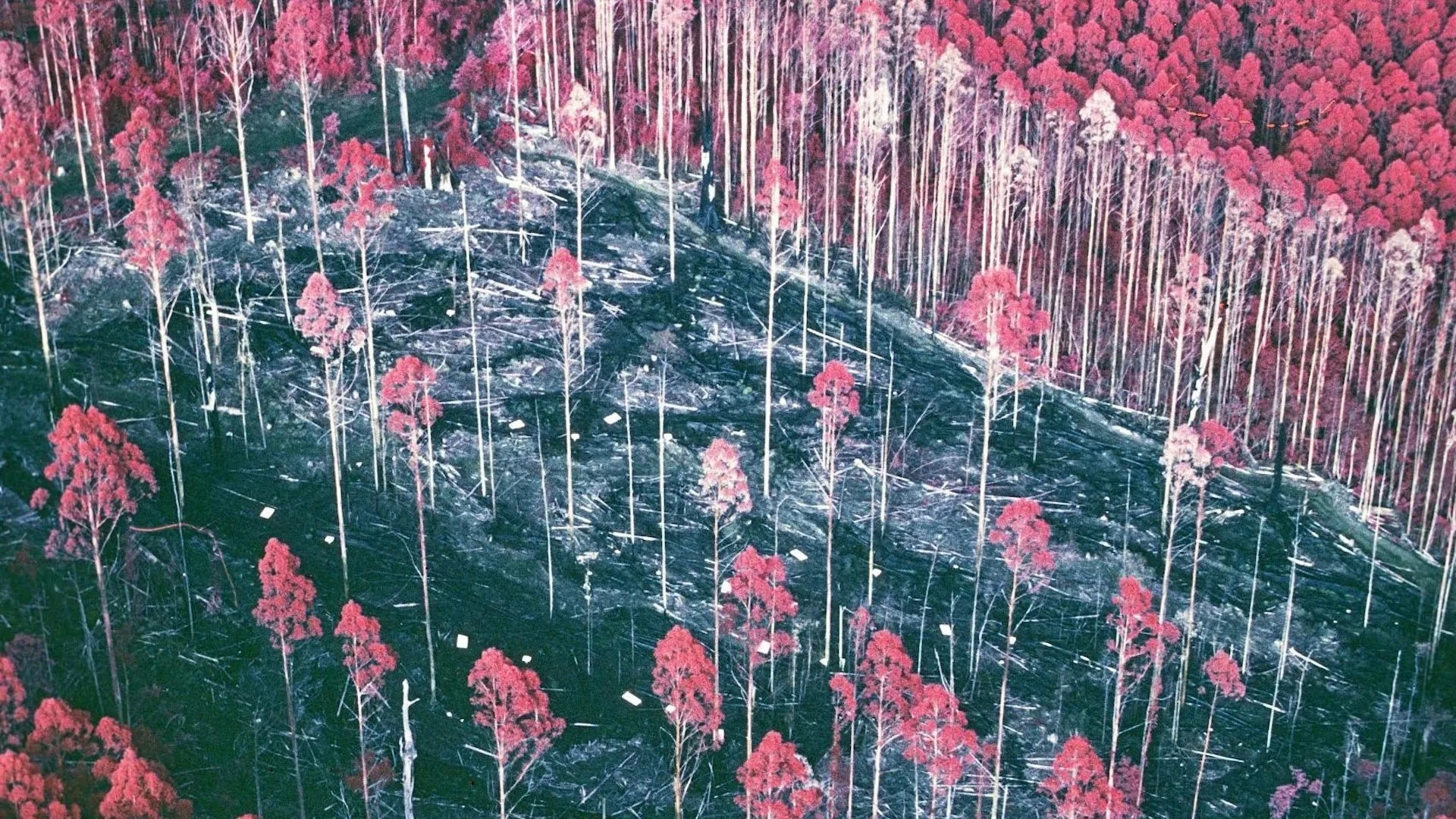
Researchers recently revisited a landmark forestry experiment established in Victoria’s mountain ash forests between 1987 and 1989, finding unexpected long-term results that could reshape forest management debates in Australia. The Silvicultural Systems Project was initially launched by the Victorian government in the mid-1980s as part of a major timber industry restructure, investing the equivalent of A$26 million to explore alternatives to clearfelling—a controversial practice where entire forest blocks are harvested at once.
The original study compared various forestry approaches across two sites: traditional clearfells, small patch clearfells, and heavy thinning operations where 50-70% of trees were removed. Results published in the early 2000s showed that mountain ash regenerated most effectively in clearfelled areas, leading most observers to conclude the experiment had resolved the debate in favor of traditional logging practices. The project site was subsequently neglected and largely forgotten as discussions about forest management continued without resolution.
When researchers revisited Tanjil Bren in 2014, they discovered remarkable developments in the heavily thinned forest sections. Trees left standing after thinning had grown to exceptional sizes, with the largest specimens averaging over one meter in diameter—approximately 20% larger than trees in unharvested control areas. More significantly, these thinned stands had accumulated as much or more carbon in their wood as the untouched forest areas, having fully recovered carbon removed during harvesting and matched the growth gains seen in protected forests.
The findings carry substantial ecological implications. Larger trees demonstrate greater fire resistance and are more likely to develop hollows used by endangered species including greater gliders and Leadbeater’s possums. Wildlife surveys documented possums in every treated plot, contrasting with their absence in unharvested areas. Acacia species that grew in thinned sections proved particularly valuable as forage and movement corridors for these animals.
Researchers emphasize three key conclusions: long-term forest experiments provide irreplaceable data that risks being lost to neglect; selective thinning challenges the traditional conservation-versus-production dichotomy by potentially delivering wood resources, carbon storage, and habitat benefits simultaneously; and no single management approach serves all forest management objectives universally.
Article Attribution | Read More at Article Source
Article summary produced by Claude AI