

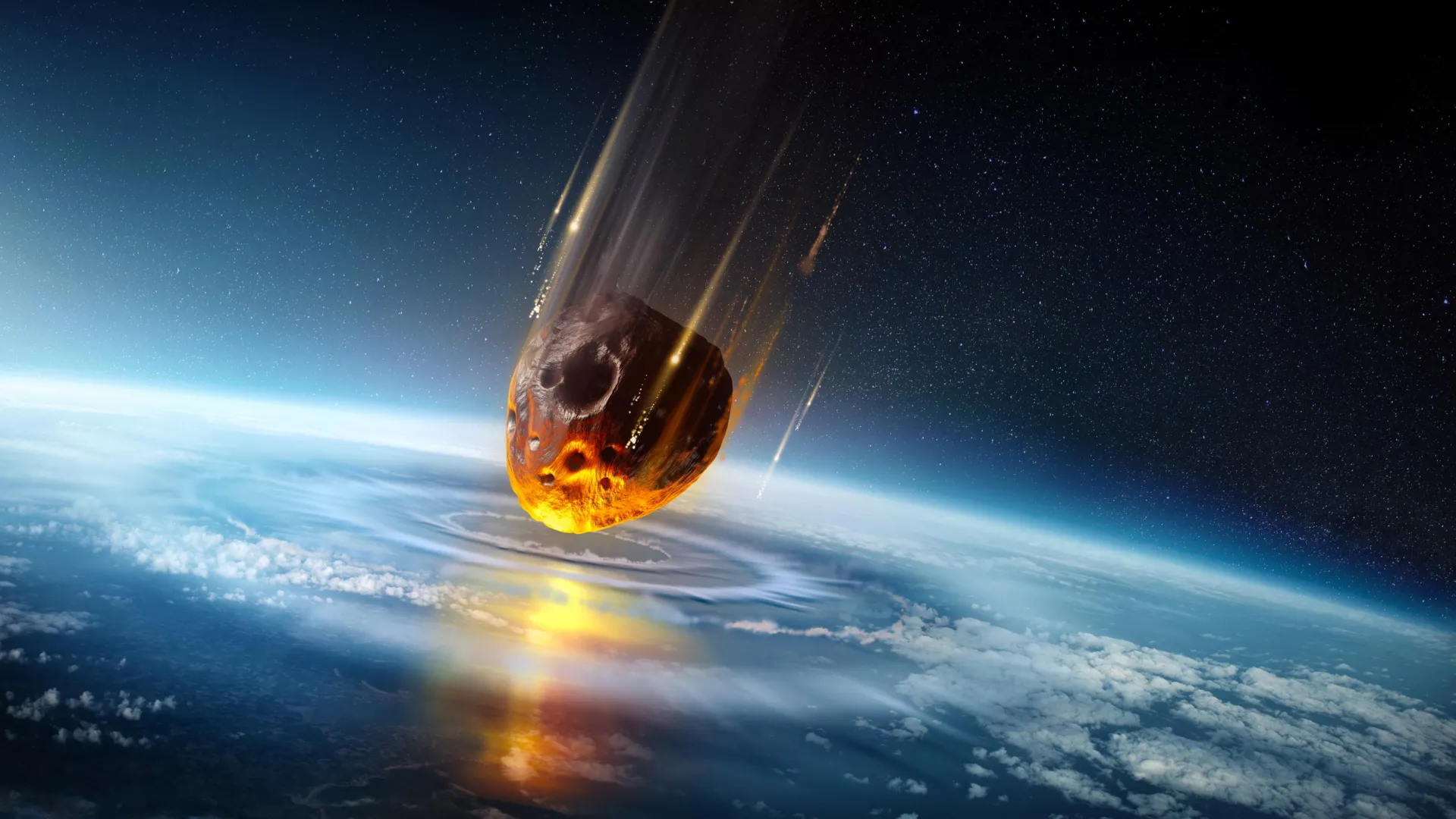
Researchers at the University of Texas at Austin have reassessed the timing of a significant meteor impact at the Ames crater structure, located beneath the town of Ames, Oklahoma. This geological formation, which extends miles underground and serves as a major producer of oil and gas, has long been studied by scientists for its role in Earth’s history.
For many years, the Ames impact structure was classified alongside other major meteor impacts across North America thought to have occurred around 467.5 million years ago during a period known as the Ordovician Meteor Event. This clustering of impact structures led some researchers to theorize that Earth may have been surrounded by a Saturn-like ring of asteroid debris during that era. However, new research has fundamentally altered this understanding of the crater’s age and significance.
Using advanced dating techniques focused on zircon crystals extracted from granite that was altered by the impact, the research team determined that the meteorite actually struck approximately 370 million years ago during the Late Devonian period. This finding places the impact nearly 100 million years younger than earlier estimates. The earlier dating had been based on biological evidence, specifically teeth from ancient eel-like organisms called conodonts that were preserved in the rock. Researchers now believe these fossils were already millions of years old when the asteroid struck, having been churned up from older material and mixed into the rock layers during the impact.
The revised timeline suggests that the Ames impact may instead be connected to the Frasnian-Famennian mass extinction event, which occurred roughly 372 million years ago and resulted in significant loss of marine life. This connection could provide new insights into the relationship between extraterrestrial impacts and extinction events. The research team verified their findings using NASA imaging technologies, including catholuminescence and electron backscatter diffraction, to confirm that the zircon crystals bore the distinctive structural changes characteristic of impact events.
Scientists involved in the project emphasize that establishing more precise dates for major geological and biological events is critical for understanding how Earth’s environment and life have evolved. Understanding whether extinction events were primarily triggered by space-based forces such as meteor impacts or by internal Earth processes like volcanic activity remains an important scientific question.
Article Attribution | Read More at Article Source
Article summary produced by Claude AI