

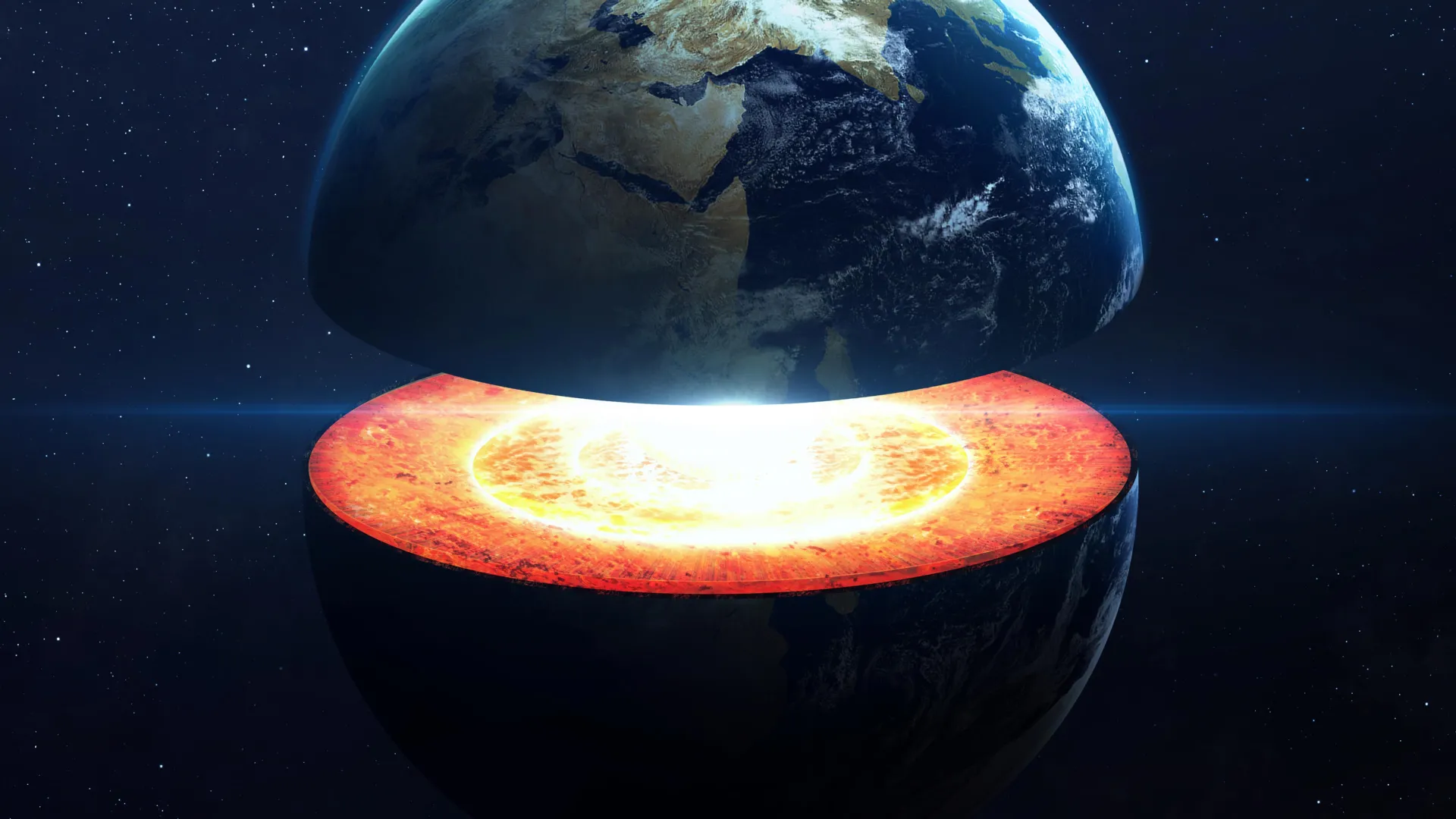
An international research team led by Göttingen University examined an eclogite rock specimen from Papua New Guinea to understand conditions deep within Earth’s subduction zones. The rock was pushed approximately 90 kilometers below the surface approximately four million years ago, with researchers using advanced analytical techniques to reconstruct its thermal history by studying microscopic crystals trapped within it.
The analysis revealed an unexpected temperature pattern as the rock descended. At roughly 45 kilometers depth, the specimen had already reached approximately 700°C, leaving only about 100°C of warming remaining across the next 45 kilometers of descent. This contradicts standard models, which predict a more consistent rate of temperature increase with depth. The rock first experienced unusually hot conditions at shallower depths before entering a zone with a relatively cooler thermal environment at greater depths.
Researchers identified multiple possible explanations for this anomaly. Tectonic plates may generate substantially more heat through shearing forces at shallow depths than previously understood. Alternatively, the subduction zone may not have existed long enough to develop the cooler temperatures predicted by conventional thermal models. Both mechanisms could have contributed to the observed conditions.
These findings have broader implications for understanding Earth’s geology and climate. Subduction zones drive powerful geological processes including earthquakes and volcanic activity, and they also regulate planetary climate by cycling materials such as carbon dioxide through Earth’s interior over millions of years. More accurate thermal models could improve scientists’ understanding of these critical processes and their effects on the planet’s long-term evolution. The research was supported by the German Research Foundation.
Article Attribution | Read More at Article Source
Article summary produced by Claude AI