

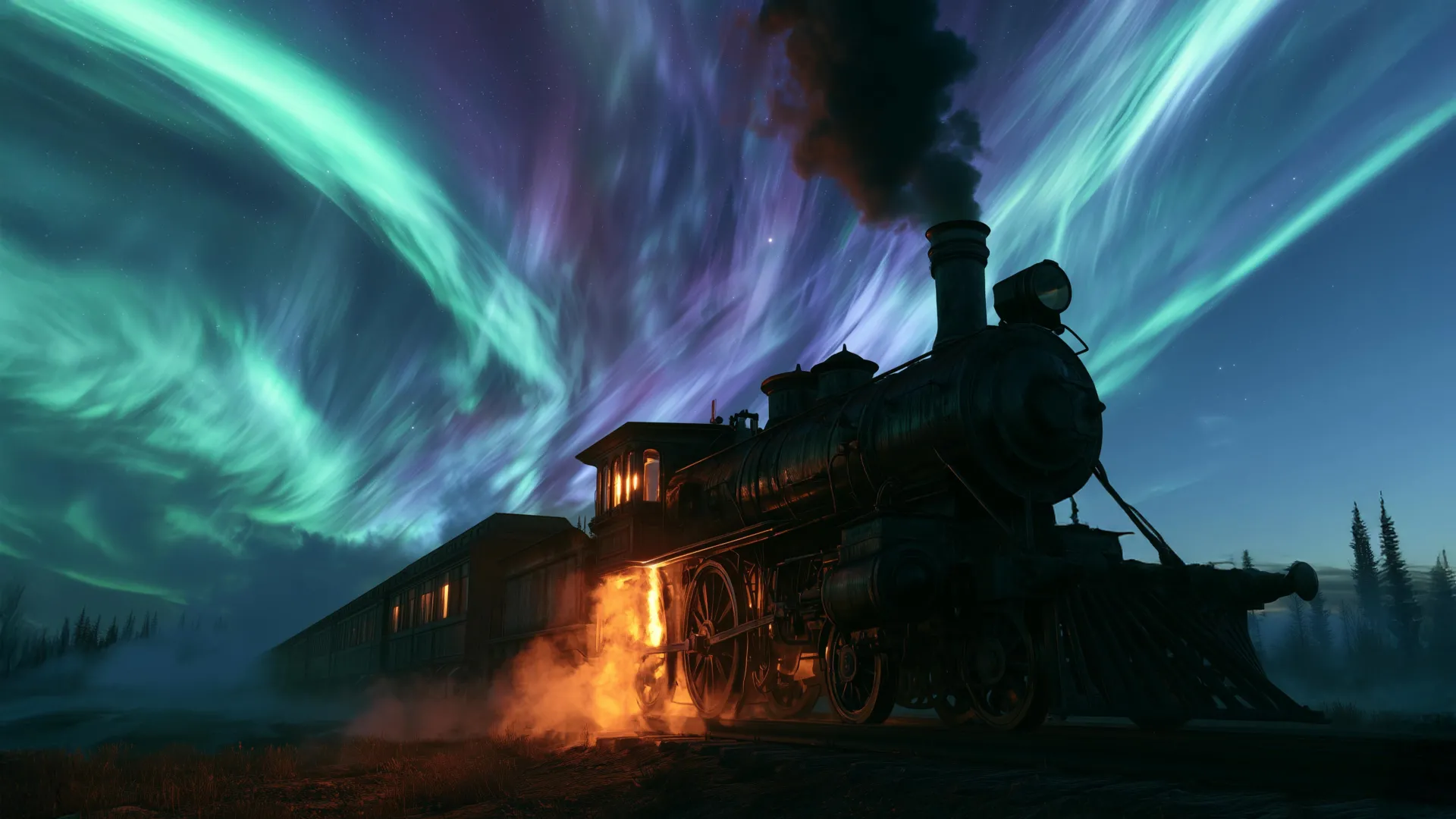
An international research team has resolved a historical mystery surrounding one of the earliest documented cases of solar activity interfering with electrical technology. The investigation centered on a report published in the scientific journal Nature in 1871 describing a magnetic disturbance that allegedly disrupted railway signals in Exeter, England, and delayed a train on October 18, 1841. However, researchers from Lancaster University, RMIT University, the British Geological Survey, Natural Resources Canada, Baylor University, and RAL Space discovered a significant error in the original account.
The key finding emerged when investigators noticed that the Exeter-to-Starcross railway line mentioned in the 1871 report did not actually open until 1846, five years after the supposed incident. This impossibility prompted the team to examine historical archives including railway timetables, newspaper records, solar observations, aurora accounts, and digitized measurements of Earth’s magnetic field. By cross-referencing these sources, researchers determined that the train delay actually occurred on October 18, 1848, exactly seven years later than the published account claimed.
The corrected timeline places the incident during a pivotal period in technological history when electrical communication systems were rapidly expanding across society. While the Exeter disruption remains one of the earliest credible examples of space weather affecting technology, it can no longer claim the distinction of being the first. That record now belongs to an earlier documented incident involving telegraph interference on Britain’s Midland Railway in March 1847. The findings underscore that solar activity disruptions of electrical systems began affecting human infrastructure nearly as long as electrical technologies themselves have existed.
Researchers emphasize that the 1840s marked a critical intersection between the emergence of electrical technology and humanity’s vulnerability to space weather phenomena. The study demonstrates how historical scientific records, when combined with archival materials and contemporary observations, can reconstruct events from the pre-modern monitoring era and provide valuable perspective on long-standing natural hazards affecting society.
Article Attribution | Read More at Article Source
Article summary produced by Claude AI