

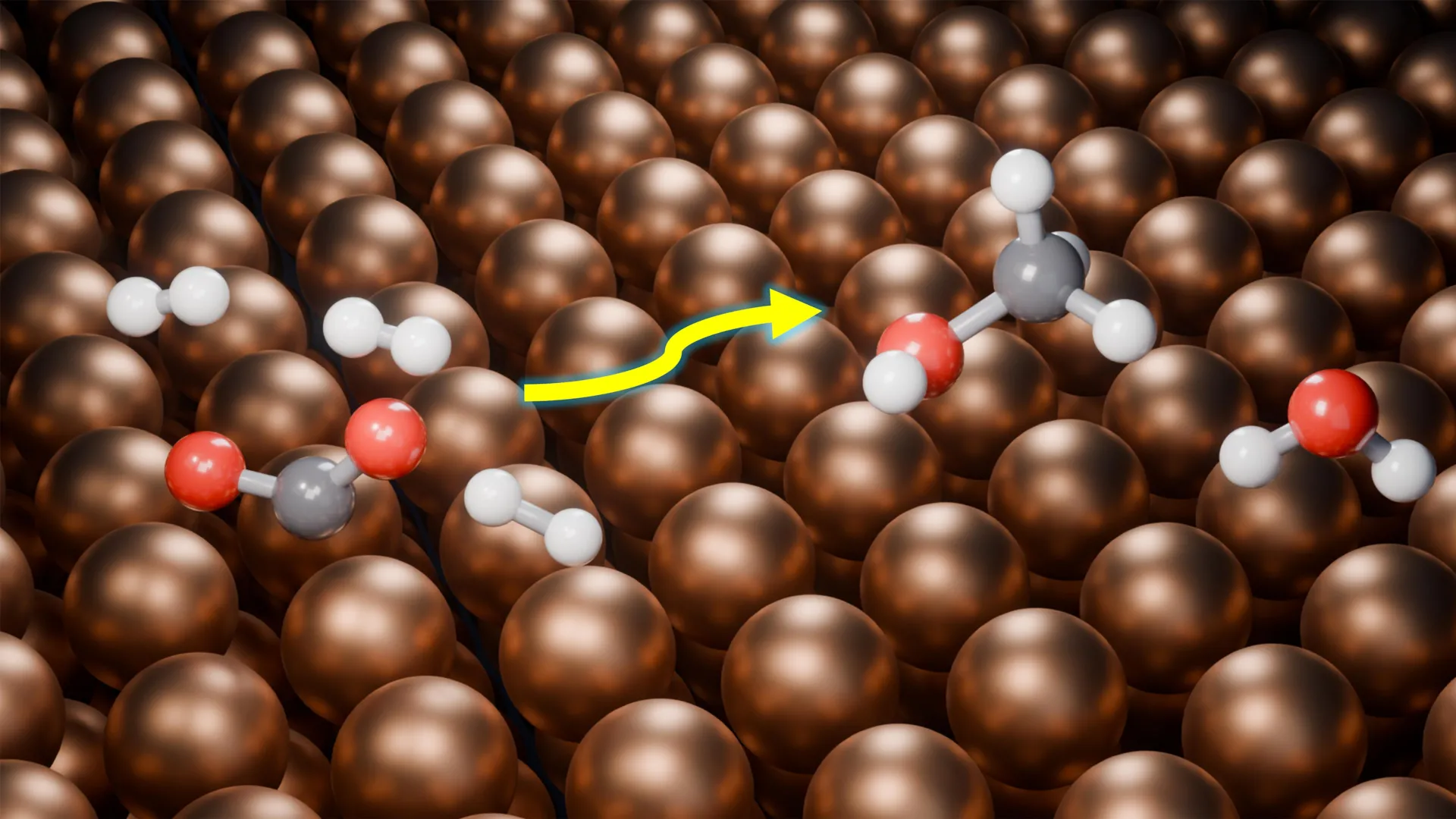
Scientists at the Indian Institute of Science have used machine learning combined with quantum mechanics simulations to discover a vast network of previously overlooked chemical reactions occurring on copper catalysts. The research, detailed in Nature Communications, identified 9,389 individual reactions involved in carbon dioxide conversion, far exceeding the 152 reactions typically considered in conventional modeling approaches.
The conventional approach to simulating CO2 hydrogenation—a process that converts carbon dioxide into valuable chemicals like methanol—faces a significant computational challenge. The reaction network is so complex that researchers have historically focused only on what they believed were the most important steps. The team addressed this limitation by developing machine learning models trained on quantum mechanics data to predict energy barriers for additional reactions. Automated computational tools then systematically examined possible transformations among 105 chemical species on the catalyst surface.
The expanded reaction network produced dramatically different results compared to the original limited model. When using only 152 reactions, the researchers’ model incorrectly predicted formic acid as the primary product and significantly underestimated CO2 conversion rates. Incorporating the full network of 9,389 reactions corrected these predictions, increasing estimated CO2 conversion by approximately 40 times and accurately identifying methanol and carbon monoxide as major products, aligning with experimental observations.
The research also revealed an unexpected chemical mechanism challenging established assumptions about hydrogen’s role in these reactions. Hydrogen can transfer to intermediate compounds as intact molecules rather than only through individual atoms, a pathway that proves particularly favorable when transferring to oxygen-containing intermediates. This finding suggests that developing catalysts with stronger interactions to molecular hydrogen could enhance methanol production pathways.
The researchers indicate their computational framework extends beyond CO2 hydrogenation applications. The integrated approach combining quantum mechanics, machine learning, automated reaction identification, and kinetic modeling could facilitate investigation of other industrial processes including nitrogen reduction and water splitting, offering more complete understanding of complex catalytic reactions.
Article Attribution | Read More at Article Source
Article summary produced by Claude AI