

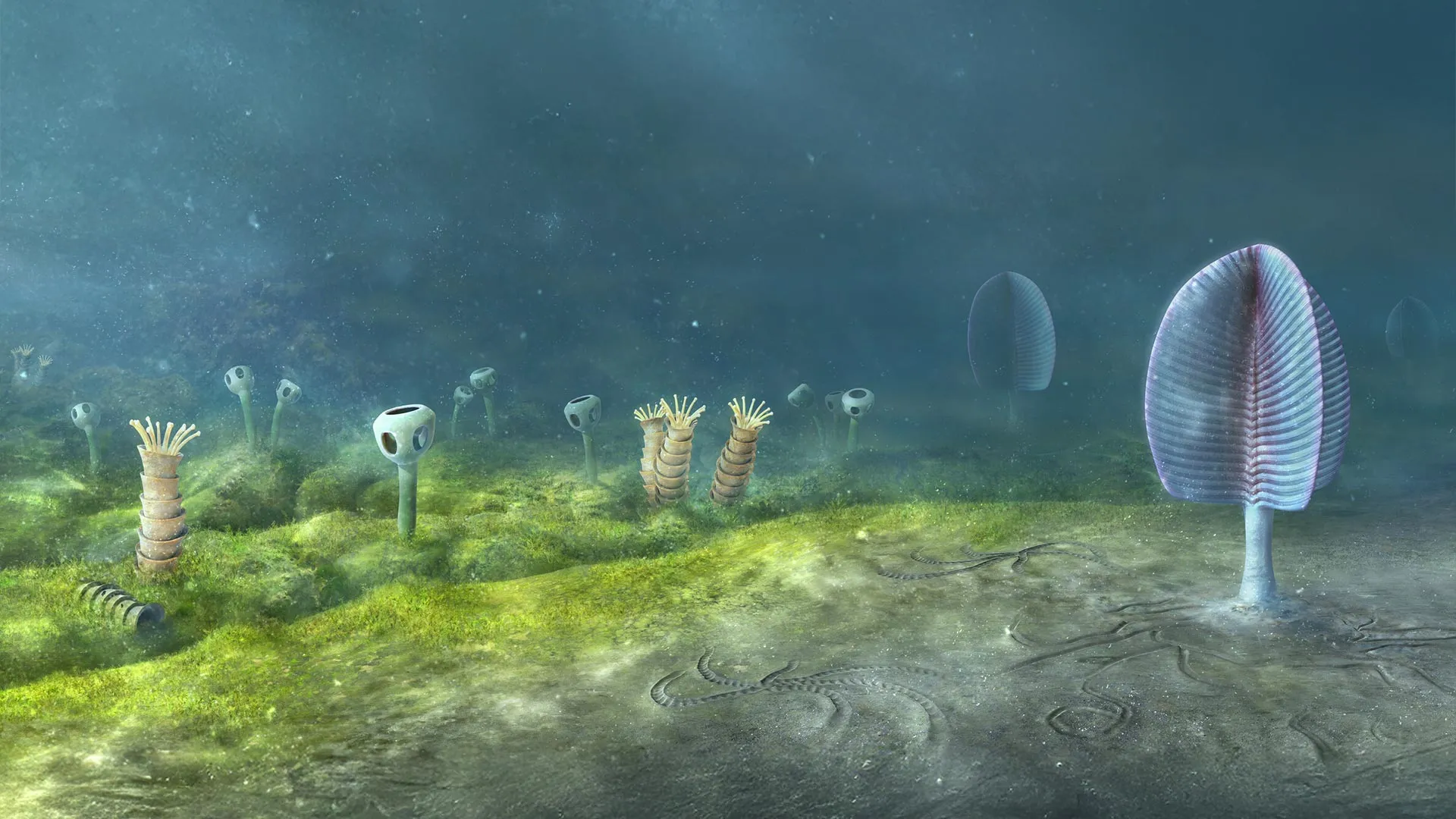
A study led by the University of Oxford, published on October 2 in Science Advances, challenges the conventional timeline for animal evolution on Earth. The research suggests that animals may have originated significantly earlier than indicated by the fossil record, with potential origins dating back to between 800 and 700 million years ago during the Neoproterozoic Era. This finding contradicts existing assumptions about when animal life first emerged.
The research centers on a critical reassessment of how scientists have used fossil deposits to estimate when animals first appeared. The Weng’an Biota in China, a 590 million-year-old fossil deposit, has long served as a key marker because it contains no definitively identified animal fossils. Scientists previously reasoned that if animals had existed at that time, such a well-preserved deposit would contain evidence of them. The international team, including researchers from UC Berkeley, ETH Zürich, and Yale University, examined the Kheseen Biota in Mongolia, which is more than 40 million years younger than Weng’an. Despite exceptional preservation of microfossils at the Kheseen site, no animals were identified there either, yet animals are known to have existed elsewhere by that period. This finding undermines the assumption that the absence of animals from Weng’an proves they had not yet evolved.
The researchers argue that animals may have occupied different environments than those represented in these fossil deposits, or that chemical conditions at these sites were unsuitable for preserving animal remains. Using older fossil deposits dating from approximately 850 to 730 million years ago as constraints, the team conducted molecular clock analysis comparing genetic differences among living species with fossil dates and evolutionary rates. This approach shifted the estimated origin of animals backward by approximately 200 million years.
Additional evidence supporting an earlier origin comes from chemical fossils, or biomarkers, preserved in ancient rocks that suggest sponges may have existed at least 650 million years ago. Early animals would likely have been small and soft-bodied, making fossilization far less probable than for later animals with shells or bones. If animals originated between 800 and 700 million years ago, they may have existed before or during the Cryogenian Period’s extreme ice ages, known as Snowball Earth, potentially reopening questions about environmental influences on animal evolution.
Article Attribution | Read More at Article Source
Article summary produced by Claude AI