

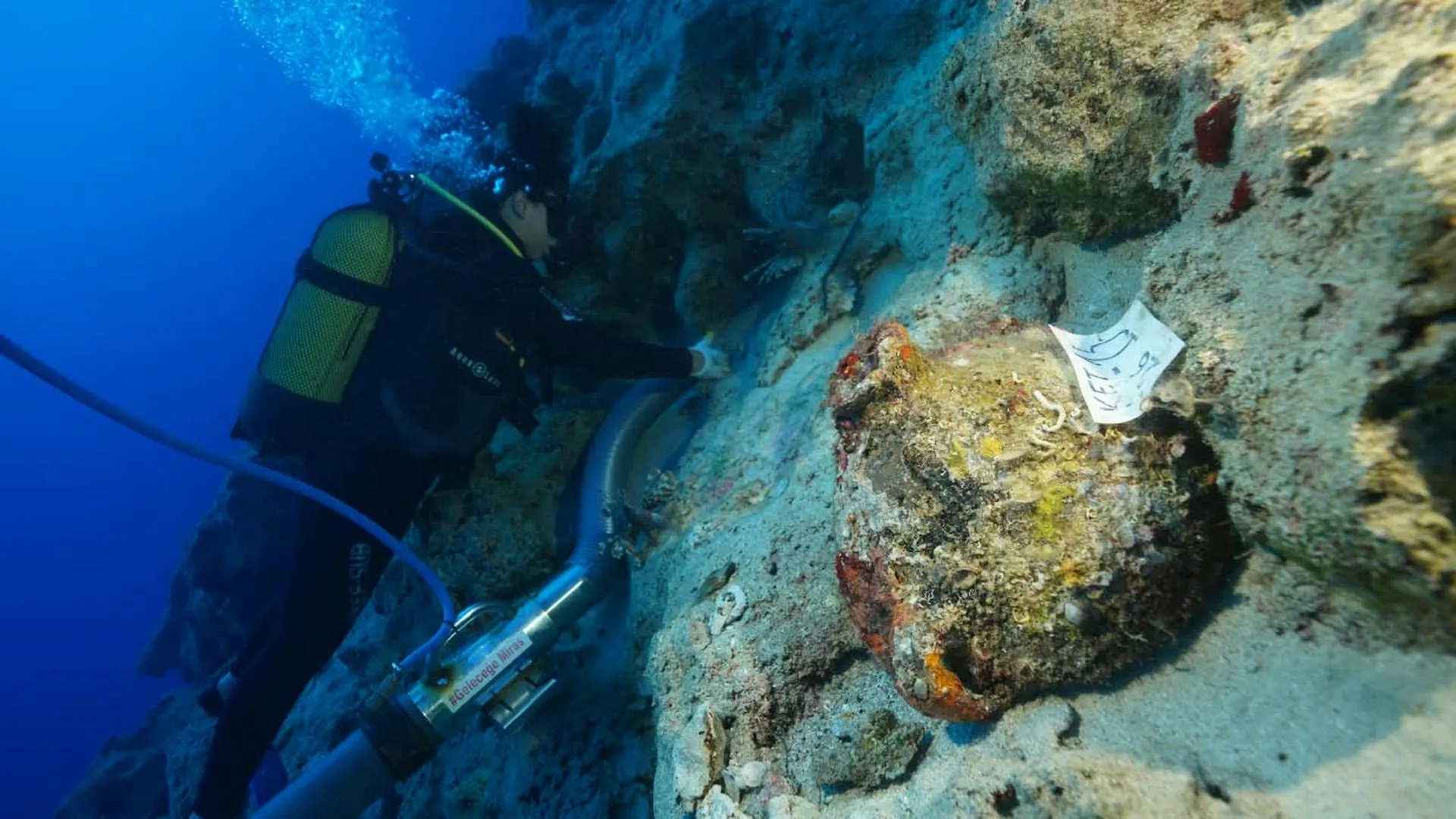
A research team led by Associate Professor Hakan Öniz of Akdeniz University has identified what may be the oldest known shipwreck in the world, discovered in shallow waters off Kekova on Turkey’s southern coast. Based on analysis of pottery vessels and other cargo recovered from the site, the team has provisionally dated the wreck to around 2700–2400 BCE, making it approximately 500 years older than the previously recognized oldest shipwreck, which was located off Dokos, Greece.
The ship itself has largely deteriorated due to prolonged underwater exposure, leaving few physical remains of the vessel’s structure. However, the cargo of ceramic storage vessels known as amphorae provides substantial evidence for dating purposes. The pots are characterized by their large ovoid shape with flat bases, two handles, and a distinctive raised horizontal clay belt around the widest section. Over a four-month period, divers carefully extracted these pottery pieces from the rocky underwater slope where they had become embedded, removing them from layers of barnacles and other marine organisms.
The vessel appears to have been traveling along the southern Turkish coast when it encountered severe weather conditions. Evidence suggests the ship sought shelter in the lee waters between two islands but ultimately struck rocks during what may have been a storm. Analysis of the pottery indicates the cargo likely originated from multiple sources across the eastern Mediterranean, with some of the distinctive belted jars possibly originating from the Central Jordan Valley. Residues visible on the vessel interiors suggest the amphorae may have contained commodities such as olive oil, wine, or tree resin.
The discovery holds significant implications for understanding trade and exchange networks during the third millennium BCE, a period when maritime commerce in the eastern Mediterranean remains comparatively poorly documented. Contemporary historical records indicate that ancient Egypt was actively trading through the port of Byblos in Lebanon during this era, acquiring materials including cedar, tin, oils, tree resins, lapis lazuli, and silver. The Kekova shipwreck may represent evidence of an extended international maritime network that facilitated such trade, though formal conclusions remain pending publication of peer-reviewed research and completion of ongoing scientific analyses of the recovered materials.
Article Attribution | Read More at Article Source
Article summary produced by Claude AI