

An international team of scientists has achieved a major advancement in measuring the amount of helium produced during the Universe’s earliest moments. The research, conducted by collaborators from multiple institutions including the University of Minnesota Twin Cities and Ohio State University, focused on determining the abundance of this light element with greater accuracy than ever before achieved.
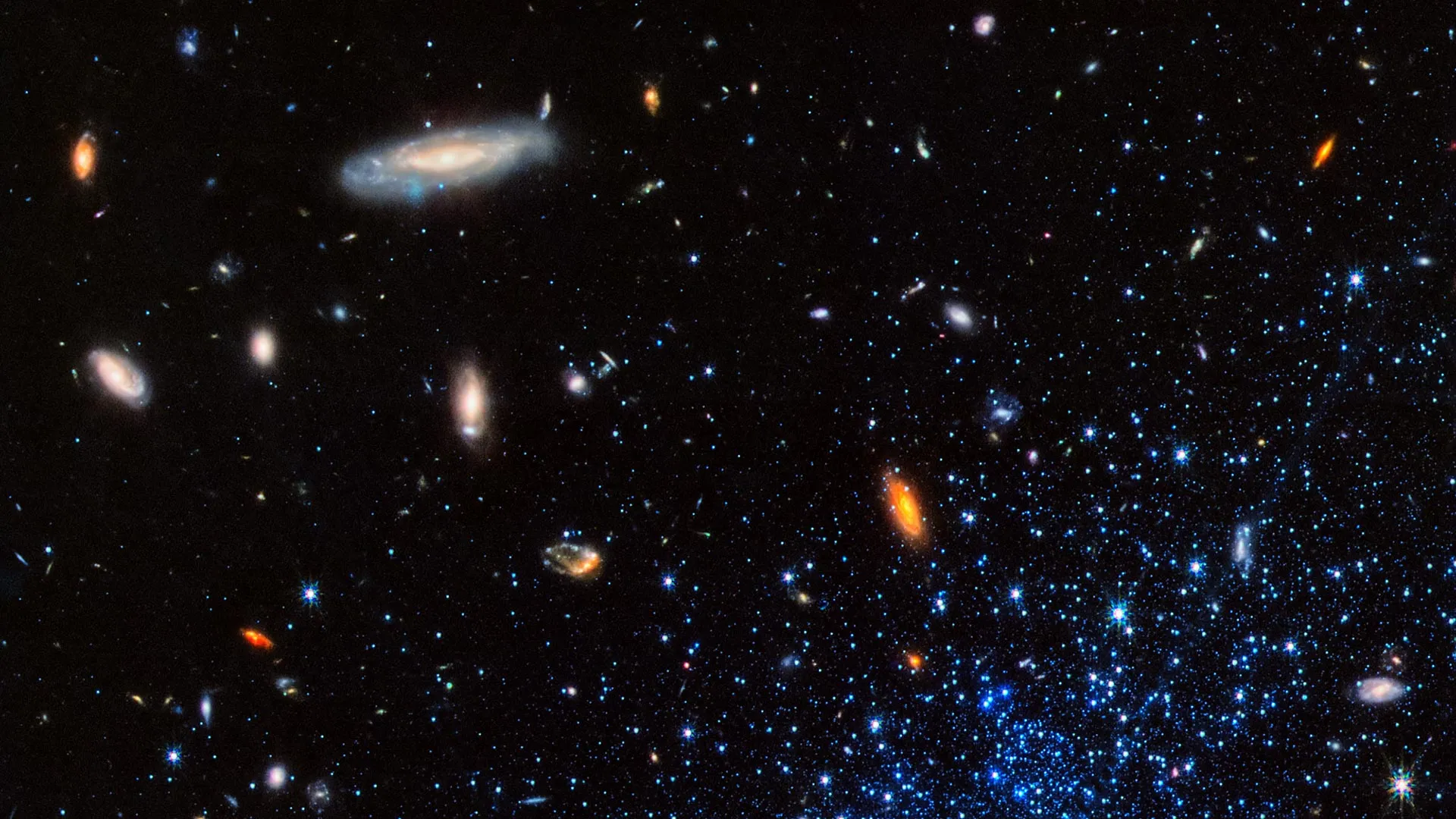
The researchers presented their findings across five papers published in The Astrophysical Journal, based on 130 hours of observations conducted with the Large Binocular Telescope. By analyzing 15 particularly pristine and distant galaxies that have undergone minimal chemical evolution, the team was able to reduce measurement uncertainty to just 0.5%, representing a threefold improvement over previous estimates. This enhanced precision was made possible through the use of advanced spectrographs developed at Ohio State University that examined multiple helium and hydrogen spectral lines simultaneously, allowing researchers to identify and correct subtle measurement errors that earlier studies could not adequately address.
The primordial helium abundance serves as a key diagnostic tool for understanding conditions in the early Universe. According to Big Bang theory, the cosmos emerged from an extraordinarily hot and dense state approximately 13.8 billion years ago, with light elements such as helium forming within minutes of the expansion’s beginning. While cosmic expansion and microwave background radiation have received considerable scientific attention, precise measurements of original helium amounts have historically been less thoroughly investigated.
Beyond refining estimates of the Universe’s chemical composition at its inception, the precise helium measurement provides an important test of the Standard Model of physics. The amount of helium created in the early Universe depends on physical conditions at that time, including the types of elementary particles present. Using their improved measurement, researchers calculated the number of neutrino families that existed in the early Universe, offering a more refined method for evaluating whether established physical theories accurately describe cosmic conditions during its first few minutes.
Article Attribution | Read More at Article Source
Article summary produced by Claude AI