

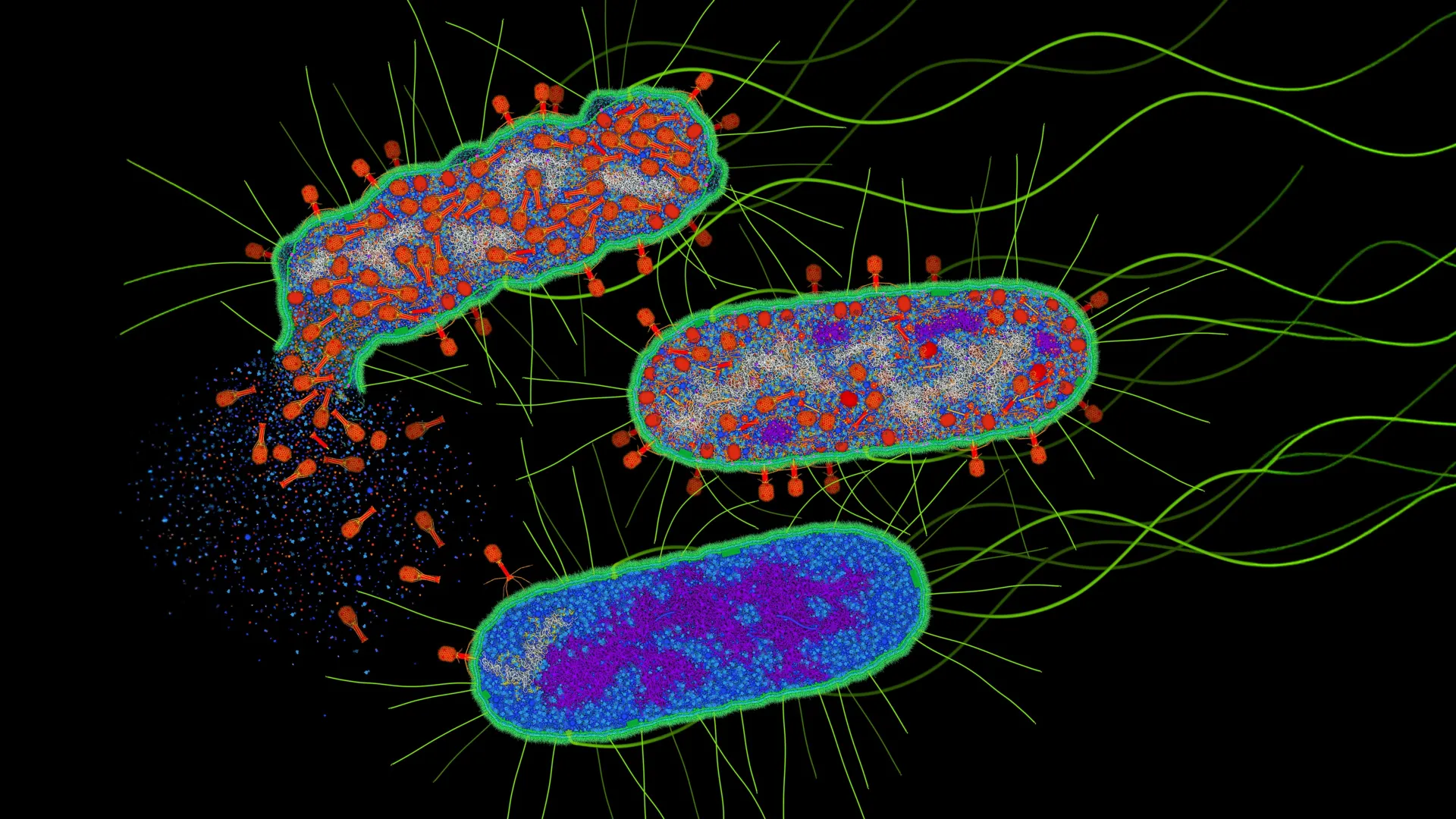
Scientists are investigating bacteriophage therapy as a potential treatment for bacterial infections, particularly those resistant to antibiotics. These viruses target bacteria specifically without harming human cells, but bacteria have evolved their own defense mechanisms that can prevent phage therapy from working effectively.
A research team led by Sam Hobbs at University of Utah Health discovered a previously unknown mechanism by which bacteria recognize viral attacks. The study focused on a bacterial immune system called CBASS, which can trigger a fatal response in infected bacteria to prevent viruses from spreading to neighboring cells. The researchers found that certain viruses produce an enzyme called a protease that directly damages a crucial sensor protein within the bacterial cell, effectively triggering an alarm that activates the immune response.
This detection method represents a novel immune pathway distinct from other antiviral systems. Rather than directly recognizing viral genetic material, the CBASS system is activated by the direct action of a viral protein on a bacterial host protein. The findings suggest this mechanism is highly precise, allowing bacteria to distinguish genuine threats from false alarms before committing to their fatal defensive response.
The research has implications beyond bacterial immunity. CBASS is related to immune pathways found in humans, indicating that aspects of this antiviral defense have been preserved through billions of years of evolution. The connection suggests the pathway originated in the common ancestor of bacteria and humans. The discovery could inform understanding of fundamental immunity processes in higher organisms and may help researchers develop more effective phage therapies capable of circumventing bacterial immune defenses.
The findings were published in Science and received support from multiple biomedical research funding organizations.
Article Attribution | Read More at Article Source
Article summary produced by Claude AI