

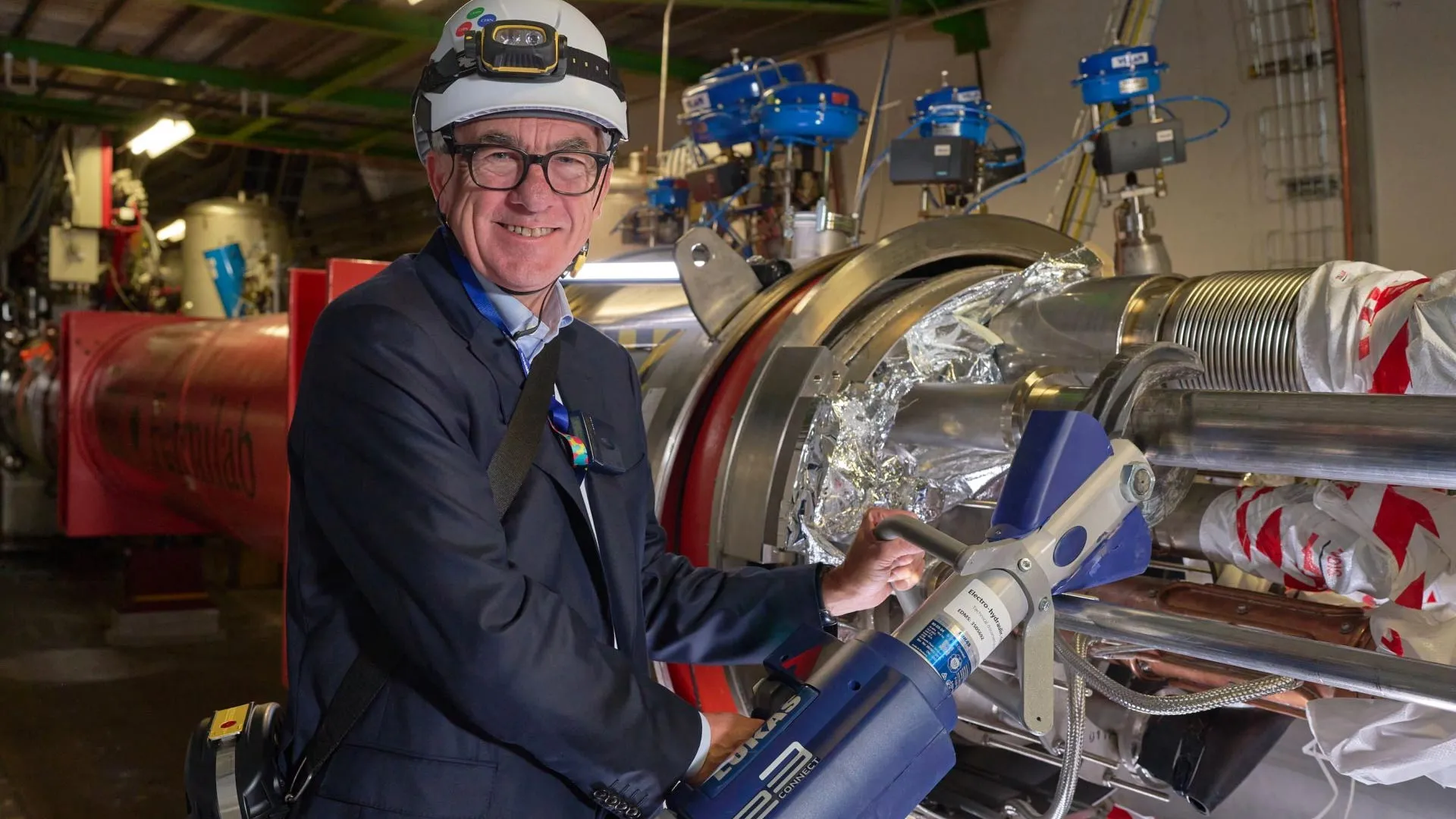
The European Organization for Nuclear Research has initiated the third long shutdown of the Large Hadron Collider, formally beginning the disconnection and replacement of critical magnet systems that have operated for nearly two decades.
The removed components include inner triplet magnets—groups of three quadrupole magnets positioned on both sides of the facility’s four main experiments. These magnets focus particle beams with precision before collisions occur in the detectors. The tightness of beam compression directly affects luminosity, the rate at which particle collisions happen, making the inner triplets essential for generating research data.
The replacement operation is central to the High-Luminosity LHC project, which aims to enhance the facility’s scientific capabilities. According to Jean-Philippe Tock, head of the third shutdown coordination team, crews will remove 28 superconducting magnets and install 16 cryostats and 28 cryo-assemblies, with the first new quadrupole expected to arrive in the tunnel at the start of 2029. The new inner triplets will be installed around the ATLAS and CMS experiments, where increased collision rates will provide the most significant benefit.
The upgraded magnets represent a substantial technological advancement, utilizing niobium-tin superconducting coils instead of the existing niobium-titanium design. This change enables magnetic fields reaching 11.3 tesla, approximately 40 percent stronger than current magnets. The ALICE and LHCb experiments will retain their existing inner triplets but will receive supplementary upgrades to capitalize on the overall luminosity gains.
The current magnet systems, installed during the collider’s construction phase between 2005 and 2007, have completed their operational cycle, giving way to more advanced technology designed to extend the facility’s research productivity.
Article Attribution | Read More at Article Source
Article summary produced by Claude AI