

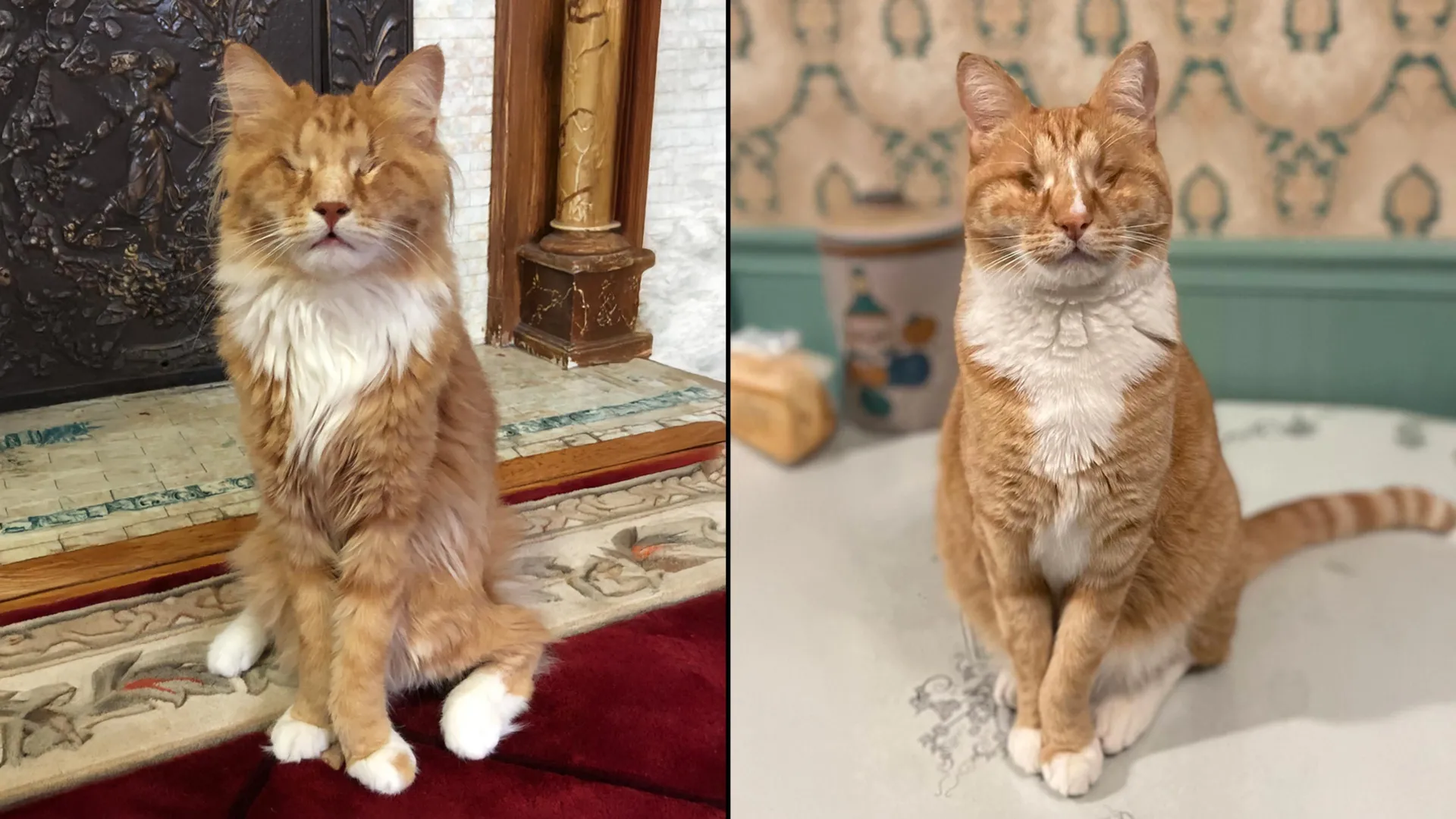
Scientists at Cornell University have documented the first molecular characterization of Marfan syndrome in domestic cats, as reported in a study published in Scientific Reports. The research centers on two feline brothers, Gary and Shaggy, whose distinctive physical features prompted investigation into an underlying genetic condition.
The cats were first noted in their youth for their disproportionately long limbs. As they matured, additional medical findings emerged, including structural eye abnormalities and an enlarged aorta. These combined characteristics aligned with Marfan syndrome, a hereditary disorder that compromises connective tissue integrity throughout the body. The condition affects roughly 1 in 4,000 humans, making the identification of cases in cats particularly unusual.
Researchers conducted comprehensive medical assessments and genetic analysis to identify the cause of the brothers’ symptoms. Their investigation pinpointed mutations in the FBN1 gene, which encodes fibrillin-1, a protein critical to connective tissue health. This protein plays a structural role in blood vessels, bones, ligaments, skin, and eye tissues. The cats each carried two mutated versions of the gene—one inherited from each parent—a notably uncommon occurrence.
In humans, a single altered copy of FBN1 is typically sufficient to trigger Marfan syndrome. The discovery of two mutated copies in Gary and Shaggy represented an exceptional finding. However, the specific nature of their genetic variations produced an atypical outcome. Rather than completely eliminating gene function, the mutations disrupted the processing of genetic instructions while preserving partial normal function. This residual activity likely contributed to the brothers’ survival into adulthood, as such a mutation combination might otherwise have resulted in a more severe presentation.
According to Dr. Jacquelyn Evans, assistant professor in the College of Veterinary Medicine and at the Baker Institute for Animal Health, the findings establish a basis for advancing veterinary diagnostic approaches. The research may enable veterinarians to recognize comparable cases in future feline patients and contribute to the development of genetic testing protocols.
Article Attribution | Read More at Article Source
Article summary produced by Claude AI