

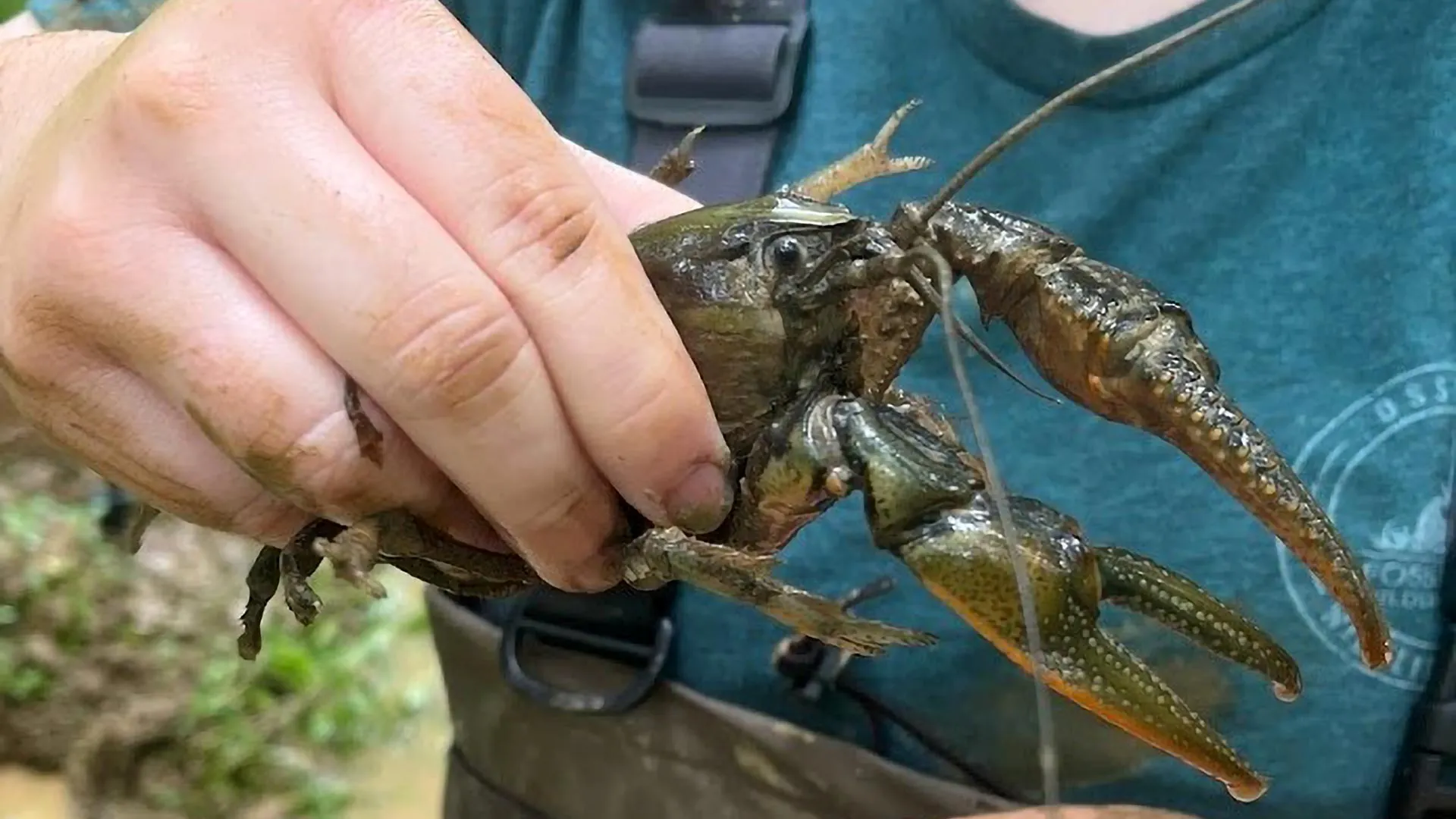
Researchers at the University of Illinois initiated a nationwide investigation into crayfish size records after a teaching assistant professor named Caitlin Bloomer captured a specimen she believed to be the largest ever documented. Bloomer’s find, dubbed “Crawzilla,” prompted collaboration with biologists and museum curators across the country to examine preserved crayfish collections and establish a definitive size ranking.
The study identified 20 exceptionally large crayfish specimens representing 18 different species, with results published in the journal Ecology. The largest known North American crayfish proved to be a Tennessee bottlebrush crayfish measuring 86.6 millimeters in body length, excluding its tail, claws, and antennae. This record-holder had been collected in 2011 and was housed in the West Liberty University Astacology Collection in West Virginia. While Bloomer’s original specimen did not achieve the top ranking, it secured a position in the top 20 and notably represented the only burrowing crayfish to make the list.
Beyond settling the size competition, the research revealed an unexpected pattern suggesting North American crayfish may have a biological growth ceiling. Despite representing different species and inhabiting varied environments, the largest specimens consistently approached approximately 80 millimeters in body measurement. This observation raised questions about why North American crayfish appear constrained at this size when some crayfish species in other regions, such as the Tasmanian giant freshwater crayfish, achieve significantly larger dimensions.
The team investigated potential environmental factors including geographic location, oxygen availability, and habitat type, but found no clear correlations with maximum body size. This finding redirected focus toward biological mechanisms as the primary constraint on crayfish growth. Researchers proposed that structural features of the exoskeleton or muscle anatomy might impose physical limits on how large North American crayfish can become, though this remains hypothetical pending further physiological investigation.
The discovery underscores how much remains unknown about common freshwater organisms. Despite crayfish being widely recognized inhabitants of North American waterways and familiar to generations of people exploring streams as children, fundamental aspects of their biology including growth limits remain incompletely understood.
Article Attribution | Read More at Article Source
Article summary produced by Claude AI