

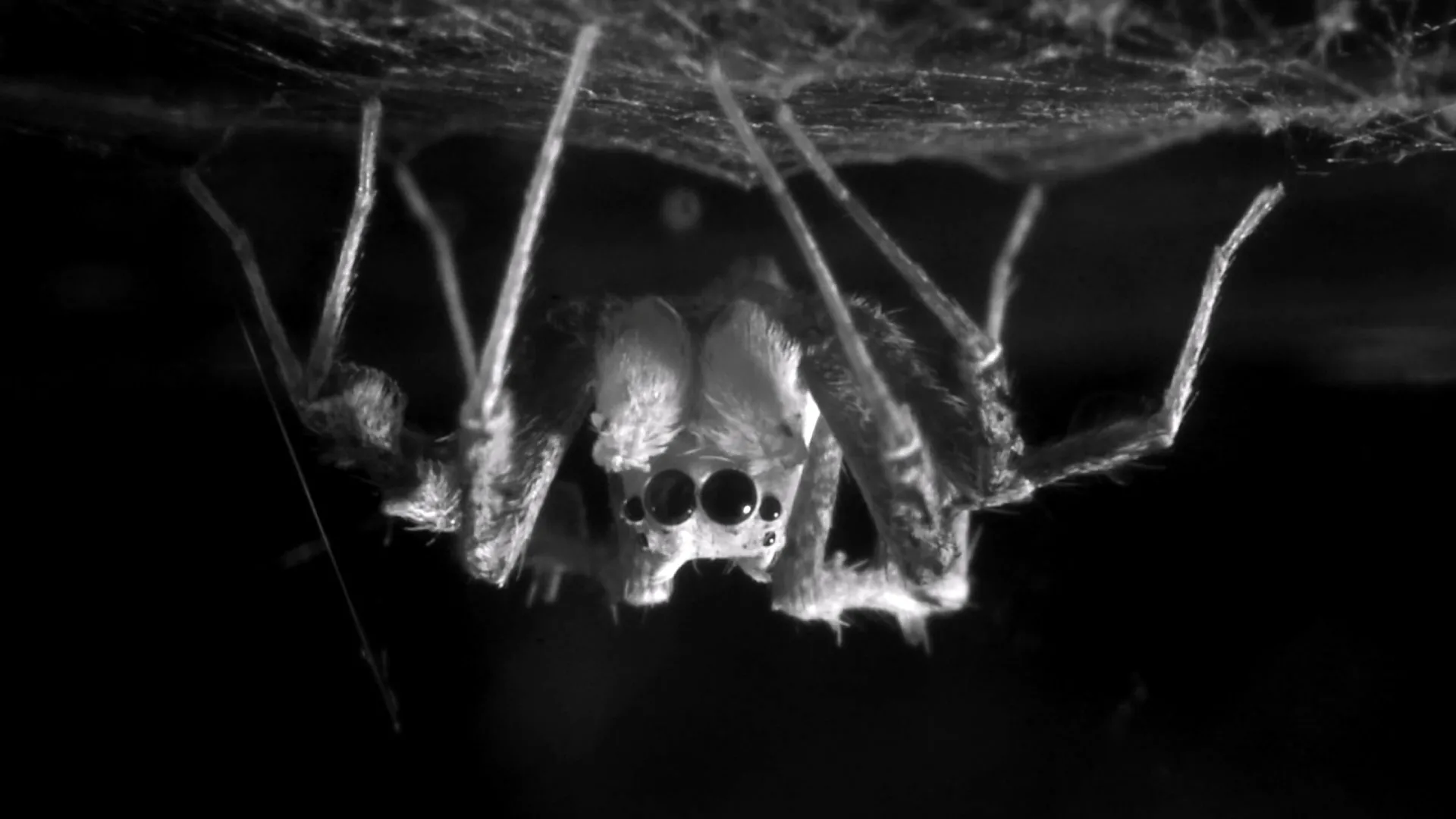
Researchers at the University of Bonn’s Institute of Organismic Biology have identified evidence that spiders undergo regulated sleep with distinct stages comparable to patterns observed in vertebrates. The study focused on the Australian jumping spider Portia fimbriata, a species known for its sophisticated predatory behavior and learning abilities. During observation, these spiders exhibited a REM-like sleep state characterized by rapid eye movements and muscle twitches, behaviors previously associated primarily with humans and other vertebrates.
To confirm that spiders experience genuine sleep rather than mere inactivity, the research team employed multiple experimental approaches. They monitored individual spiders in controlled environments using infrared cameras to observe behavior throughout daily cycles. Researchers also conducted stimulus-response tests using sound to measure how quickly spiders reacted when disturbed, helping distinguish sleep from simple immobility. Additionally, the team examined whether spiders displayed sleep rebound—compensating for interrupted rest by increasing subsequent sleep—a hallmark of genuine sleep regulation.
The investigation presented significant methodological challenges. Researchers could not directly measure spider brain activity and instead relied on extensive high-resolution video documentation collected over multiple days. They also had to identify appropriate sensory stimuli capable of producing consistent responses in animals with fundamentally different sensory systems than humans. Despite these limitations, the combination of behavioral observation, response testing, and sleep deprivation studies provided strong evidence for regulated sleep with multiple distinct stages.
The findings carry broader implications for understanding sleep evolution across the animal kingdom. Most existing sleep research focuses on vertebrates, particularly mammals and birds. Identifying comparable sleep features in species with radically different nervous systems could illuminate when and why different sleep types emerged during evolutionary history. The University of Bonn team plans to expand investigations across multiple spider species, examine sleep in natural versus laboratory environments, and explore relationships between sleep and cognitive function. Future research will also investigate how environmental factors, including artificial light and climate change, may affect spider sleep patterns.
Article Attribution | Read More at Article Source
Article summary produced by Claude AI