

October presents multiple opportunities for astronomical observation, with several significant events occurring throughout the month. The most prominent feature arrives early in the period when Saturn reaches opposition on October 4th, placing the ringed planet in an ideal position for viewing. During opposition, Earth positioned itself between the Sun and Saturn, causing the planet to appear opposite the Sun in the sky. This alignment allows Saturn to rise around sunset and remain visible throughout much of the night, providing one of the year’s best viewing opportunities for the planet.
Beyond its visibility, Saturn is currently attracting scientific interest due to notable atmospheric phenomena. Researchers have long tracked a hexagonal jet stream spanning approximately 20,000 miles across the planet’s north pole. Recent observations from NASA’s Hubble Space Telescope have identified a ten-sided atmospheric wave formation at Saturn’s south pole that appears to be intensifying. This development offers scientists a valuable opportunity to study how such large-scale atmospheric structures evolve and strengthen over time.
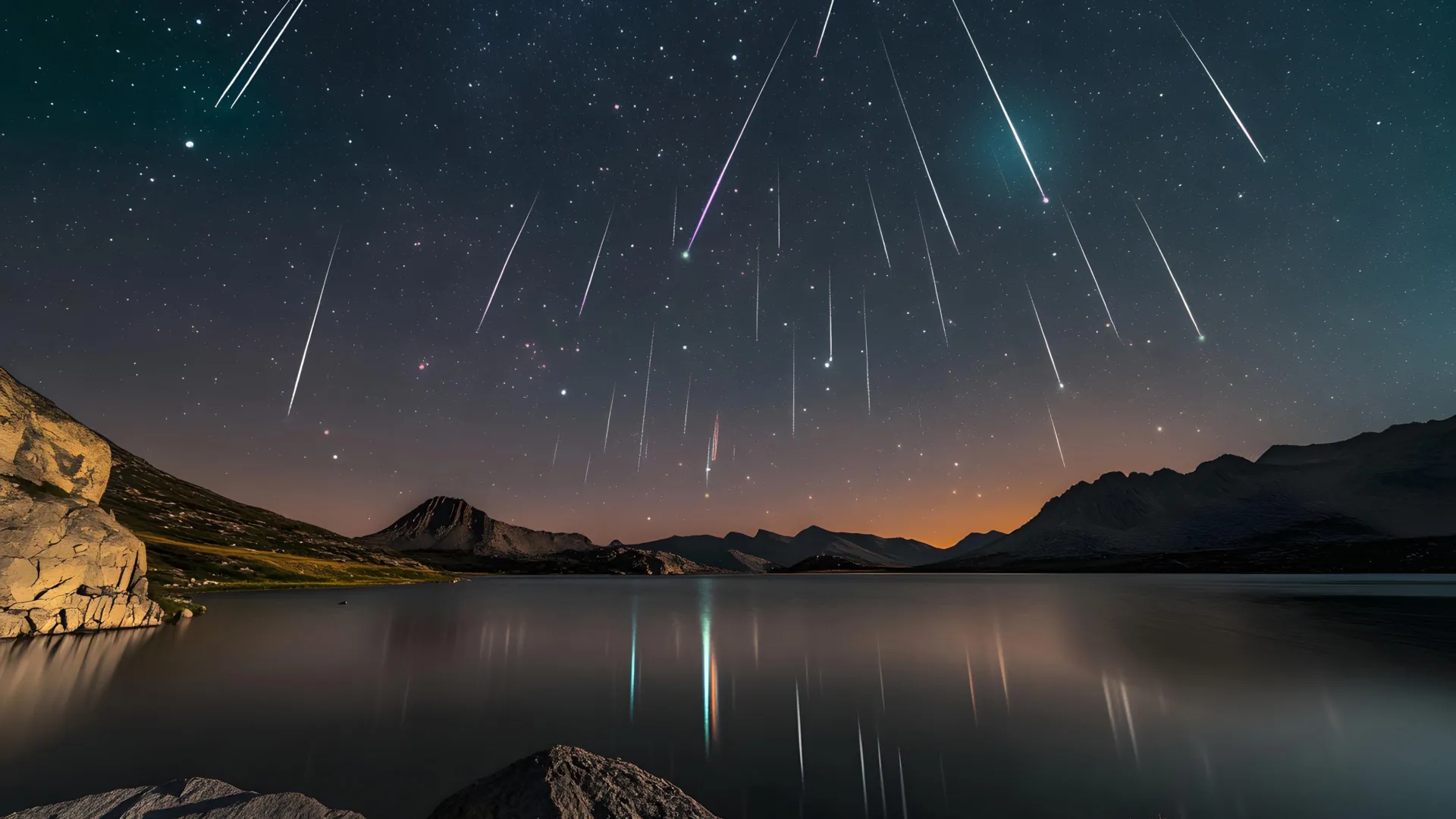
Later in the month, the Orionid meteor shower reaches peak activity during the night of October 21st extending into the morning of October 22nd. These meteors originate from debris trails left by Halley’s Comet as Earth passes through the remnants. While the meteors appear to radiate from the constellation Orion, they can be visible across any portion of the sky. A bright waxing gibbous Moon will reduce visibility of fainter meteors throughout the night, though optimal viewing conditions are expected to occur in the hours before dawn after the Moon sets below the horizon.
The month concludes with a notable celestial pairing on October 27th extending into the 28th, when the Moon passes near the Pleiades star cluster, commonly referred to as the Seven Sisters. This cluster holds cultural significance across many ancient civilizations and remains visible from virtually every location on Earth. Observers should look toward the east during evening hours to locate the conjunction as both objects rise higher in the sky. While the cluster appears as a faint grouping of six to seven stars to the naked eye, binoculars or telescopes reveal substantially greater detail within the formation.
Article Attribution | Read More at Article Source
Article summary produced by Claude AI