

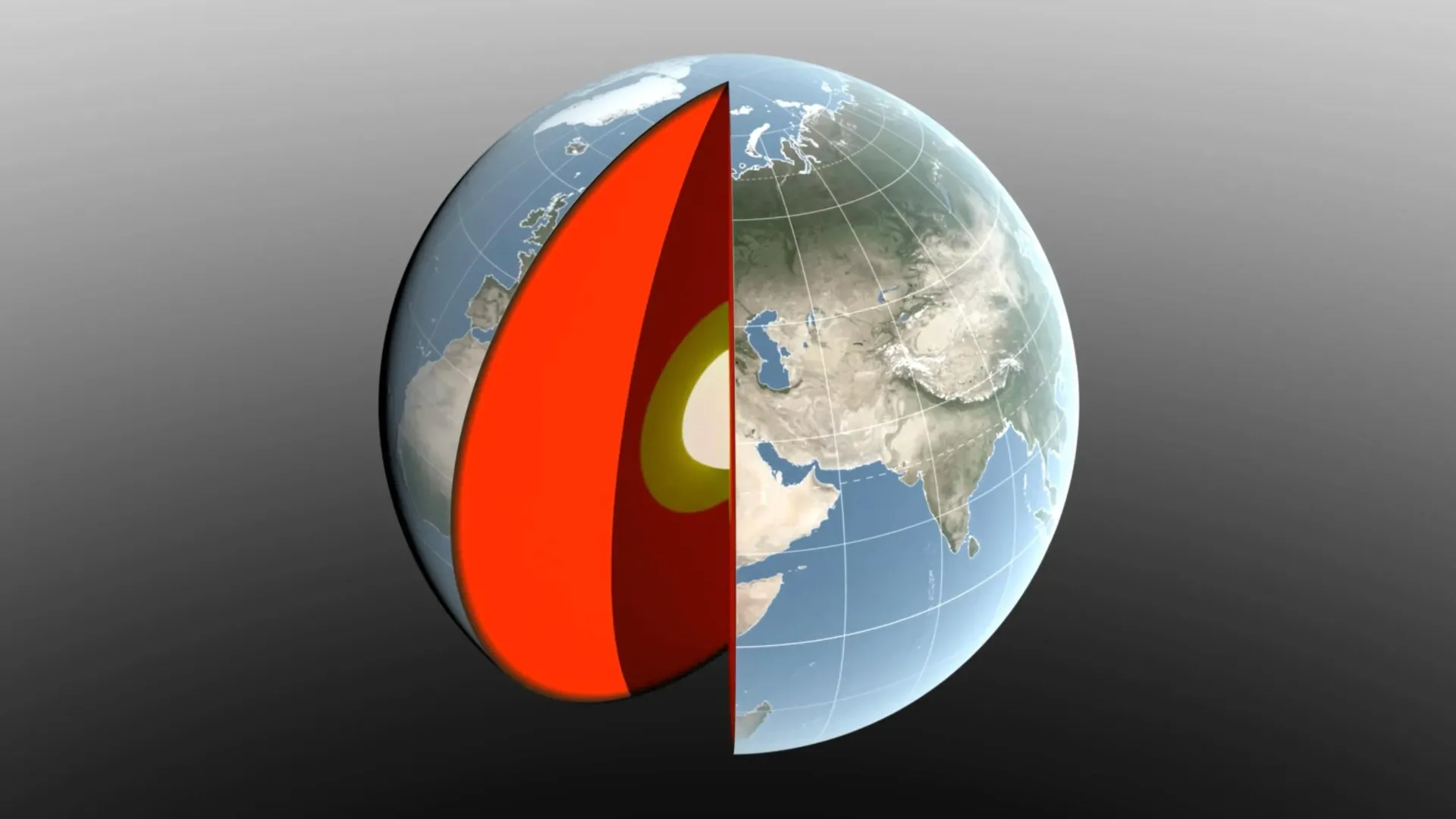
NASA scientists have refined techniques for measuring the seasonal movement of Earth’s center of mass with unprecedented precision, according to research published in Geophysical Journal International. Earth’s center of mass does not remain stationary but instead shifts relative to the planet’s geometric center as water, ice, and atmospheric mass redistribute across the globe. These shifts, typically measured in millimeters, occur because Earth responds to the changing weight of various materials on its surface rather than behaving as a static, uniform object.
The research, led by geoscientist Donald Argus at NASA’s Jet Propulsion Laboratory in Southern California, employed satellite tracking technology to detect minute changes in distances between orbiting satellites and ground stations. The team combined laser measurements from the Laser Geodynamics Satellites with GPS tracking data and orbital information from multiple low Earth orbit satellites, addressing previous limitations caused by uneven distribution of laser tracking stations worldwide. The improved methodology accounts for how shifting weight actually bends Earth’s crust, causing ground stations themselves to move slightly as the surface beneath them shifts.
The analysis identified three major contributors to seasonal mass redistribution. Snow accumulation across North America and Eurasia peaks in March, shifting Earth’s center of mass approximately 3 millimeters toward the North Pole. The Amazon River basin reaches maximum water concentration in April with roughly 2,400 gigatons, pulling the center of mass toward South America by 2.2 millimeters. Monsoon water in Southeast Asia peaks in November with around 600 gigatons, providing additional seasonal movement. Ocean water, particularly from the vast Pacific, significantly influences the shift from August through October, while atmospheric changes create additional cyclical effects around December and June.
Findings from this research have practical implications for modern navigation and positioning systems. Accurate reference points for Earth’s center of mass benefit global shipping logistics, precision agriculture, and mapping technologies that depend on extremely precise measurements. The new analysis produced estimates consistent with observations from the Gravity Recovery and Climate Experiment Follow-On satellites, which measure changes in Earth’s gravitational field caused by water movement.
Article Attribution | Read More at Article Source
Article summary produced by Claude AI