

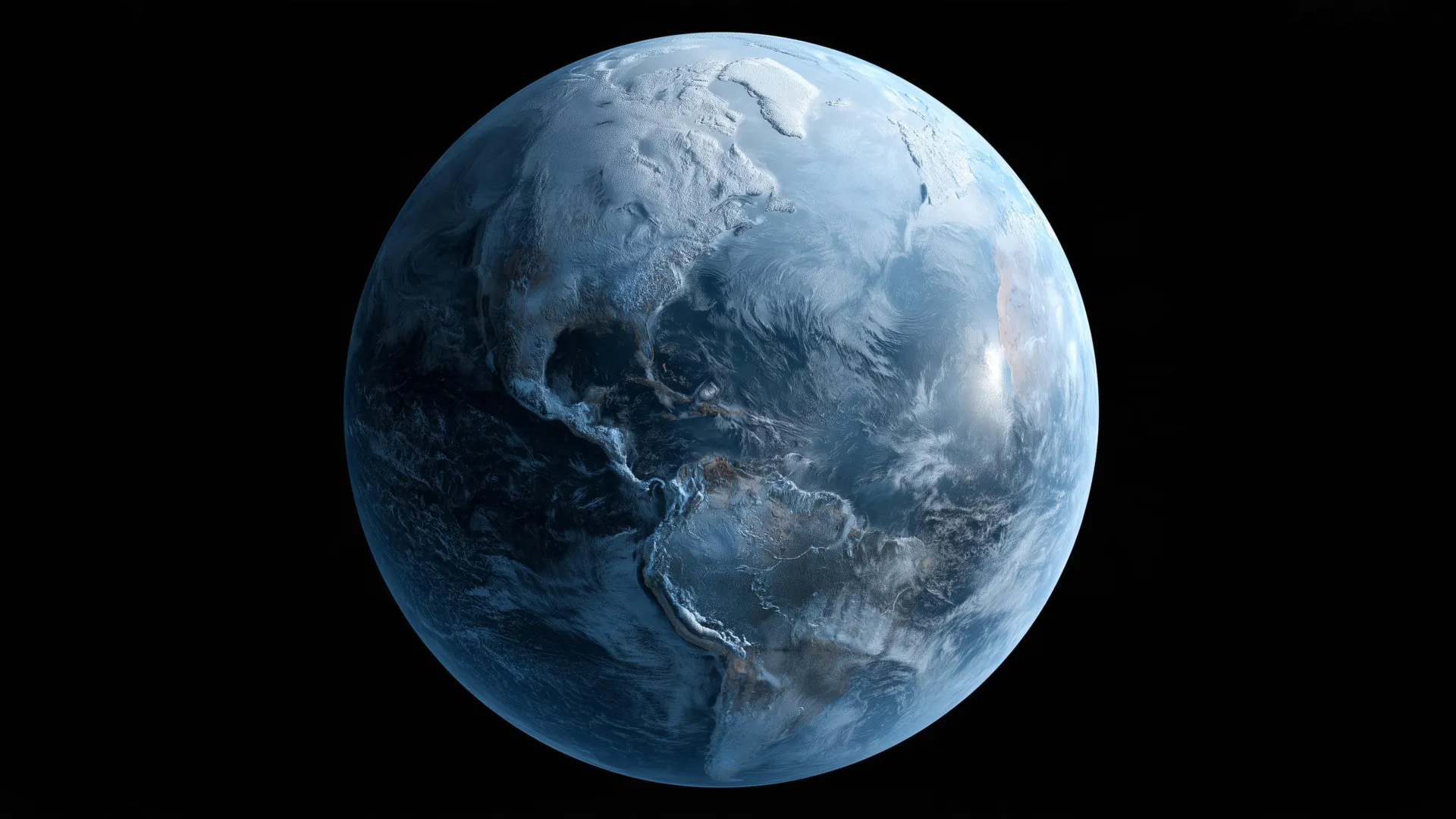
Researchers at the University of St Andrews have described a mechanism that could explain how Earth’s past ice ages developed, according to findings published in the Journal of Climate. The research addresses a long-standing gap in climate science by proposing how cooling in the Northern Hemisphere could influence distant ocean processes near Antarctica that are known to reduce atmospheric carbon dioxide levels.
The study focuses on ocean circulation as the connecting link between two geographically distant climate phenomena. As ice sheets expanded across northern regions during past climate cycles, they cooled nearby Atlantic waters. These colder waters then gradually circulated southward toward the Southern Ocean, where they could alter circulation patterns and increase the ocean’s capacity to store carbon beneath its surface. This process would reduce atmospheric carbon dioxide and contribute to further global cooling, potentially intensifying ice age conditions.
To test this hypothesis, the research team conducted computer simulations that isolated the effects of Northern Hemisphere cooling. Rather than reducing temperatures globally, they modeled what would happen if only the northernmost latitudes experienced significant cooling, mimicking the effect of expanding ice sheets. The results indicated that northern cooling alone produced approximately 74 percent of the carbon dioxide reduction observed in a separate simulation where the entire planet was cooled, suggesting a strong connection between hemispheric temperature changes.
The findings represent a significant advance in understanding Earth’s climate history. Scientists have long recognized that changes in the Southern Ocean play a crucial role in controlling atmospheric carbon dioxide levels during ice ages, but explaining how distant Northern Hemisphere ice sheets could influence these processes has remained challenging. By demonstrating a plausible oceanographic pathway connecting these two regions, the research helps resolve this theoretical gap and provides new insight into how Earth’s natural carbon cycle operates across different ocean basins.
According to lead researcher Dr. Madison Shankle, the work demonstrates a working mechanism in climate models that could help explain how various components of the ice age climate system functioned together. This understanding of past climate changes may provide valuable context for scientists studying how the planet’s ocean systems will respond to current atmospheric carbon dioxide increases.
Article Attribution | Read More at Article Source
Article summary produced by Claude AI