

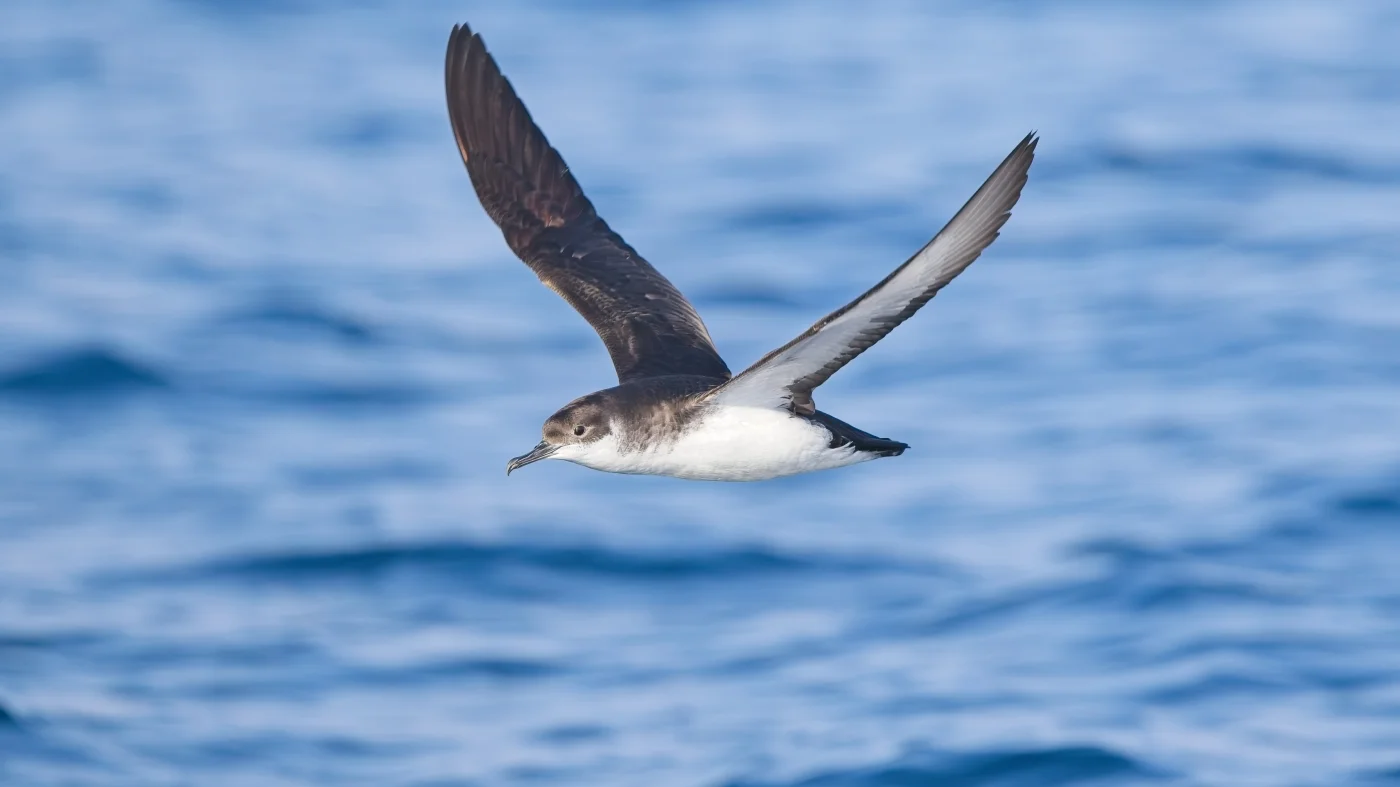
New research published in Science indicates that jet lag is not unique to humans but also affects certain bird species during long-distance travel. The study focused on Manx shearwaters, seabirds native to the British Isles that are closely related to albatrosses.
Manx shearwaters engage in a breeding pattern where paired birds take turns incubating a single egg. One partner remains at the nest while the other travels up to hundreds of miles across the North Atlantic to hunt for fish and squid over a period of up to two weeks. Once they have gathered sufficient food, the hunting birds make rapid return journeys to their colonies, often completing the flight home in approximately one day.
Researchers at the University of Oxford analyzed 20 years of GPS tracking data collected from these birds to investigate whether they experience jet lag similar to humans. The study was based on the principle that Manx shearwaters rely on solar navigation, using the sun’s position at different times of day to orient themselves. The researchers observed that during their return flights, the birds demonstrated slight navigational deviations, veering marginally off course. The maximum deviation recorded was a seven-degree error, which resulted in birds traveling approximately three miles off route during 600-mile journeys.
Experts outside the study have praised the research for its innovative approach to understanding animal navigation. The use of GPS tracking technology to observe wild birds in remote locations provides valuable insights into how various species accomplish their extensive migrations and navigate their environments.
Article Attribution | Read More at Article Source
Article summary produced by Claude AI