

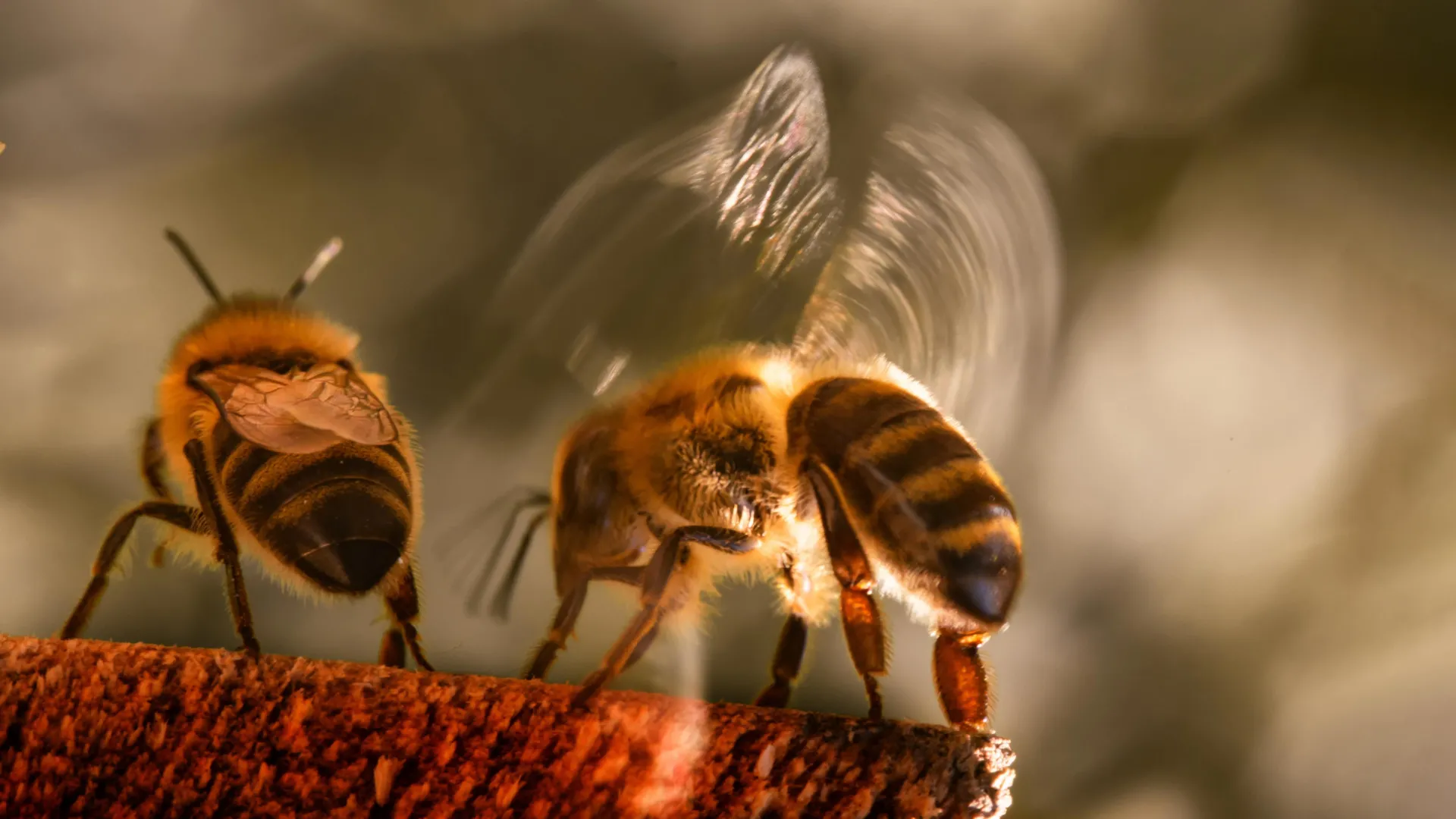
A two-year study by Anglia Ruskin University researchers has provided detailed evidence that honey bees compete aggressively with other pollinator species for nectar and pollen in the United Kingdom. The research, published in Ecological Entomology, tracked pollinator interactions at five locations near Cambridge, monitoring visits to bramble and ivy plants that provide important food sources for many insects.
Over 93 hours of observation, scientists documented that honey bees frequently initiated aggressive encounters to secure feeding opportunities. On bramble flowers, doubling honey bee density correlated with a 14 percent decrease in bumblebee numbers. On ivy, increased honey bee populations were associated with reduced counts of solitary bees and hoverflies. Approximately 28 percent of interactions on bramble and 36 percent on ivy involved other pollinators actively avoiding honey bees. The research classified competitive outcomes into three categories: instances where one species gained access to flowers at another’s expense, situations where insects shared flowers without conflict, and encounters where one pollinator was physically displaced or chased away.
The study identified one notable exception to honey bees’ competitive dominance. The ivy bee, a solitary species not native to Britain that was first documented in the country in 2001, demonstrated an ability to challenge honey bees and successfully competed for flower access through its own aggressive behaviors.
Researchers warn that climate change may intensify competitive pressures on wild pollinators. Warming temperatures increase honey bee foraging activity while reducing the heat tolerance of species like bumblebees and hoverflies. Additionally, heat stress can reduce nectar production in plants, potentially forcing more insects to compete for limited food supplies. The findings arrive as beekeeping in the UK has expanded significantly, with registered beekeepers growing from 19,000 in 2010 to 47,000 last year.
Lead researcher Victoria Buckle emphasized that the study aims to support conservation of wild pollinators rather than discourage beekeeping. She noted that findings highlight the importance of developing strategies to enable honey bees and wild pollinators to coexist, particularly in areas with high concentrations of hives such as urban environments.
Article Attribution | Read More at Article Source
Article summary produced by Claude AI