

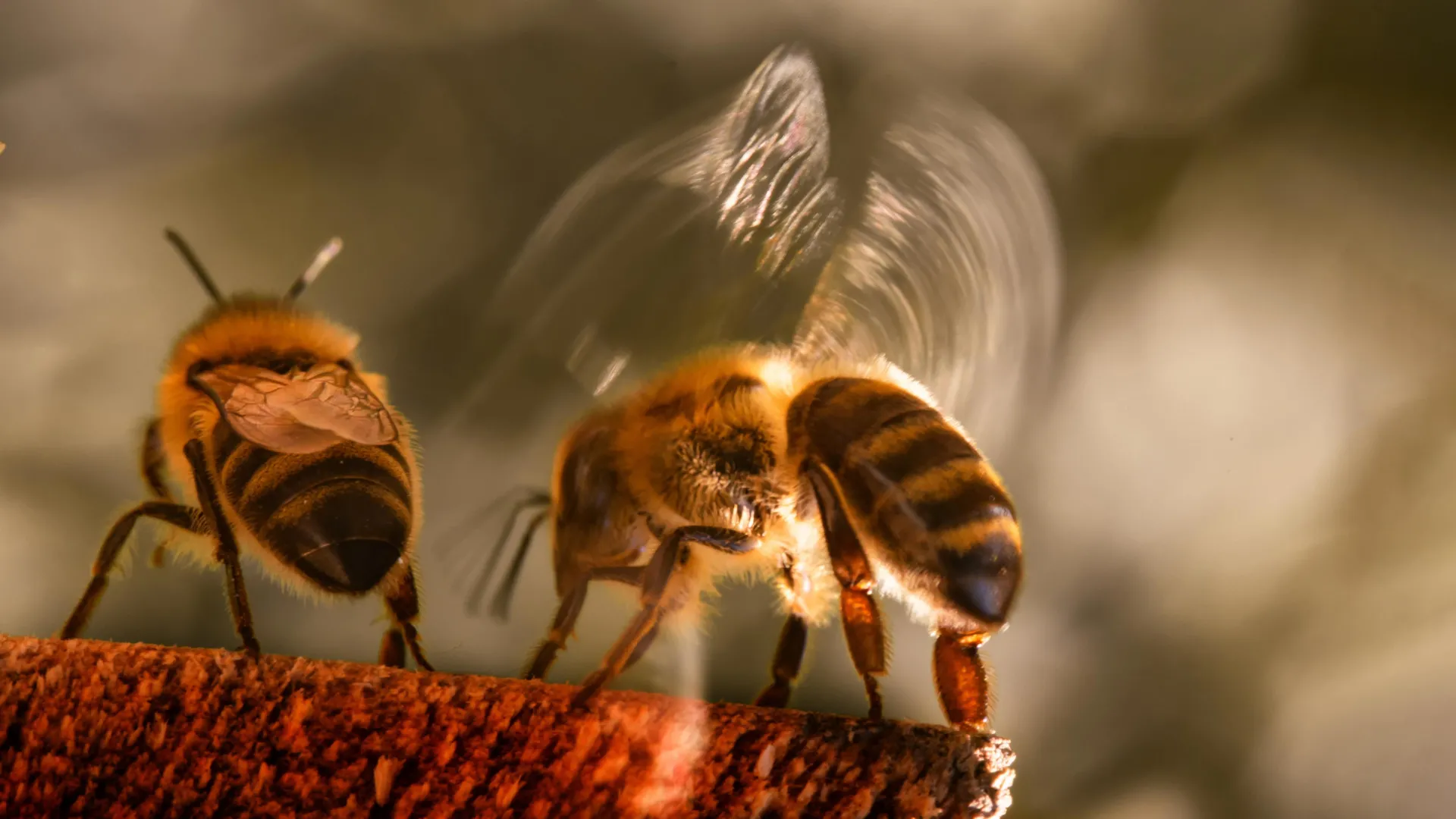
Scientists at Anglia Ruskin University have published findings showing that honey bees use aggressive tactics to exclude other pollinators from feeding opportunities. The research, conducted over two years at five locations near Cambridge, examined interactions between different pollinator species visiting bramble and ivy flowers. Observations spanning 93 hours revealed that honey bees frequently initiated confrontations, chasing away competitors and preventing them from accessing flowers. Other insects actively avoided honey bees in roughly one-third of observed encounters on each plant type, and honey bees successfully displaced rivals in at least one-fifth of competitive interactions.
The study documented five distinct pollinator groups: honey bees, bumble bees, solitary bees, hoverflies, and miscellaneous insects including butterflies and beetles. Results showed a correlation between higher honey bee density and reduced abundance of wild pollinators at each site. On bramble flowers, doubling the concentration of honey bees corresponded with a 14% decline in bumblebee numbers. Similarly, elevated honey bee populations on ivy correlated with lower counts of solitary bees and hoverflies. Notably, the ivy bee, a non-native solitary species first documented in Britain in 2001, was the sole pollinator observed regularly challenging honey bees and successfully competing for access to flowers.
Researchers warn that climate change may intensify competitive pressures on wild pollinators. Warmer temperatures increased the frequency of competitive encounters in their observations. Heat stress can reduce nectar production in flowers, limiting available food resources, while rising temperatures activate honey bees more than certain wild species like bumblebees and hoverflies, which perform better in cooler conditions. The findings coincide with significant growth in UK beekeeping, with registered beekeepers increasing from 19,000 in 2010 to 47,000 the previous year. Lead researcher Victoria Buckle emphasized the study aims to support conservation of wild pollinators and sustainable coexistence between managed and wild bee populations, particularly in areas with high concentrations of hives.
Article Attribution | Read More at Article Source
Article summary produced by Claude AI