

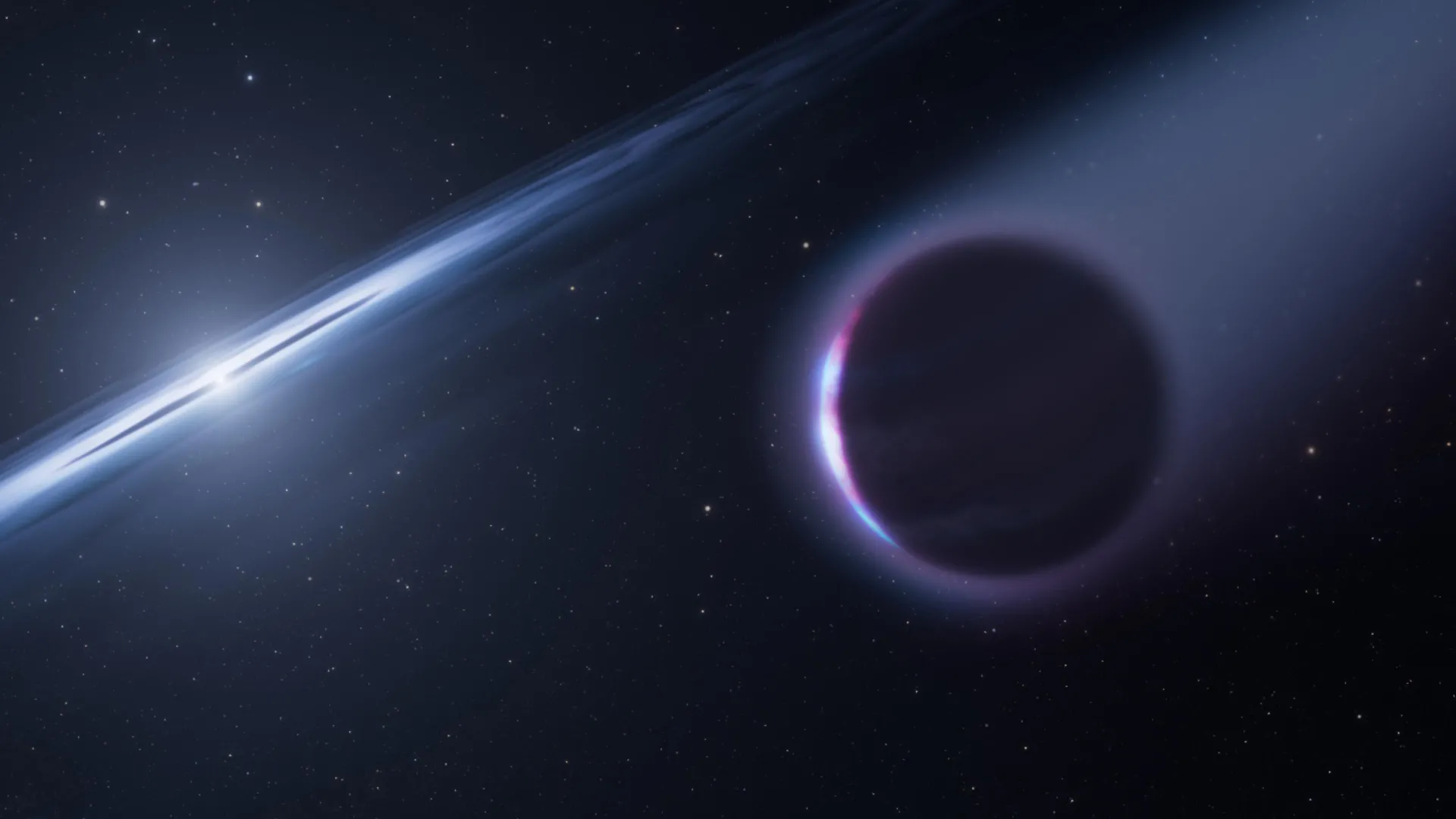
A research team led by astronomer Jamie Williams at the University of Warwick has announced findings based on reanalysis of Hubble Space Telescope data collected in 1999. The study, published Oct. 5 in Nature Astronomy, proposes that the white dwarf HS 0209+0832 could harbor a planet formed from material expelled during the star’s death, representing a fundamentally different origin story from planets like Earth that formed alongside their parent stars.
The key evidence centers on an unusually high abundance of the element niobium detected in the white dwarf system. When Williams examined the archival data using an updated chemical database, he identified niobium signatures among roughly 100 previously unexplained chemical features in the observations. According to research team member Nicholas Stone, a theoretical astrophysicist at the University of Wisconsin-Madison, heavy elements like niobium are synthesized only under extreme conditions during a star’s death throes, making their presence a diagnostic marker for material expelled from a dying star.
The research team proposes that after the star shed its chemically enriched outer material, some of this expelled matter coalesced to form a gas giant comparable in size to Jupiter. Observations from NASA’s TESS satellite provided supporting evidence, detecting periodic brightness variations over four months that suggest an orbiting body approximately 3.7 million miles from the white dwarf—considerably closer to the stellar remnant than Mercury orbits the Sun. Data from NASA’s retired FUSE mission corroborated the niobium detection.
The proposed planet appears to be experiencing rapid atmospheric loss, likely driven by radiation from the extremely hot white dwarf. This process may explain the niobium signatures Hubble detected, as escaping atmospheric material could create a disk around the stellar remnant before depositing onto its surface. Despite ongoing atmospheric erosion, Williams indicated the planet would likely persist as the white dwarf gradually cools, eventually entering a stable habitable zone lasting millions of years.
Williams plans to conduct continued Hubble observations over the coming years to investigate fundamental questions about second-generation planetary systems, including their formation mechanisms, prevalence, and orbital evolution around dead stars.
Article Attribution | Read More at Article Source
Article summary produced by Claude AI