

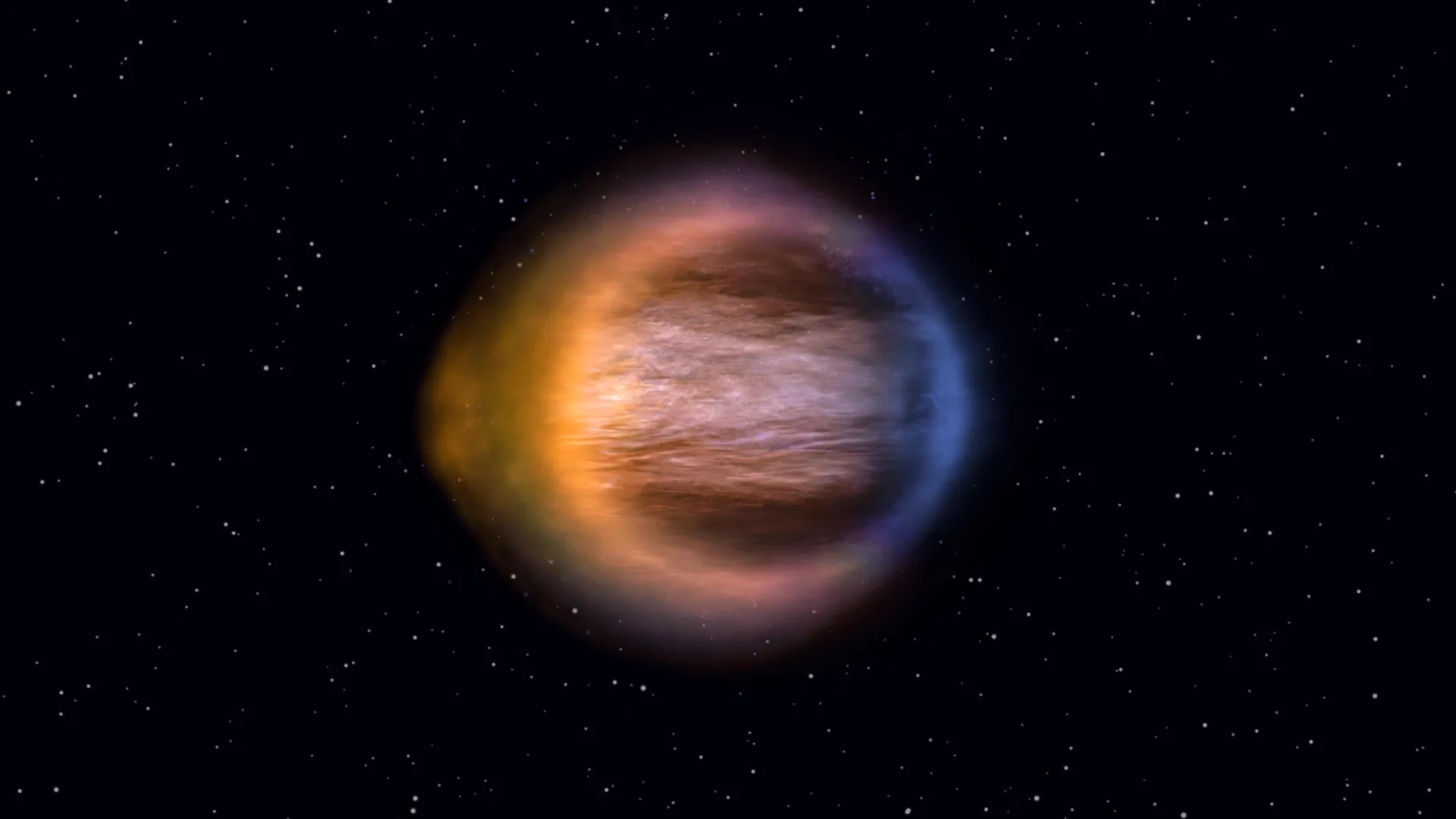
Astronomers using NASA’s James Webb Space Telescope have observed that the atmosphere of WASP-17b, a hot Jupiter located approximately 1,300 light-years from Earth, exhibits an asymmetrical structure rather than the smooth, circular outline traditionally depicted for exoplanets. The research, published in Nature Astronomy and led jointly by Cornell University and the University of Bristol, reveals that the planet’s atmosphere extends farther outward on one side than the other, providing insights into how atmospheric conditions vary on these extreme worlds.
The discovery employed an innovative analytical approach called “transmission strings” or transit mapping, a technique developed by Bristol astrophysicists that separates atmospheric measurements from different regions rather than averaging them together. This method examines starlight traveling through the outer edges of the planet’s atmosphere as it passes in front of its star, allowing researchers to determine atmospheric composition and extension at various locations. Lead researcher Dr. Lili Alderson noted that this approach enables scientists to identify specific atmospheric variations that would otherwise remain hidden when using traditional combined measurements.
The atmospheric distortion detected on WASP-17b occurs on the planet’s evening side, where powerful winds transport heat away from the permanently illuminated hemisphere toward the dark side. This movement of hot gas causes the atmosphere to expand farther outward on the cooler morning side, creating the observed asymmetry. The measurements confirmed theoretical predictions about temperature differences between the day and night sides of the planet.
The successful application of transmission strings to WASP-17b demonstrates potential for studying numerous other exoplanets. Rather than providing only averaged measurements across large regions, this technique enables examination of atmospheric conditions at different latitudes and between day and night hemispheres. Scientists suggest the approach could eventually assist in mapping weather patterns on distant worlds, offering one of the most detailed three-dimensional atmospheric pictures of an exoplanet produced to date and establishing a reference point for studying the more than 6,000 confirmed exoplanets.
Article Attribution | Read More at Article Source
Article summary produced by Claude AI