

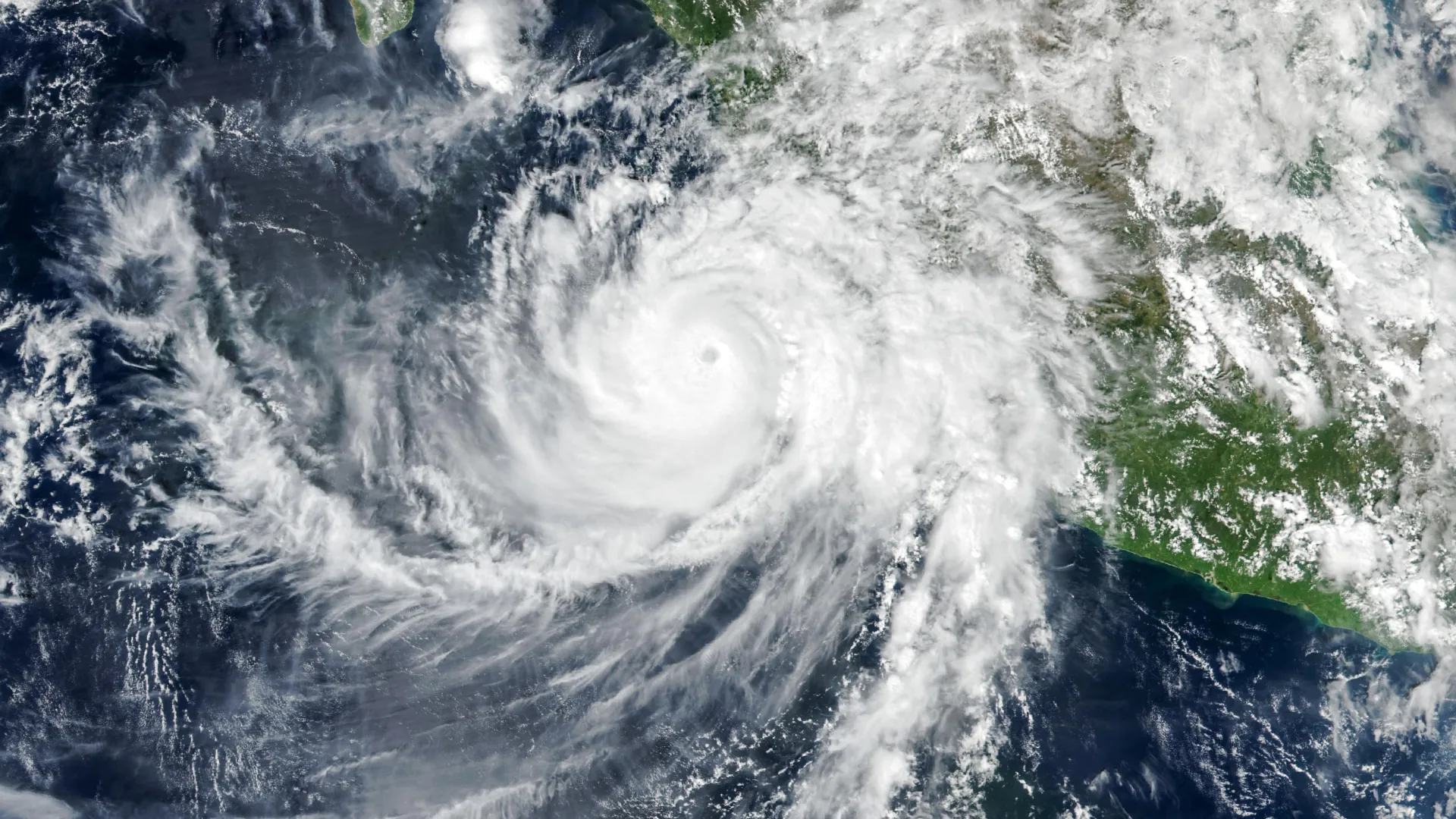
Hurricane Simon impacted Mexico’s Pacific coast during the 2026 hurricane season, bringing significant weather threats to coastal communities. On October 11, 2026, the hurricane maintained Category 4 status with sustained winds of approximately 210 kilometers per hour when observed via satellite imagery. The storm’s center positioned roughly 50 kilometers offshore between the coastal cities of Manzanillo and Puerto Vallarta, while the Sierra Madre mountains appeared to constrain the hurricane’s strength. Coastal areas experienced torrential rainfall and flooding, with elevated risks of mudslides in mountainous regions according to reporting at the time.
Simultaneously, NASA satellites documented an unusual atmospheric phenomenon occurring well above the hurricane’s clouds. During the early morning hours of October 11, the intense storm activity generated rippling disturbances that propagated into Earth’s upper atmosphere. Satellite instruments detected atmospheric gravity waves—disturbances created by powerful convection within the hurricane’s structure—spreading outward from the storm system. These waves form when the intense updrafts within towering cumulonimbus clouds near the hurricane’s eyewall disturb the surrounding air, with the waves subsequently traveling upward through the stratosphere and mesosphere.
The visibility of these atmospheric waves through satellite observation occurs through a phenomenon known as airglow, a natural faint light produced by gases in the upper atmosphere. When gravity waves traverse the airglow region, they create subtle variations in brightness that reveal their distinctive ripple patterns. While powerful hurricanes frequently generate such atmospheric gravity waves, satellite detection proves difficult because high-altitude winds often weaken or disperse the disturbances before they reach the mesosphere. The VIIRS instrument’s day-night band possesses sufficient sensitivity to detect airglow, though moonlight reflection typically overwhelms the weaker signal. Favorable conditions during the Simon observations included minimal lunar illumination, allowing the atmospheric ripples to stand out distinctly against the night sky.
Predicting Hurricane Simon’s future behavior and intensity presented significant challenges for meteorologists. By October 13, the National Hurricane Center assigned very low confidence to both its track and intensity forecasts, citing the storm’s repeated departures from expected patterns. One scenario involved the hurricane turning northward and potentially entering the Gulf of California before making landfall. Regardless of the ultimate path, the storm generated large ocean swells expected to produce hazardous conditions along portions of Mexico’s southwestern and west-central coastlines in subsequent days.
Article Attribution | Read More at Article Source
Article summary produced by Claude AI