

When NASA’s OSIRIS-REx spacecraft arrived at asteroid Bennu in 2018, scientists encountered unexpected terrain markedly different from earlier expectations. Rather than discovering smooth regions covered in fine dust suitable for sample collection, the mission revealed a landscape dominated by enormous boulders with minimal accessible areas. This observation created a significant scientific puzzle for researchers analyzing the mission’s data.
The mystery deepened when scientists considered Bennu’s thermal properties. Previous measurements from NASA’s Spitzer Space Telescope indicated the asteroid exhibited low thermal inertia, warming and cooling rapidly as it rotated through daylight and shadow. This characteristic typically occurs in materials like sand, which absorb and release heat quickly. However, large solid rocks normally retain heat longer, similar to concrete. The boulder-covered surface appeared inconsistent with the thermal measurements, prompting researchers to investigate how such large rock formations could cool so rapidly.
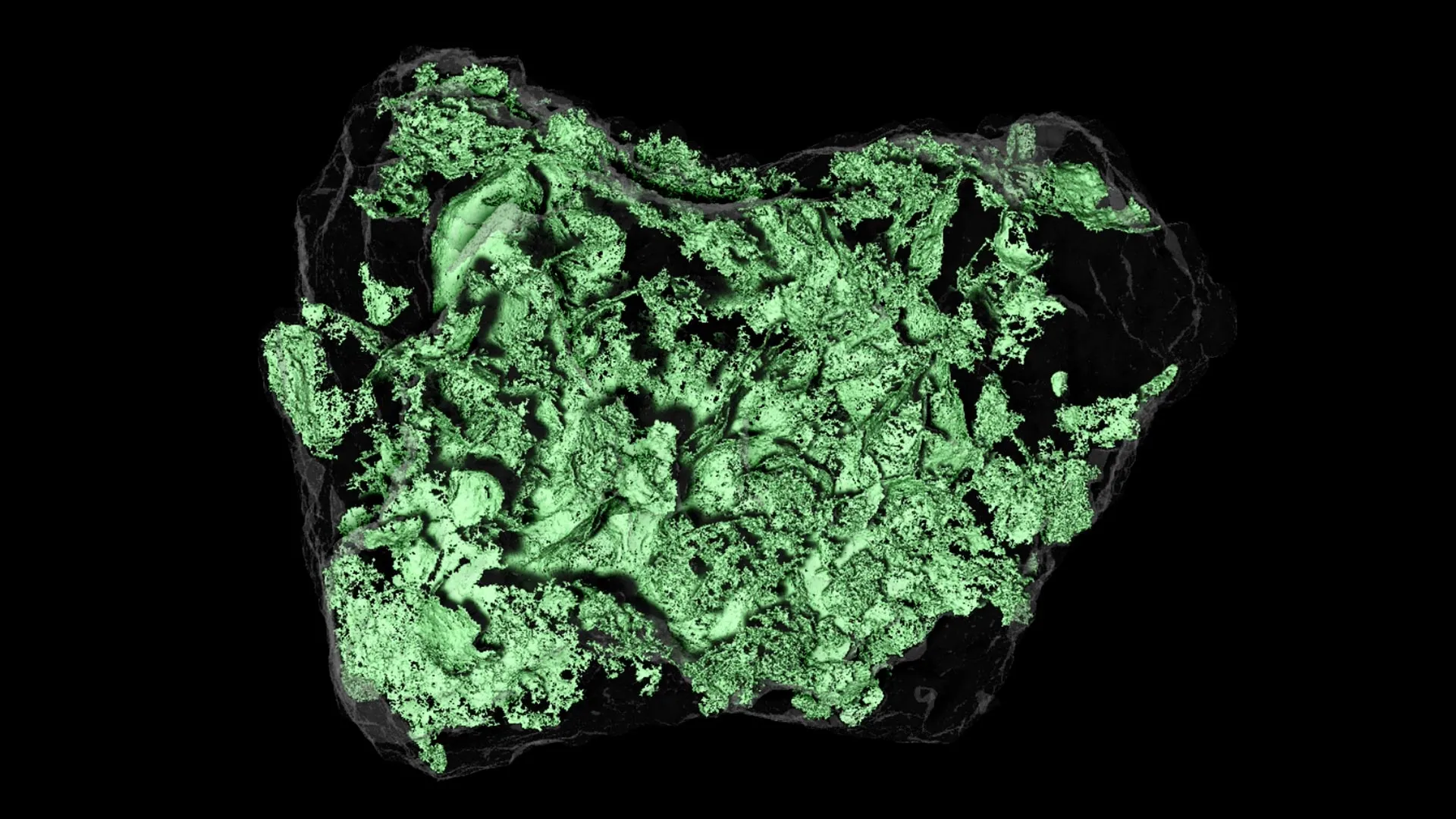
Examination of samples returned to Earth provided the key to resolving this discrepancy. Using laboratory techniques including lock-in thermography at Nagoya University and X-ray computed tomography scanning at NASA’s Johnson Space Center, researchers discovered that Bennu’s rocks possessed two critical properties: they were highly porous and contained extensive networks of internal cracks. These fractures, running through the rock interiors, significantly influenced heat movement through the material and explained the rapid thermal response observed from space.
Scientists created three-dimensional digital models of the rock samples using X-ray imaging data and incorporated these models into computer simulations tracking heat distribution. By scaling calculations from individual particles to the much larger boulders covering Bennu’s surface, researchers successfully reproduced the low thermal inertia measurements recorded by spacecraft instruments. This discovery resolved the surface mystery while providing broader implications for asteroid science.
The findings demonstrate how internal rock structure critically influences thermal behavior in asteroid materials. Researchers noted that the results provide valuable connections between remote thermal measurements and the actual internal composition of asteroid rocks, potentially improving how scientists interpret heat-based observations of distant celestial bodies.
Article Attribution | Read More at Article Source
Article summary produced by Claude AI