

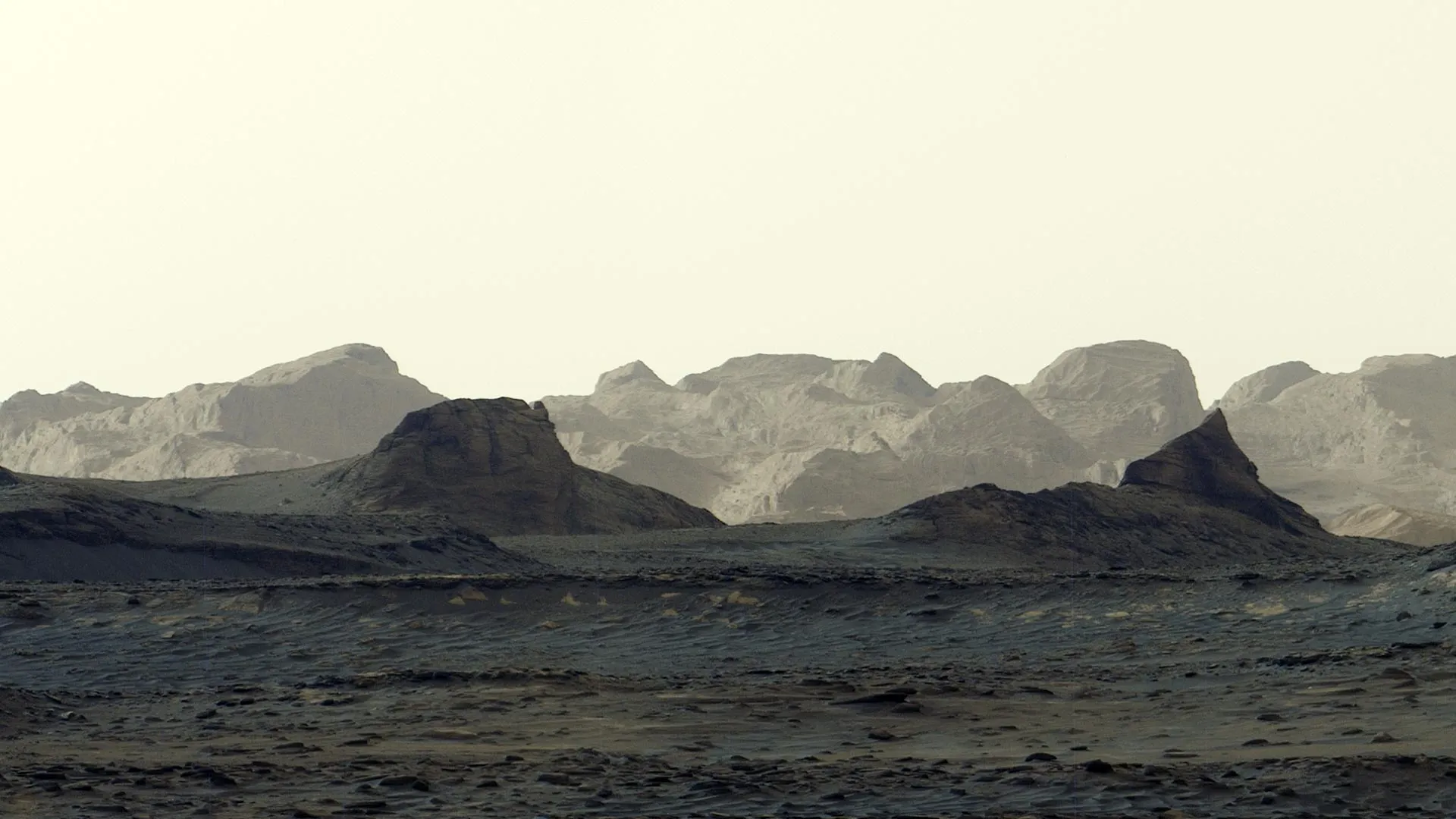
NASA’s Curiosity rover has documented a new panoramic image of Mars featuring a series of distinctive cliff formations known as yardangs. The rover captured the image using its Mastcam on August 11 during its 4,982nd Martian day. Six separate photographs were combined to create the sweeping view, which was processed without standard white balancing to preserve the natural colors and lighting conditions of the Martian morning.
The yardang formations stretch approximately 10 miles across the northwestern section of Mount Sharp, a 3-mile-tall mountain that Curiosity has been ascending since 2014. The rover has recently achieved a significant milestone by gaining 0.6 miles in elevation, representing a greater climb than any other rover has accomplished on Mars. Researchers anticipate that approaching these formations will provide increasingly detailed views and opportunities for investigation.
Mount Sharp’s layers of sedimentary rock contain evidence from different periods of Martian geological history. Scientists have determined that this region once contained lakes and streams billions of years ago. As Mars’ environment evolved, these water bodies disappeared, leaving mineral deposits behind. Wind erosion subsequently carved out the distinctive yardang formations visible in the panorama.
However, the distinctive characteristics of this particular layer have raised scientific questions. The rock displays an unusual color that differs from surrounding terrain, and its layers are tilted at unexpected angles. Ashwin Vasavada, the Curiosity project scientist at NASA’s Jet Propulsion Laboratory, noted that the layer appears anomalous. One hypothesis suggests that ancient volcanic eruptions may have deposited ash that contributed to its formation.
Curiosity is currently in the second year of its fifth extended mission. Mission planners anticipate reaching the base of the yardang formations sometime in 2027, at which point the rover will be able to examine the cliffs using its robotic arm and gather measurements to help determine their formation process and reveal additional information about Mars’ ancient environmental changes.
Article Attribution | Read More at Article Source
Article summary produced by Claude AI