

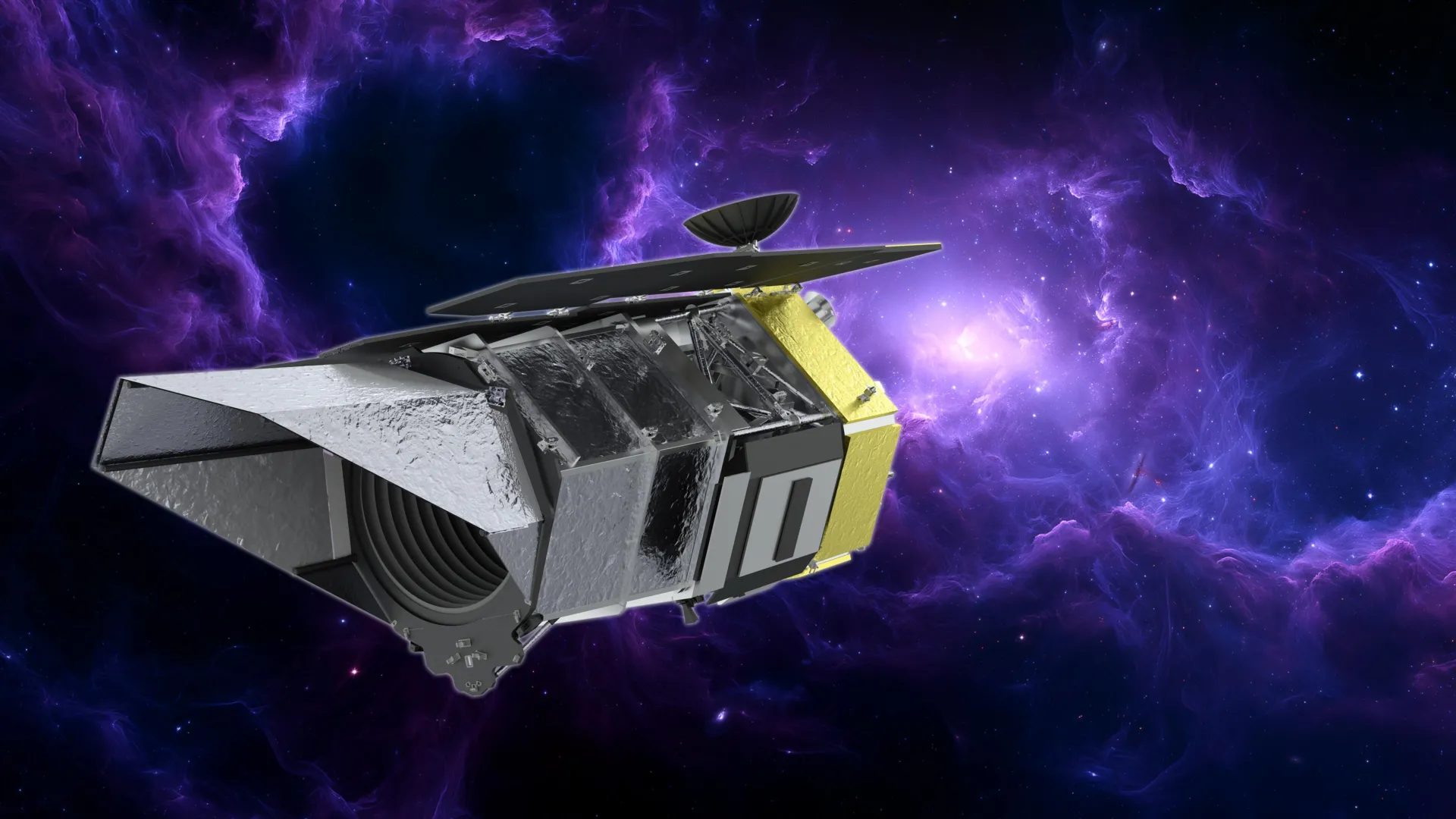
NASA’s Nancy Grace Roman Space Telescope has demonstrated superior performance following a comprehensive series of tests and calibration adjustments conducted by engineering teams. The observatory’s main imaging system, known as the Wide Field Instrument, has achieved optical quality approximately 30% better than scientists had anticipated prior to launch. This enhanced performance positions the telescope favorably for its planned investigations into dark matter, dark energy, and other fundamental questions about the universe.
Engineers activated the Wide Field Instrument in September and subsequently conducted extensive testing of its components. The examination included evaluation of 18 detectors, each approximately the size of a sticky note, along with the electronics controlling them. Teams also tested the element wheel, a rotating mechanism containing filters and optical elements that allow specific wavelengths of light to reach the detectors. The calibration system was verified using light-emitting diodes that produce adjustable light sources, enabling scientists to measure detector responses and identify sensitivity variations requiring correction.
Roman’s optical system demonstrated remarkable accuracy even before adjustments were made, requiring only minor refinements to achieve near-perfect alignment. The telescope launched on August 30 carrying optical components that underwent meticulous ground testing prior to deployment. However, the space environment—including the absence of gravity and differences in temperature and moisture—required some additional fine-tuning. Adjustments to the secondary mirror involved movements on the order of one-sixteenth the diameter of a human hair, yet such microscopic precision is essential for a telescope designed to observe distant cosmic objects.
The Coronagraph Instrument, which produces images of faint objects near brighter sources, underwent initial focus optimization after producing slightly out-of-focus images. The problem proved less severe than anticipated, and the coronagraph now meets performance expectations. Subsequent testing of the Wide Field Instrument confirmed the exceptional final results. Engineers plan to continue refining camera settings and testing additional capabilities in the coming weeks.
Article Attribution | Read More at Article Source
Article summary produced by Claude AI