

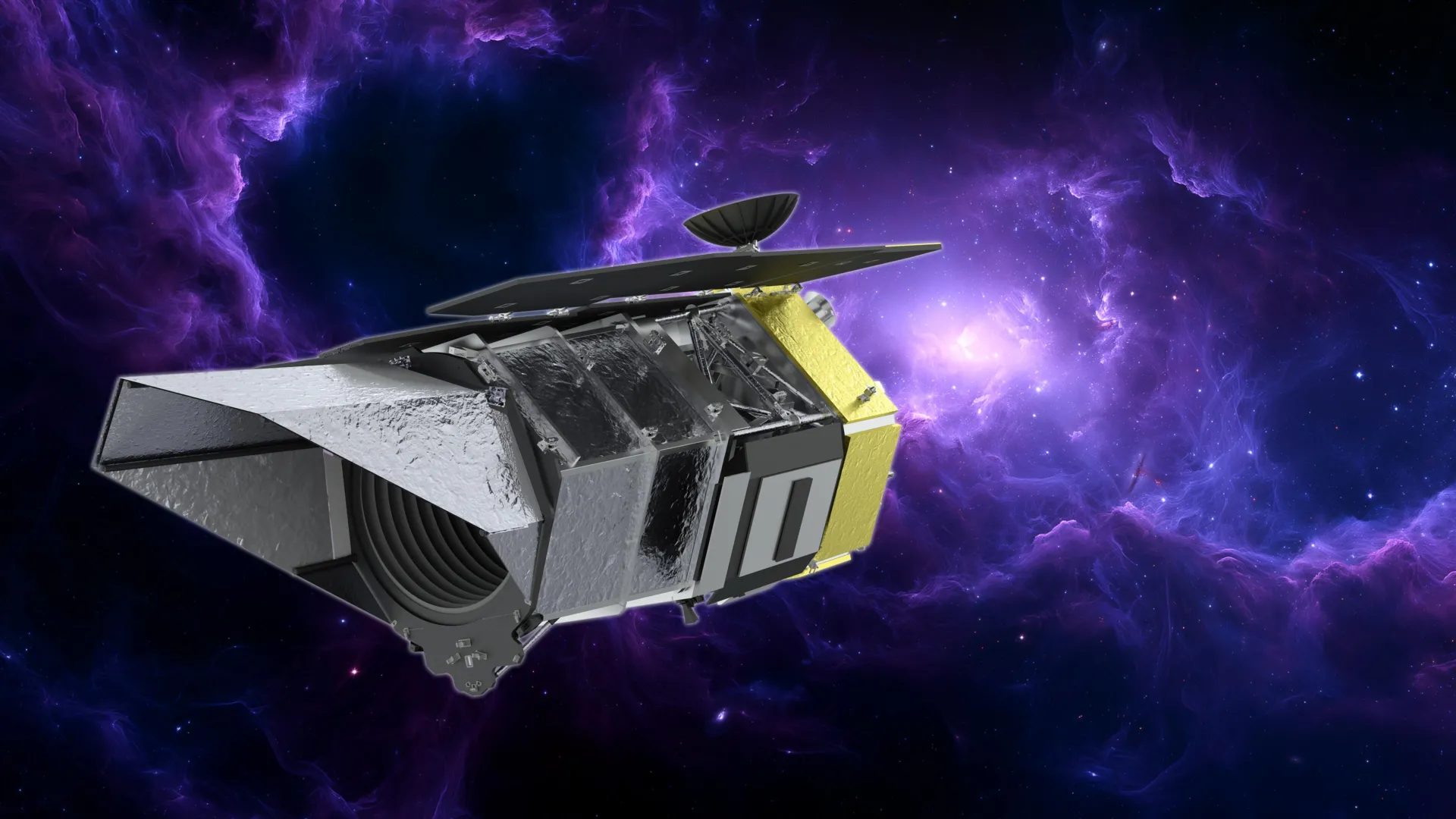
NASA’s Nancy Grace Roman Space Telescope has exceeded performance predictions following a comprehensive series of tests and calibration work conducted by the agency’s engineering teams. The Wide Field Instrument, which serves as the observatory’s main camera system, now delivers image quality approximately 30% better than scientists had anticipated. This advancement represents a significant development for the mission’s scientific objectives, which include investigating dark matter, dark energy, and other fundamental cosmic phenomena.
Engineers activated the Wide Field Instrument in September and subsequently launched an extensive testing program to verify the functionality of all components both individually and as an integrated system. The evaluation process examined the instrument’s 18 detectors, the element wheel containing filters and optical components, and the internal calibration system featuring light-emitting diodes that produce adjustable light sources. Technicians also assessed the instrument’s alignment mechanism and thermal control systems. Engineers progressively moved the instrument from its launch position to the configuration designed to produce the sharpest possible images.
Concurrently, a separate team worked to optimize the telescope’s overall optical alignment. Roman’s mirrors and optical components demonstrated remarkable accuracy even before adjustments began, requiring only minor refinements. The telescope was launched on August 30 with optical systems that had undergone meticulous ground-based testing. Despite challenges in reproducing space conditions during pre-launch testing, including the absence of gravity and variations in temperature and moisture, the assessments demonstrated that ground testing had been highly effective.
The necessary adjustments proved extraordinarily subtle. Engineers moved the secondary mirror by approximately one-sixteenth of a human hair’s diameter to improve focus, a minuscule change that nonetheless significantly enhanced performance for an instrument designed to observe distant cosmic objects. The Coronagraph Instrument, which initially produced slightly out-of-focus images, was also successfully recalibrated to meet performance specifications. Ongoing work will include testing the coronagraph’s ability to block unwanted light, a critical capability for observing dim objects near brighter celestial sources.
Article Attribution | Read More at Article Source
Article summary produced by Claude AI