

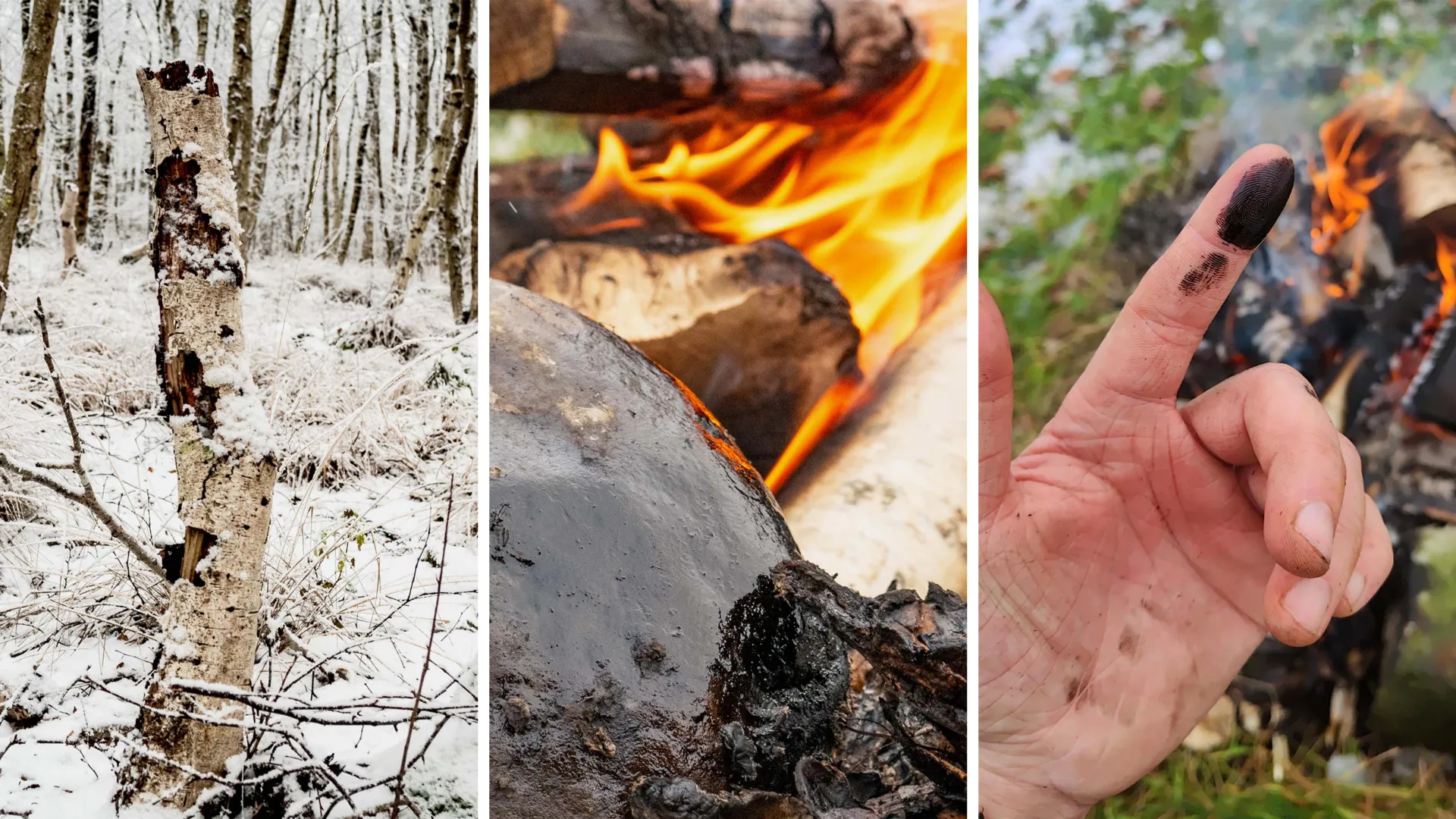
A multinational research team from universities in Cologne, Oxford, Liège, and Cape Breton has published findings suggesting that birch tar—a sticky substance produced from tree bark—may have served dual purposes for Neanderthals beyond its well-documented use as an adhesive for tool construction. The research, appearing in PLOS One, demonstrates that this prehistoric material possessed antibacterial capabilities that could have made it valuable for wound treatment and infection prevention.
Archaeological evidence has long established that Neanderthals used birch tar, primarily as a hafting agent to attach stone blades and points to wooden handles, making tools more functional and effective. However, scientists increasingly question whether this material had broader applications in prehistoric life. The research team, led by Tjaark Siemssen, was prompted by mounting evidence that Neanderthals engaged in medicinal practices and utilized plants for health purposes, raising the possibility they recognized the healing properties of substances they otherwise used for toolmaking.
To test this hypothesis, the researchers produced birch tar using methods reconstructed from archaeological evidence and employing tree species available during the Neanderthal period. They experimented with two extraction techniques: placing birch bark in sealed underground pits with minimal oxygen to trigger dry distillation, and burning bark near stone surfaces to collect condensed tar vapors. Testing revealed that all samples produced inhibited the growth of Staphylococcus aureus, a bacterium commonly responsible for wound infections, regardless of which production method was employed.
While the experiments do not definitively prove Neanderthals applied birch tar medicinally, they establish that the material possessed properties suitable for such use. The findings may extend beyond prehistoric interest, as antibiotic resistance presents a significant modern health challenge. Researchers suggest that ancient materials and traditional medicinal practices warrant scientific examination for potential contemporary applications, though further investigation would be necessary to determine safety and effectiveness for human medical use.
The research contributes to an expanding understanding of Neanderthals as sophisticated humans who skillfully utilized natural resources available to them, potentially representing early developments in human medical knowledge and practice.
Article Attribution | Read More at Article Source
Article summary produced by Claude AI