

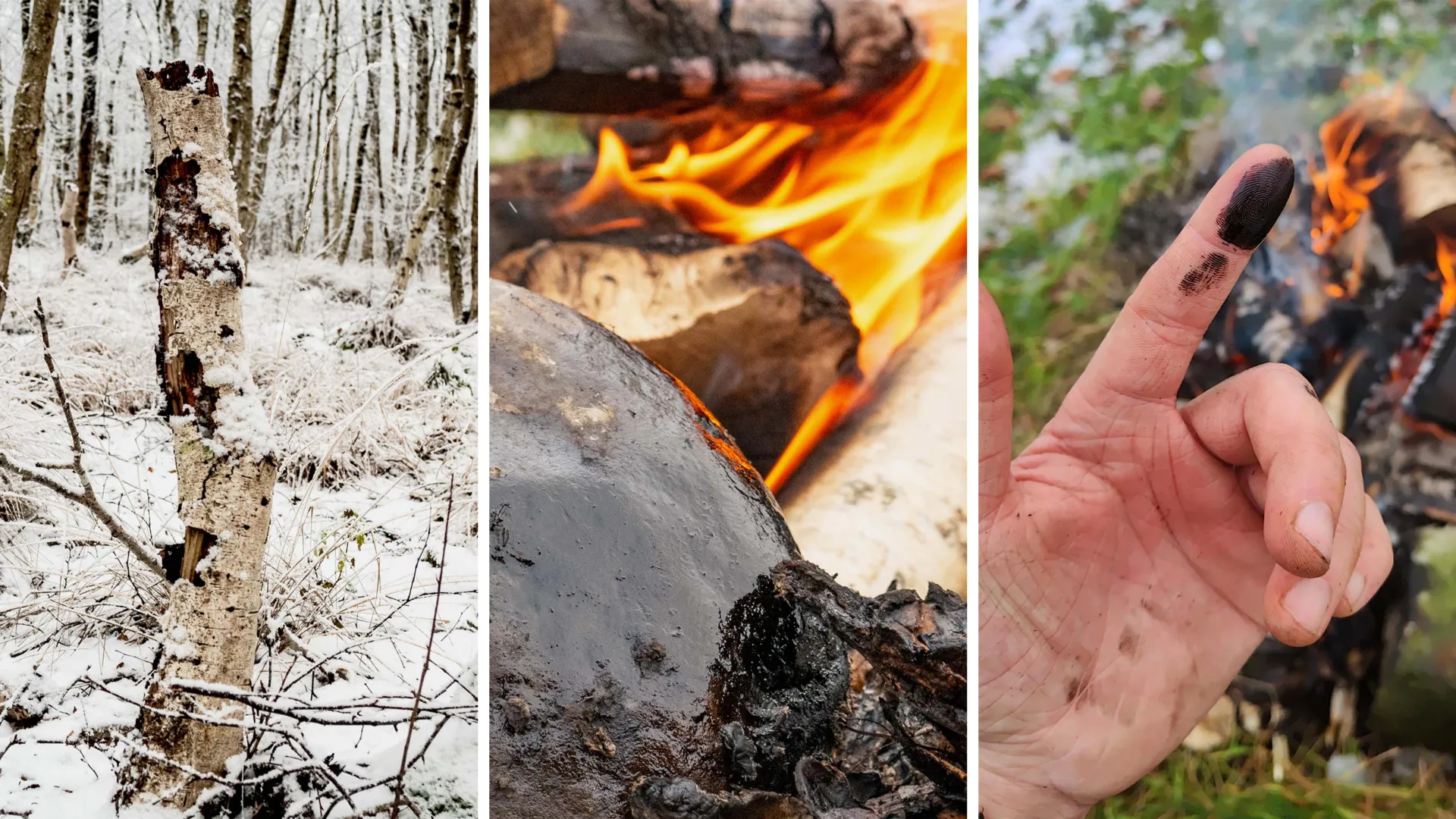
Scientists from multiple European and Canadian universities conducted research suggesting that birch tar, a material long associated with prehistoric tool construction, may have additionally functioned as a medical treatment for wound infections among Neanderthals. The investigation, published in PLOS One, examined whether this adhesive substance possessed properties beyond its known use in hafting stone blades to wooden handles.
To conduct their research, the team recreated ancient production methods using tree bark species available during the Neanderthal period. They employed two primary techniques: placing birch bark in sealed underground pits with minimal oxygen to trigger dry distillation, and burning bark near solid surfaces to collect condensed tar residue. These reconstruction methods were based on archaeological evidence associated with Neanderthal sites across Europe.
When tested in laboratory settings, all samples of experimentally produced birch tar demonstrated the ability to inhibit growth of Staphylococcus aureus, a bacterium commonly responsible for wound infections. The antibacterial activity remained consistent across samples produced through different prehistoric extraction techniques, indicating that the bacteria-inhibiting properties did not depend on a single production method. Lead researcher Tjaark Siemssen noted that these findings suggest antimicrobial properties were understood and potentially applied intentionally during the early Neanderthal period.
While the experiments do not definitively prove that Neanderthals applied birch tar to wounds, they establish that the material they were capable of producing possessed properties suitable for medical care. The research aligns with growing evidence that Neanderthals engaged in medicinal practices and utilized plants for health purposes. The discovery adds to scholarly understanding of Neanderthals as resourceful populations who understood their natural environment.
The findings may also hold relevance for contemporary medicine, as antibiotic resistance presents an increasing global health challenge. Researchers suggest that ancient and traditional medicinal practices warrant closer scientific examination for potential compounds effective against modern infections, though further research would be necessary to evaluate any practical medical applications for human use.
Article Attribution | Read More at Article Source
Article summary produced by Claude AI