

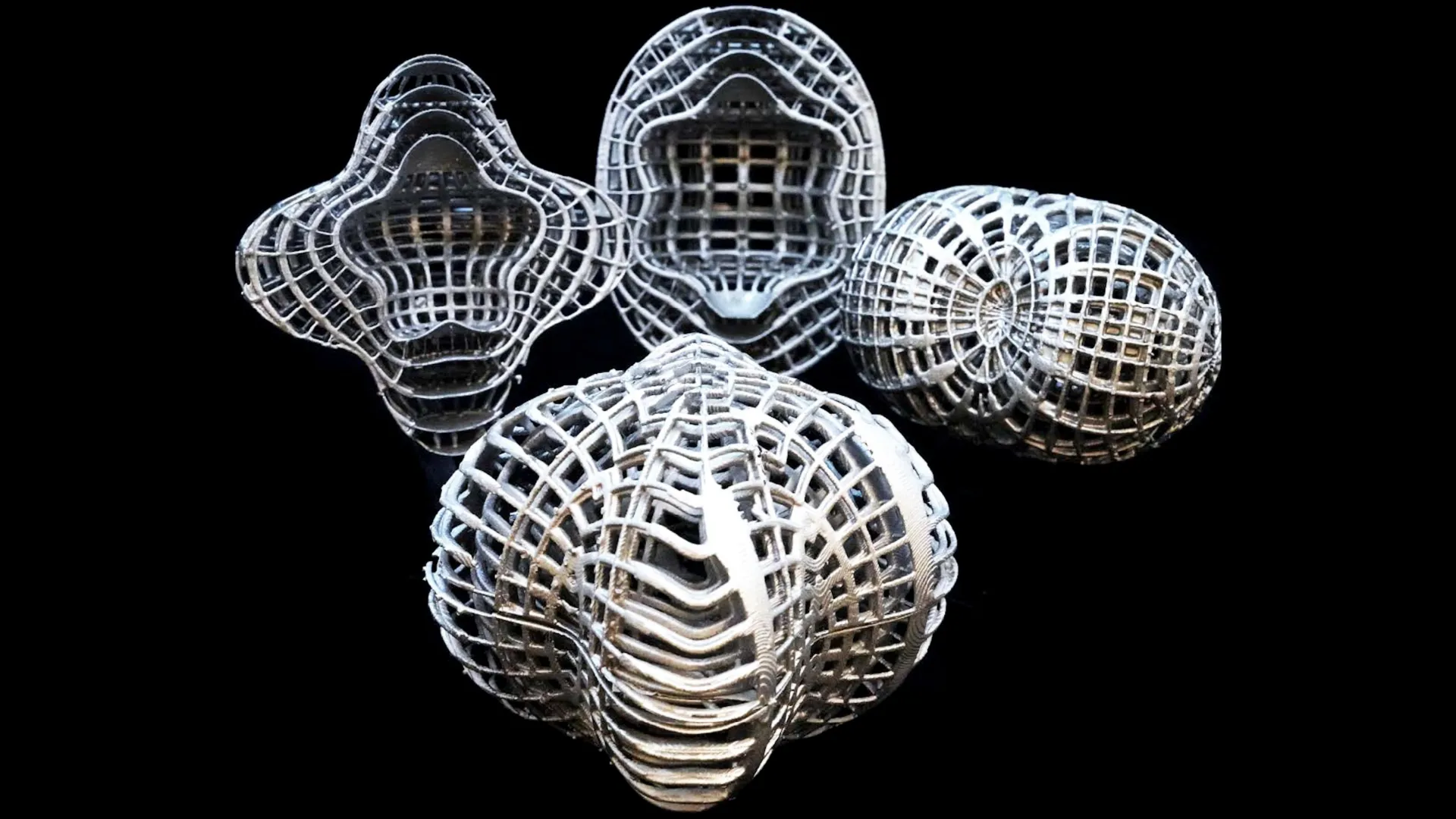
Researchers at the University of Illinois Urbana-Champaign and the Technical University of Denmark have developed a working three-dimensional thermal invisibility cloak, marking a significant advancement in thermal cloaking technology. Led by civil and environmental engineering professor Shelly Zhang, the team successfully created a device that can conceal objects with various shapes from infrared cameras regardless of the direction from which heat approaches. The findings were published in Nature Communications.
Previous thermal cloaking devices were limited to two-dimensional applications or functioned only when heat traveled in a specific direction. The new design overcomes these constraints by directing heat around hidden objects rather than simply blocking it, causing infrared imaging to display temperature patterns that make concealed items appear absent. The researchers developed a lattice-based material whose structure can be independently adjusted along three directions, enabling precise control over how efficiently heat passes through different sections of the cloak. This approach uses a combination of 3D-printed aluminum lattice for efficient heat conduction and a rubber-like material that conducts heat poorly to create the necessary thermal properties.
The team conducted infrared camera tests to validate the cloak’s effectiveness. The experiments demonstrated that the device successfully guides heat around the hidden region while maintaining surrounding temperature patterns and keeping conditions inside the cloak uniform. The researchers tested the technology with complex three-dimensional geometries, including detailed shapes resembling human heads, showing capabilities beyond what previous experimental thermal cloaks have achieved.
The technology has multiple potential applications across industries. In electronics, it could improve thermal management in microchips and protect sensitive components operating under demanding conditions. The researchers also identified possibilities in security and defense sectors, where future versions might conceal people or equipment from thermal detection systems or shield assets from severe temperature conditions. However, the current device protects objects from external heat rather than concealing objects that generate heat themselves, which represents a key area for future development.
Article Attribution | Read More at Article Source
Article summary produced by Claude AI