

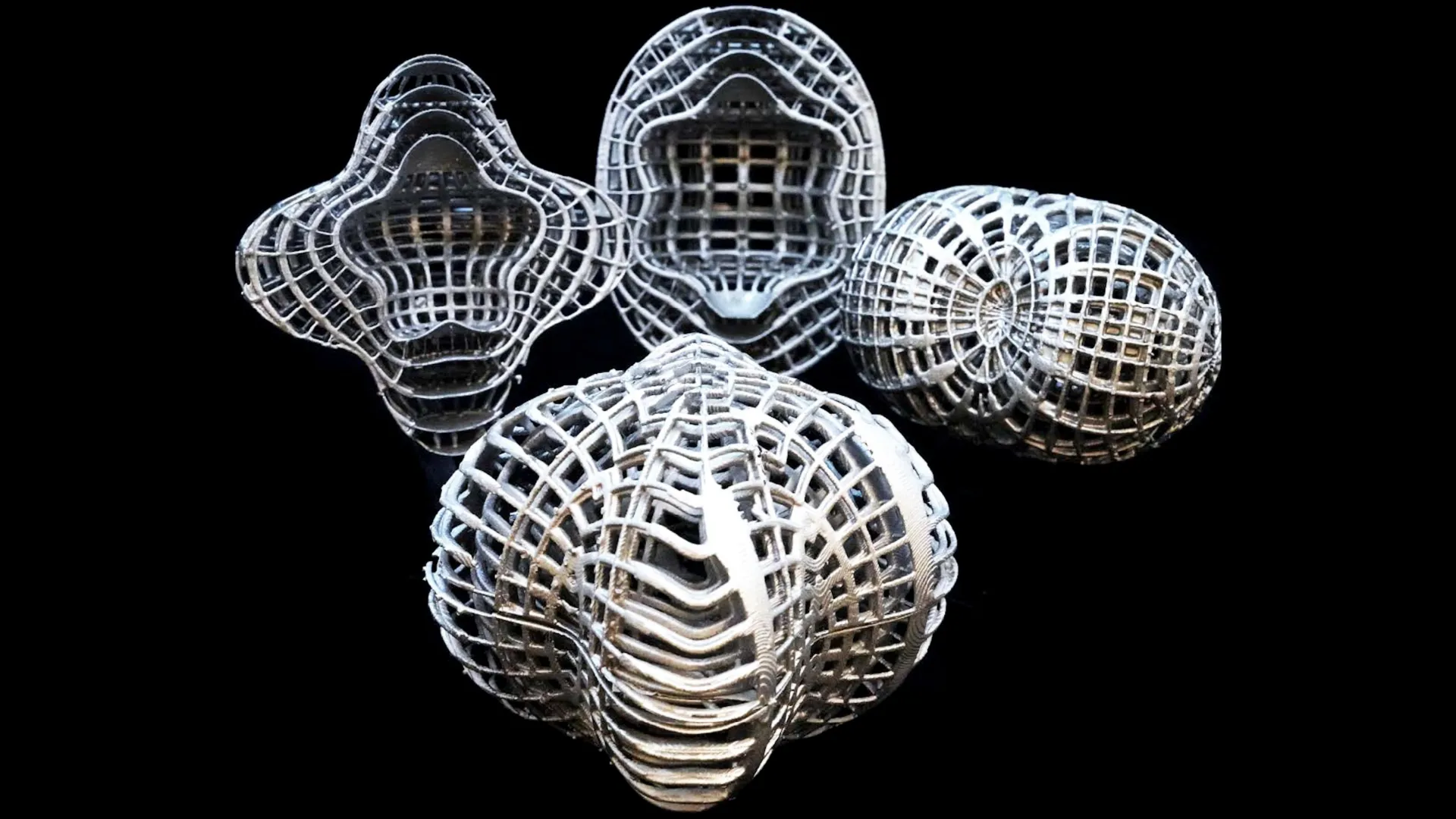
Scientists at the University of Illinois Urbana-Champaign, working with colleagues from the Technical University of Denmark, have created and tested the first fully three-dimensional thermal invisibility cloak. The device, described in research published in Nature Communications, can conceal objects of various shapes from infrared imaging systems regardless of the direction from which heat approaches. Unlike previous thermal cloaking technologies limited to two dimensions or specific heat flow directions, this advancement redirects thermal energy around concealed objects rather than simply blocking it, making the hidden area appear absent to thermal cameras.
The breakthrough relies on a novel lattice-based material with independently adjustable structure along three axes, enabling control over heat conductivity in different directions. The research team constructed a working prototype using 3D metal printing to create an aluminum lattice, which they then filled with rubber-like material that resists heat transfer. This combination produces a structure capable of precisely managing heat movement through the system. Testing with infrared cameras confirmed the device could guide heat around hidden regions while maintaining uniform temperatures inside the protected area and preserving surrounding temperature patterns.
The researchers demonstrated the cloak’s capability by successfully concealing complex three-dimensional objects, including detailed geometries resembling human heads. This represents a notable advancement over previous experimental thermal cloaks, which lacked comparable combinations of geometric complexity and cloaking effectiveness. The technology emerged from revisiting foundational principles in transformation thermotics, a field focused on redirecting heat through specially designed materials.
Potential applications span multiple industries, particularly electronics and microchip thermal management, where the technology could protect sensitive components and improve device performance under demanding conditions. Security and defense sectors may also benefit from equipment that prevents thermal detection or shields assets from extreme temperature environments. However, the research team identifies an important next objective: developing more advanced versions capable of concealing objects that generate their own heat rather than only protecting from external thermal sources. Such capabilities would require active heat manipulation rather than passive redirection, expanding the technology’s utility in thermal protection and infrared detection applications.
Article Attribution | Read More at Article Source
Article summary produced by Claude AI