

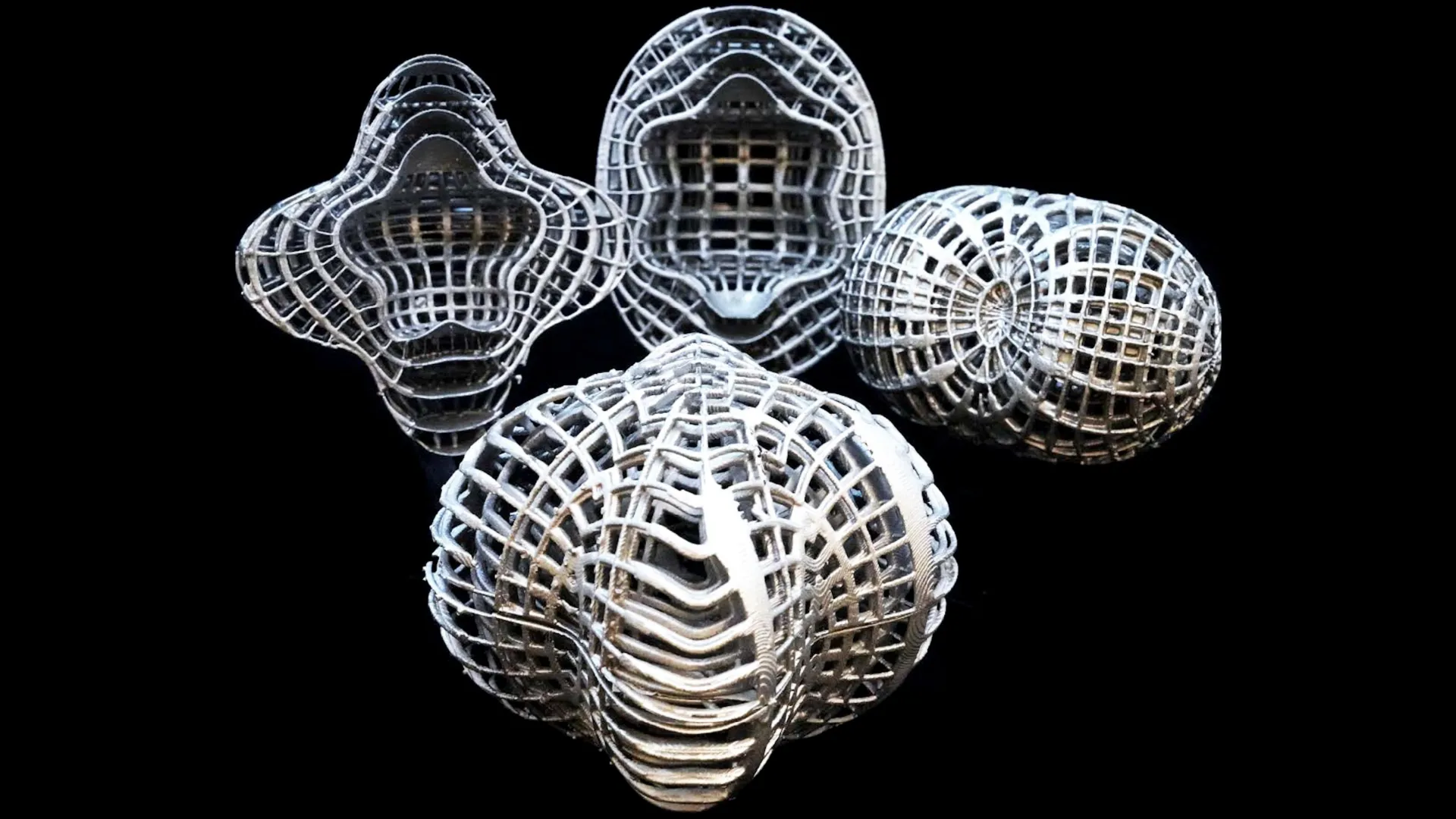
Scientists at the University of Illinois Urbana-Champaign and the Technical University of Denmark have developed and tested a three-dimensional thermal invisibility cloak capable of rendering objects invisible to infrared imaging systems. The device functions by directing heat around a concealed object rather than blocking it entirely, allowing the surrounding temperature pattern to remain unchanged to thermal cameras. This represents a significant advance over previous thermal cloaking designs, which operated only in two dimensions or required heat to approach from a specific direction.
The research team, led by professor Shelly Zhang and including postdoctoral researcher Weichen Li, graduate student Yibo Wang, and professor Ole Sigmund, published their findings in Nature Communications. The breakthrough emerged from applying principles of transformation thermotics to create a lattice-based material whose thermal properties can be independently adjusted along three axes. This material structure achieves a much broader range of thermal conductivities than previous designs, approaching the theoretical properties necessary for ideal thermal cloaking.
The researchers constructed a working prototype using 3D metal printing to produce an intricate aluminum lattice, combined with a rubber-like material in the remaining spaces to create pathways for controlled heat conduction. When tested between hot and cold regions using infrared cameras, the device successfully guided heat around the concealed area while maintaining uniform temperatures inside the cloak. The team demonstrated the cloak’s effectiveness with complex three-dimensional geometries, including shapes resembling human heads.
The potential applications span multiple fields. In electronics manufacturing, the technology could improve thermal management in microchips and protect sensitive components from extreme conditions. The researchers also identified applications in security and defense contexts, where the cloak could conceal equipment from thermal detection systems or shield valuable assets from severe temperature exposure. Future development aims to create more sophisticated versions capable of concealing heat-generating objects, which would require active thermal manipulation rather than passive heat redirection.
Funding for the research came from the National Science Foundation, the Villum Foundation, and the Air Force Office of Scientific Research. Zhang holds additional affiliations with mechanical science and engineering and the National Center for Supercomputing Applications at the University of Illinois Urbana-Champaign.
Article Attribution | Read More at Article Source
Article summary produced by Claude AI