

A new study from Yale University examining hundreds of fossil specimens and employing advanced analytical techniques has provided fresh insights into how ancient animals adapted to aquatic environments. The research, published in Current Biology, focuses on understanding the evolutionary transitions that occurred when various species returned to water after their ancestors had established themselves on land. Researchers collected extensive data including measurements, photographs, and CT scans from specimens housed at the Yale Peabody Museum and other institutions worldwide.
The team combined traditional paleontological methods with machine learning models and statistical approaches to investigate the relationship between skeletal features and aquatic lifestyles. By training these models on living animals with known behaviors, the researchers were able to estimate how extinct species used aquatic environments and predict soft tissue adaptations that rarely survive in the fossil record. This approach addressed a longstanding challenge in paleontology, where conflicting evidence from skeletal features often made it difficult to determine whether prehistoric animals were primarily terrestrial, aquatic, or amphibious.
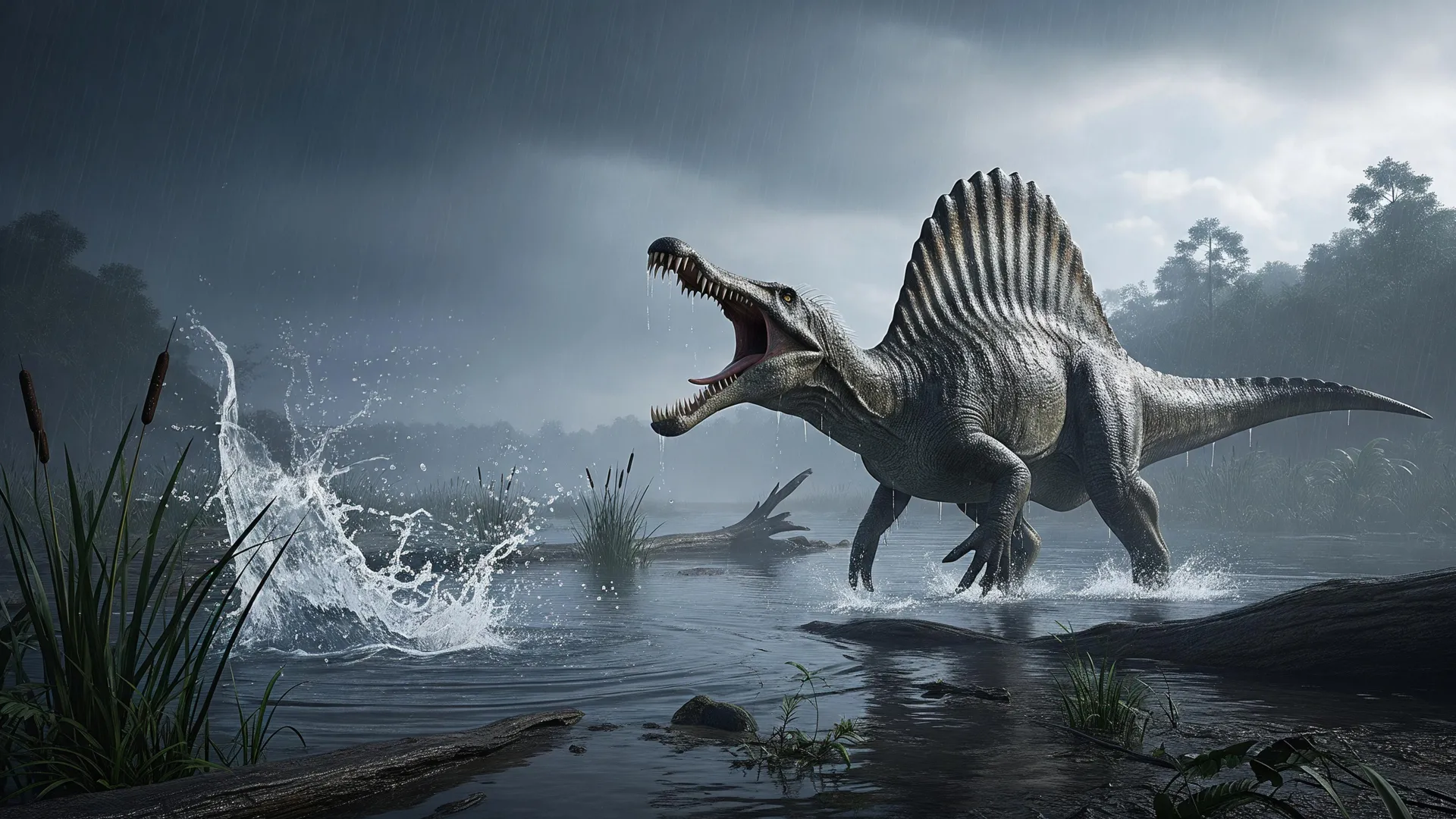
One significant finding concerns Spinosaurus, a massive prehistoric dinosaur that inhabited what is now northern Africa approximately 113 million to 94 million years ago. The analysis provides support for the interpretation that Spinosaurus spent the vast majority of its time submerged in water, though scientists continue to debate the specifics of how it hunted and moved. The research strengthens the case that this predator was far more aquatic than previously understood by some researchers.
The study reached different conclusions about mesosaurs, small marine reptiles that lived between 290 million and 274 million years ago in regions now forming parts of South Africa and eastern South America. Despite having characteristics suggesting aquatic adaptation, skeletal analysis indicated that mesosaurs regularly moved between water and land, similar to modern alligators. The researchers found that all Paleozoic marine reptiles examined in the study maintained amphibious lifestyles, with even the most water-adapted species regularly returning to land.
Article Attribution | Read More at Article Source
Article summary produced by Claude AI