

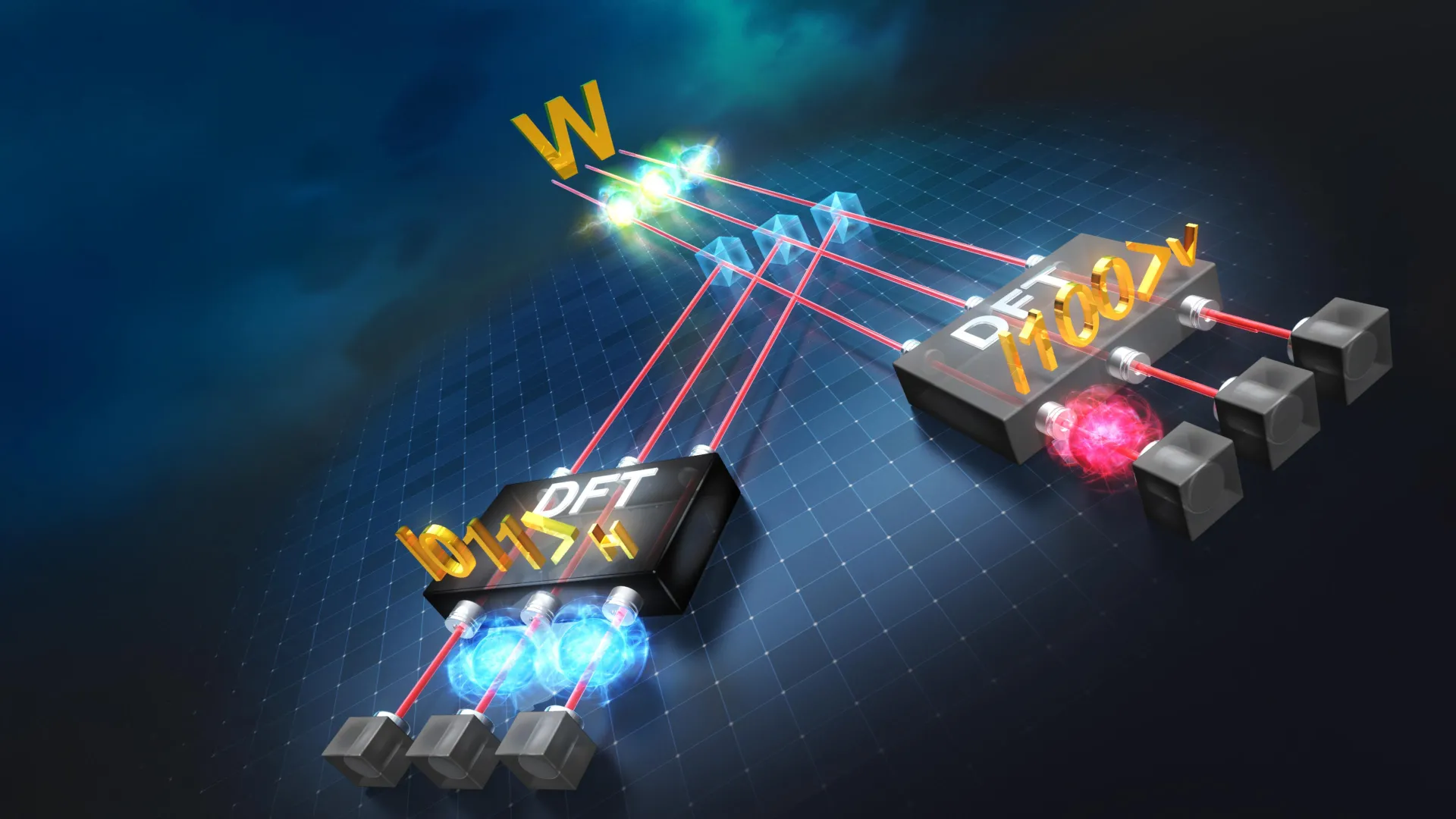
Researchers at Kyoto University and Hiroshima University have demonstrated a novel technique for identifying W states, a significant form of multi-photon quantum entanglement. This achievement addresses a longstanding gap in quantum measurement technology that has persisted for more than 25 years.
Quantum entanglement describes a phenomenon where particles become linked in ways that prevent their individual properties from being fully defined independently. While this concept challenged classical physics intuitions held by figures like Albert Einstein, entanglement has become recognized as essential for developing quantum technologies including advanced communication systems, computing platforms, and quantum information transfer methods.
The primary challenge in building these technologies lies in efficiently determining which type of entangled state has been produced. Traditional approaches use quantum tomography, which reconstructs quantum states through numerous measurements. However, this method becomes exponentially more data-intensive as additional photons are introduced to the system. Entangled measurements offer a more efficient alternative by identifying quantum states through a single operation rather than requiring extensive post-measurement reconstruction.
The research team developed their approach by leveraging the cyclic shift symmetry property inherent to W states. They created a photonic quantum circuit incorporating a quantum Fourier transformation, a mathematical operation that reorganizes quantum information to reveal otherwise hidden patterns. Through experimentation with three-photon systems using high-stability optical quantum circuits, the researchers successfully demonstrated their method’s ability to distinguish among different types of three-photon W states while measuring the reliability of their entangled measurement technique.
The implications of this work extend across multiple quantum technology domains. Potential applications include quantum teleportation, which transfers quantum information between locations using entanglement without physically moving matter, as well as new quantum communication protocols and measurement-based quantum computing approaches. The research team intends to scale their technique to larger multi-photon systems and develop on-chip photonic quantum circuits, potentially enabling more compact and integrated quantum technologies.
Article Attribution | Read More at Article Source
Article summary produced by Claude AI